Shopify Store SEO: Are Your Headings & Content AI-Ready?
Ever feel like you're constantly chasing the latest SEO trend, only to find out some fundamental best practices are still being missed by the pros? You're not alone. I recently stumbled upon a fascinating discussion in an online community that really got me thinking about the basics of content structure and how it impacts our visibility in today's AI-driven search landscape.
The original poster in this discussion shared a simple yet powerful experiment. They ran a script to mechanically check single articles from 18 well-known SEO and content marketing sites (plus their own!) for what they called "AI-answer readiness." This wasn't about predicting who gets cited by ChatGPT or Perplexity, but rather about seeing how well content was structured for machines to easily extract information. The results were quite eye-opening, even for sites whose entire business revolves around search and content strategy.
What Did the Expert Check, and Why Does It Matter for Your Shopify Store?
The original poster focused on a few key structural elements:
llms.txtFile: Does the site serve this file, which indicates how large language models should interact with the content? While not directly impacting your Shopify organic traffic monitor, it signals a site's awareness of AI interaction.- Question-Style Headings: Are there H2 or H3 headings that pose a direct question (ending in a "?")? This is crucial for appearing in "People Also Ask" sections and as direct answers in AI overviews.
- Immediate Short Answers: Is there a concise paragraph (under 300 characters) immediately following that question-style heading? This is the golden ticket for AI engines to lift and quote directly, providing quick answers to user queries.
- Valid Heading Hierarchy: This was a big one. Does the heading structure nest logically (H2 → H3 → H4) without skipping levels (e.g., H2 → H4)? A clean hierarchy makes your content much easier for search engines and AI to understand and categorize.
- Visible Author/Publish Date: Is the author and publish date visible in the actual HTML that a human would see, or only hidden away in JSON-LD schema? While schema is important, visible dates build trust and can influence click-through rates.
The findings were stark: out of 18 sites, half failed a basic heading hierarchy check! Only 8 out of 18 paired a question heading with an immediate short answer. Even the original poster's own site had issues with heading hierarchy, proving that even experts can overlook these foundational elements. This isn't just about pretty code; it's about how easily search engines and AI can parse your valuable content and present it to potential customers.
"Mechanical Extraction-Readiness" – A Key Signal for Shopify Merchants
One community member aptly defended the original post against a dismissive comment, highlighting that these checks are "useful technical signals, not a final GEO score." They emphasized that while a failed heading hierarchy doesn't guarantee a page won't be cited by AI, it certainly indicates that the page is "harder to parse or extract cleanly."
For Shopify merchants, this distinction is vital. We're not just writing for humans anymore; we're writing for algorithms and AI models that summarize, answer, and guide users. If your product descriptions, blog posts, or FAQ pages are difficult for these systems to understand due to poor structure, you're missing out on valuable visibility. A good Shopify organic traffic monitor might show you traffic fluctuations, but understanding why requires digging into these structural details.
Actionable Steps to Boost Your Shopify Store's AI Readiness
So, what can you do today to ensure your Shopify store's content is AI-ready?
- Audit Your Heading Hierarchy: Go through your key product pages, collection descriptions, and blog posts. Ensure your headings follow a logical H1 (usually your page title) → H2 → H3 structure. Don't skip levels! Use H2s for main sections, H3s for sub-sections within those H2s, and so on. This makes your content scannable for both users and machines.
- Craft Clear Question-and-Answer Sections: Identify common questions your customers ask. Turn these into H2 or H3 headings (e.g., "What are the shipping costs for international orders?"). Immediately follow these with a concise, direct answer. This is gold for AI Overviews and featured snippets.
- Prioritize Conciseness for AI: When answering questions, aim for directness. While detailed content is great, an immediate, short answer (under 300 characters) is what AI often pulls for quick responses. You can elaborate further down the page.
- Ensure Author and Date Visibility: If you have a blog, make sure the author and publication date are clearly visible on the page, not just in the backend schema. This adds credibility and freshness signals.
- Regularly Monitor and Adapt: The digital landscape, especially with AI, is always changing. What works today might evolve tomorrow. Regularly checking your content's structure and performance is key.
EShopSet Team Comment
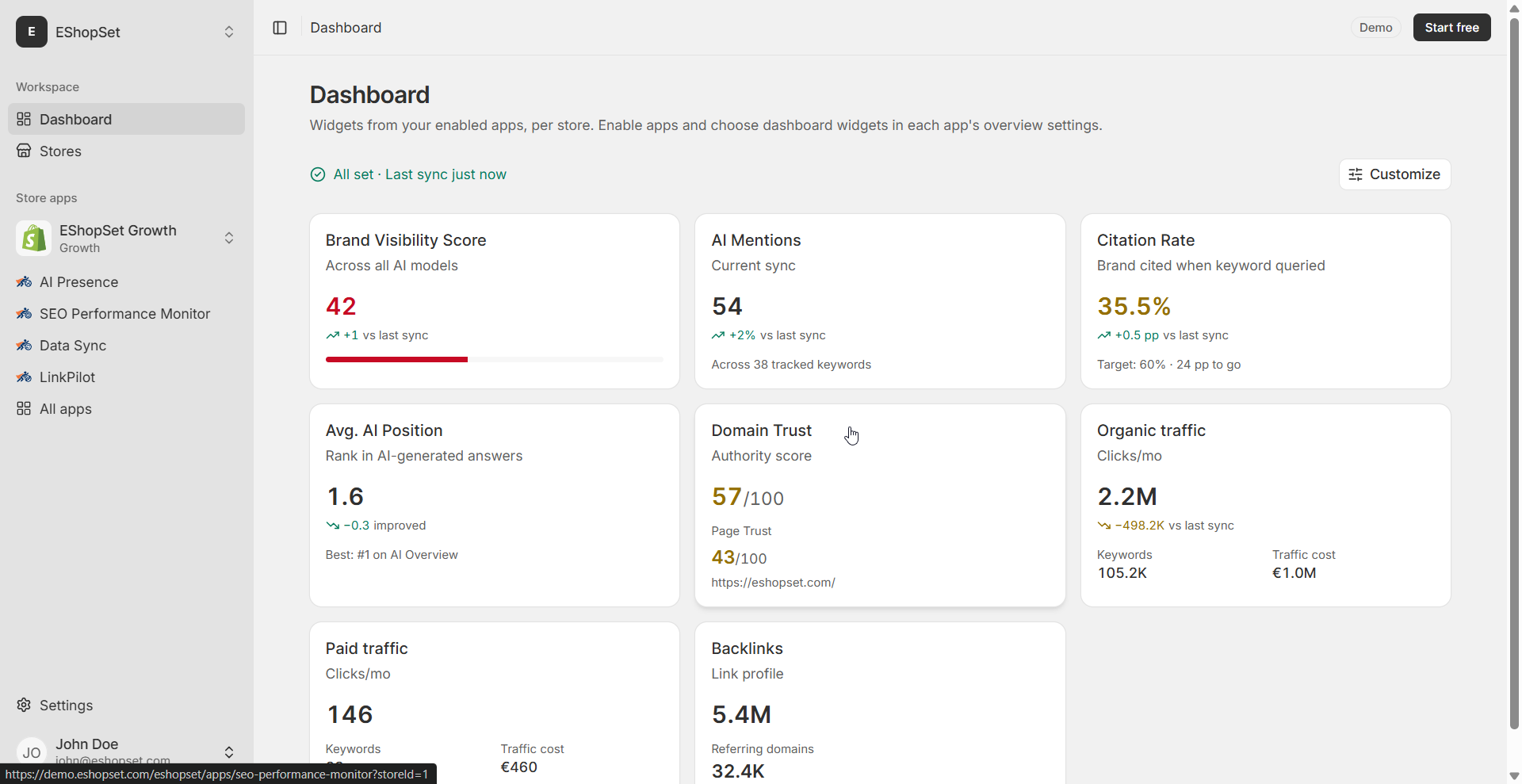
We absolutely agree with the original poster's core insight: foundational content structure is often overlooked, even by experts, and it directly impacts how well AI can understand and utilize your content. While the checks are mechanical, their implications for search visibility are profound for Shopify merchants. Our AI Presence app is designed to help you optimize for this very challenge, ensuring your content is structured for maximum AI discoverability, while SEO Performance Monitor keeps an eye on your overall search health, helping you identify areas where structural improvements can boost your organic traffic.
Ultimately, this discussion reminds us that while the tools and algorithms evolve, the importance of well-structured, user-friendly content remains paramount. By paying attention to these seemingly small details in your Shopify store's content, you're not just catering to search engines; you're creating a better experience for your customers and setting your brand up for long-term success in an AI-powered world.