Don't Let Deploys Break Your Shopify SEO: Catch Critical Errors Fast
Ever woken up to discover your Shopify store's search rankings have mysteriously tanked? For many store operators and developers, that nightmare scenario often traces back to a seemingly innocuous code deployment. A small tweak, a new app integration, or even a routine update can accidentally introduce a 'noindex' tag, a misconfigured canonical URL, or a rogue entry in your robots.txt file. These silent killers can wipe your store off Google's radar faster than you can say 'organic traffic'.
This exact frustration was recently echoed in a vibrant online community discussion. The original poster, a developer managing multiple sites, articulated a common pain point: the gap between slow, daily SEO audits and expensive, overkill 'enterprise suites'. They were looking for something precise and immediate: a tool to watch critical SEO elements on key pages, recheck right after a deploy, and ping them if something went awry. Their concern wasn't just about rankings, but about preventing catastrophic SEO breakage from code changes.
The Silent Threat: Why Real-Time Monitoring Matters
The core issue highlighted by the community is the lag. Traditional daily or weekly crawls, while useful for general SEO health, are simply too slow to catch a 'deploy just broke it 4 minutes ago' scenario. By the time a regular crawler or Search Console notices, Google has likely already seen it, and the damage to your visibility and traffic could be substantial.
Imagine pushing an update to your Shopify store, and unknowingly, a template change adds a tag to your product pages. If you're relying on a weekly audit, those pages could be de-indexed for days, costing you sales and critical SEO authority. This is why the original poster, and many others, yearned for something that could trigger checks immediately post-deployment.
Community Solutions: DIY & Niche Tools
The community responses painted a clear picture of the struggle. One respondent candidly shared their solution: building a 'janky' setup with a Raspberry Pi and a custom script, acknowledging that while it worked, it wasn't pretty. This DIY approach underscores the desperation for a solution that fills this real-time gap.
Another community member suggested looking into more general monitoring tools like Little Warden, which can be configured to watch specific page elements at tight intervals, or Coffeepot.app for URL monitoring. While these offer more frequent checks, they might not always integrate directly with deployment pipelines to trigger checks *immediately* after a release, which was the original poster's ideal scenario.
The consensus among the experts seemed to be: for deploy-triggered, narrow, and instant alerts, many end up scripting their own solutions. This highlights a significant need in the market for more accessible tools that provide robust, proactive Shopify overnight SEO alerts, without requiring deep technical expertise or an enterprise-level budget.
Protecting Your Shopify Store: Actionable Takeaways
For Shopify merchants and store operators, the discussion offers crucial insights:
- Understand the Risk: Every code change, theme update, or app installation carries a potential SEO risk. Be aware of what's being deployed.
- Prioritize Critical Pages: You don't need to monitor every single page in real-time. Identify your top-performing product pages, collection pages, and other critical landing pages that drive the most organic traffic. These are your 'canary in the coal mine'.
- Focus on Key Elements: The most dangerous SEO errors often involve
robots.txt,tags (especiallynoindex), and canonical URLs. These are the elements that can tell search engines to ignore or misinterpret your content. - Seek Frequent Monitoring: While true deploy-triggered checks might be advanced, aim for tools that offer frequent monitoring intervals. The closer to real-time, the better. You want to catch issues before Google's next major crawl.
- Set Up Alerts: Ensure your monitoring solution can send immediate notifications (email, Slack, etc.) when a critical change is detected. Timely alerts are your first line of defense against SEO disasters.
EShopSet Team Comment
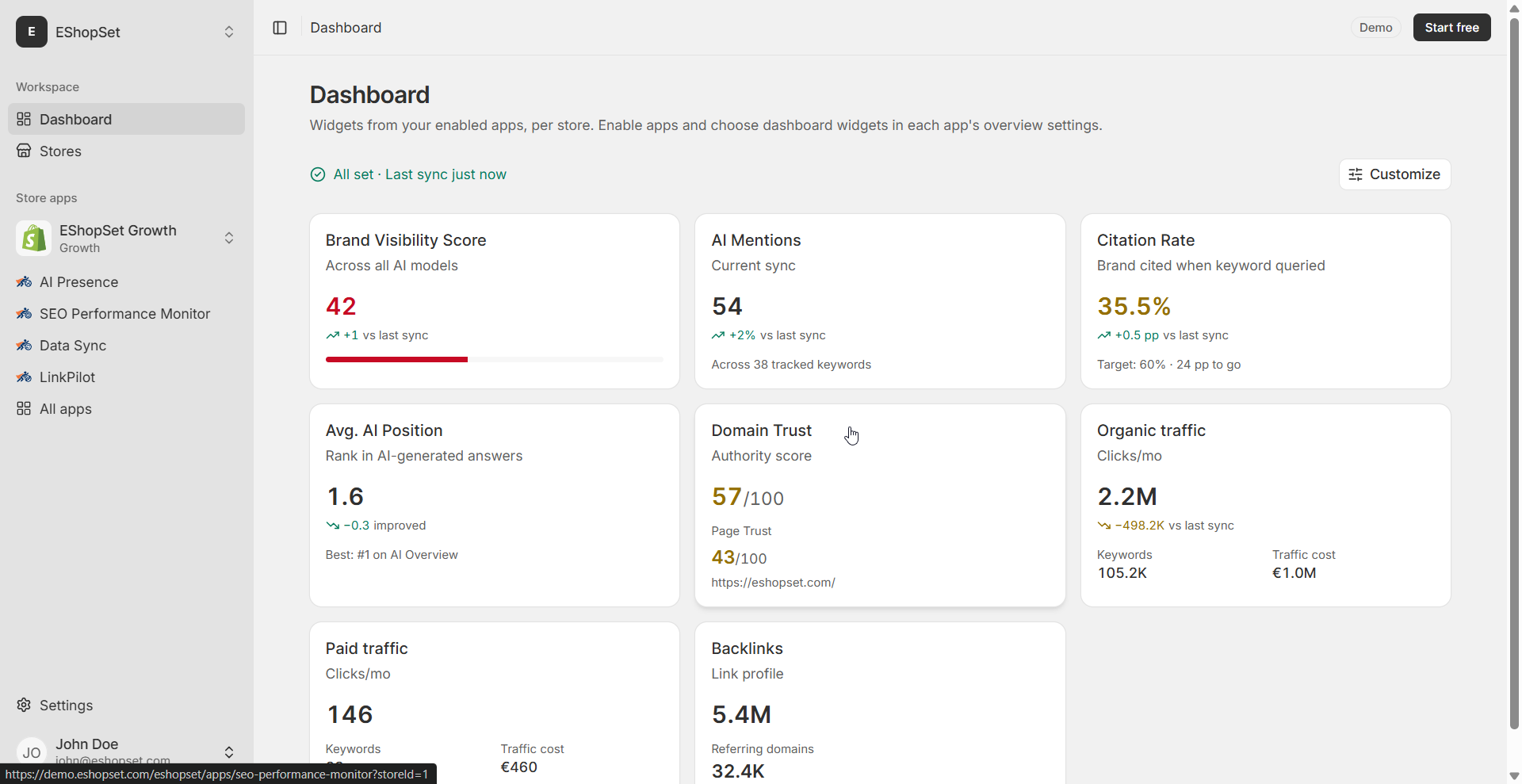
We completely resonate with the original poster's dilemma. The fear of a silent SEO killer lurking post-deploy is very real for Shopify merchants. While integrating directly with CI/CD pipelines is a developer-centric feature, merchants absolutely need robust, frequent monitoring for their store's SEO health. Our SEO Performance Monitor app is built precisely to bridge this gap, providing essential Shopify overnight SEO alerts and continuous checks on critical elements to ensure your store remains visible and performs optimally, giving you peace of mind.
Ultimately, preventing SEO breakage isn't just about rankings; it's about protecting your store's lifeline. Investing in a system that provides frequent, actionable alerts means you're no longer hoping Google doesn't notice a mistake, but actively preventing it from becoming a problem. Stay vigilant, automate where you can, and keep your Shopify store's SEO health a top priority.