Shopify for Startups: Expert Insights on Launching Your First Online Store
Starting an online store can feel like stepping into a maze. With so many platforms out there, how do you pick the right one, especially when you’re just testing the waters? That’s exactly what the original poster in a recent community discussion was grappling with, wondering if Shopify was too much for a beginner or if it was better to just dive in. The insights shared by fellow merchants and experts offer a fantastic roadmap for anyone in the same boat. Let's unpack the wisdom from that conversation.
Shopify: Your Foundation, Not Just a Stepping Stone
One of the first questions the original poster had was whether Shopify is suitable for a business just starting out. The overwhelming consensus from the community? Absolutely. While some might think of Shopify as a platform for established brands, respondents highlighted its beginner-friendliness and scalability. As one community member put it, starting on Shopify now saves you a migration headache later. It’s about building on a solid foundation from day one, so you can focus on your products rather than technical hurdles.
Navigating Canadian Taxes and Payments with Ease
For our Canadian merchants, taxes (GST, HST, PST, QST) and payment processing are often big concerns. The good news, as several experts pointed out, is that Shopify has you covered. Shopify Payments works seamlessly in Canada, acting as your in-house processor without needing separate Stripe or PayPal accounts. This takes care of the convenience factor the original poster was looking for. Moreover, Shopify's built-in system calculates these provincial and federal taxes at checkout, making compliance significantly easier, even if you still handle the filing.
Mastering Language Laws (Bonjour, Quebec!)
If you're operating in Canada, especially Quebec, language laws are a serious consideration. The community discussion brought up Shopify’s free Translate & Adapt app as a key solution. This app efficiently handles French versions of your pages, including product descriptions, checkout, and order emails, ensuring you meet local requirements without a manual, tedious process. It’s a huge relief for anyone worried about multilingual site management.
Your Store vs. The Marketplace: A Balanced Approach
The original poster considered platforms like Etsy for initial traffic, a common strategy for digital products like invitation and sticker templates. While Etsy can be a great traffic source and handles some tax collection, community members also voiced valid concerns about account suspensions and not owning your customer relationships. The expert advice here was clear: treat Etsy as a traffic generator, but make your Shopify store your true home. By running your own store, you build your own customer list and aren't reliant on a third-party platform's whims. This hybrid approach gives you the best of both worlds – marketplace visibility and the security of your own brand.
Seamless Product Management and Expansion
Whether you're starting with digital templates or planning to expand into physical products with Print-on-Demand (POD), Shopify offers robust solutions. POD services like Printful or Printify plug directly into Shopify, making it easy to add physical goods later without changing your platform. For managing your initial product catalog, especially if you have many templates, tools that facilitate Shopify product sync from spreadsheet can be incredibly helpful for bulk uploads and updates. This ensures your catalog is always accurate and up-to-date with minimal manual effort.
Don't Forget Branding and Domains
Finally, naming and branding came up as critical early steps. Before you commit to a name or print anything, ensure you check three things: the availability of your desired .com and .ca domains, your social media handles (Instagram, TikTok), and conduct a quick trademark search (CIPO for Canada, and the Quebec business register if applicable). Securing these early prevents costly rebrands down the line.
EShopSet Team Comment
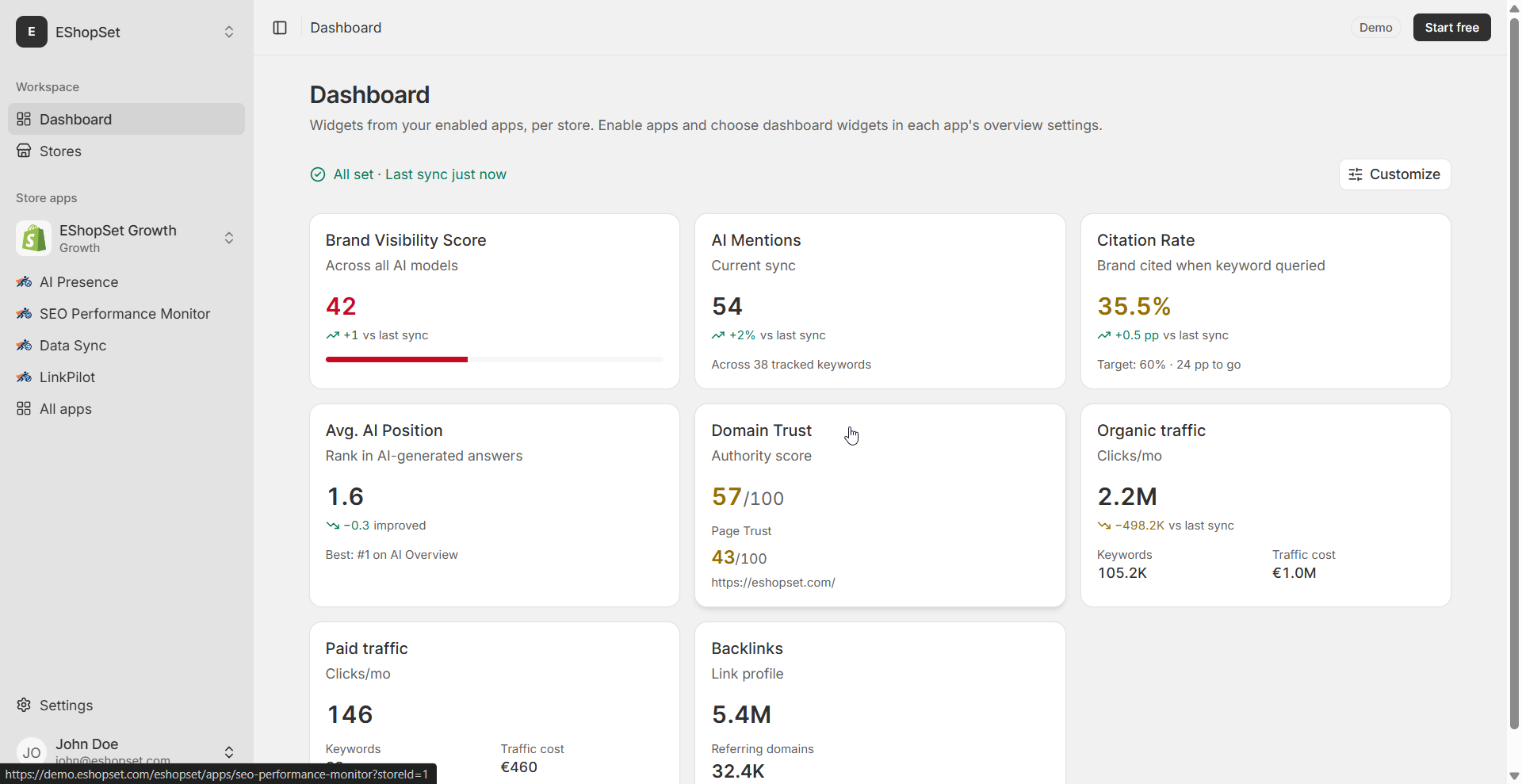
The community's insights powerfully underscore the value of choosing a robust, scalable platform like Shopify from the outset. We wholeheartedly agree that owning your store on Shopify gives you the control and flexibility needed for long-term success, especially when complemented by powerful apps. For new stores, leveraging tools like SEO Performance Monitor is crucial for gaining visibility and understanding how your products rank, while AI Presence can significantly streamline content creation, helping you craft compelling product descriptions and even localize content by leveraging various Shopify AI mentions by model for different linguistic nuances. Furthermore, Data Sync ensures your product information is always consistent and easily manageable, whether you're importing initial data with Shopify product sync from spreadsheet or updating existing catalogs.
Ultimately, the consensus is to start lean, validate demand, but do so on a platform that supports your growth. Shopify provides the infrastructure, taking care of many complexities like hosting, payments, and taxes, allowing you to focus on what truly matters: your products and your customers. This approach minimizes the technical overhead, keeps you engaged, and sets your business up for sustained success.