AI Content Watermarks: What Shopify Merchants Need to Know for SEO and Authenticity
Hey everyone! There's been a lot of chatter recently about AI-generated content, especially with the news from Anthropic about how their Claude models will be watermarking text. It's a topic that really hit home in a recent community discussion I followed, and it brings up some crucial points for us Shopify merchants and store operators.
The original poster shared some key details from Anthropic: the watermarking won't affect content quality, won't be visible to readers, adds no hidden characters or cost, and crucially, carries no identifying information. This move is largely driven by new EU regulations requiring AI providers to mark AI-generated content. Sounds straightforward, right? Well, the community had some thoughts.
The Great AI Watermark Debate: Skepticism and Solutions
Right off the bat, many community members expressed skepticism about how effective these watermarks would truly be. One respondent pointed out that if a detection tool is available, it could easily become part of a pipeline to remove the watermark. Think about it: you could use the detector as a success metric for a quick rewrite script, essentially 'laundering' the AI text. Another person likened this to the old thesaurus spinners used for low-budget SEO content – a method that often reduces quality while trying to bypass detection.
The discussion quickly moved to how platforms would actually detect this. Anthropic mentioned releasing a watermark API for testing, and the general consensus was that major platforms like social media sites would likely auto-run this detection on all new content. The goal? To tackle widespread misinformation and potentially label AI-generated posts. But this sparked another concern: what about mis-flagging?
The Fear of False Positives and 'AI Slop'
This is where it gets tricky. Several community members highlighted that current AI detectors already mis-flag human-written content, even classics like Frankenstein or Agatha Christie's work! The fear is that certain word combinations or writing styles might inadvertently get flagged as AI-generated, leading to a 'witch hunt' against authentic human content. It's a confusing message for merchants: use AI to be productive, but then risk being penalized or labeled as 'AI slop.' One person perfectly summed it up: "Everyone is throwing mix signals and it’s honestly confusing as hell."
Google's Stance: Quality Over Origin
A big question for us in the ecommerce world is, of course, what does Google think? The original poster clarified Google's stance: they welcome AI content, except for "Scaled Content including Scaled AI Content." This is a critical distinction. What exactly is "scaled content"?
As one community member explained, "Scaled is anything that looks like the publishing architecture and schedule is set by machines and not people and is designed to target search." Essentially, it's about content that lacks a human editorial process, churned out purely to game search rankings. Google's core message remains consistent: they rank usefulness, not origin. A watermark is a detection signal, not a ranking signal. The real headache, as one expert put it, is having a client see a third-party detector flag their page and then needing to explain it.
This means that if your AI-generated content is genuinely helpful, high-quality, and provides value to your customers, Google isn't going to penalize it just because it originated from an AI. The problem arises when AI is used to produce vast amounts of low-quality, unedited, unoriginal content solely for SEO manipulation.
The Human Touch: Your Best Defense
So, what's the takeaway for Shopify merchants? The overwhelming sentiment from the discussion is that the human element remains paramount. If you use AI to generate a rough draft, then rewrite and refine it yourself, adding your unique voice, expertise, and value, you're likely in a good spot. This human editorial process is what Google is looking for, and it's your best defense against any potential AI flags or penalties.
It's also worth noting that watermarking might make it easier to trace content provenance, potentially giving more weight to trusted sources. This means focusing on creating truly valuable, authoritative content for your Shopify store is more important than ever. And don't forget to regularly track Shopify keyword positions for your key products and categories to ensure your content efforts are paying off.
EShopSet Team Comment
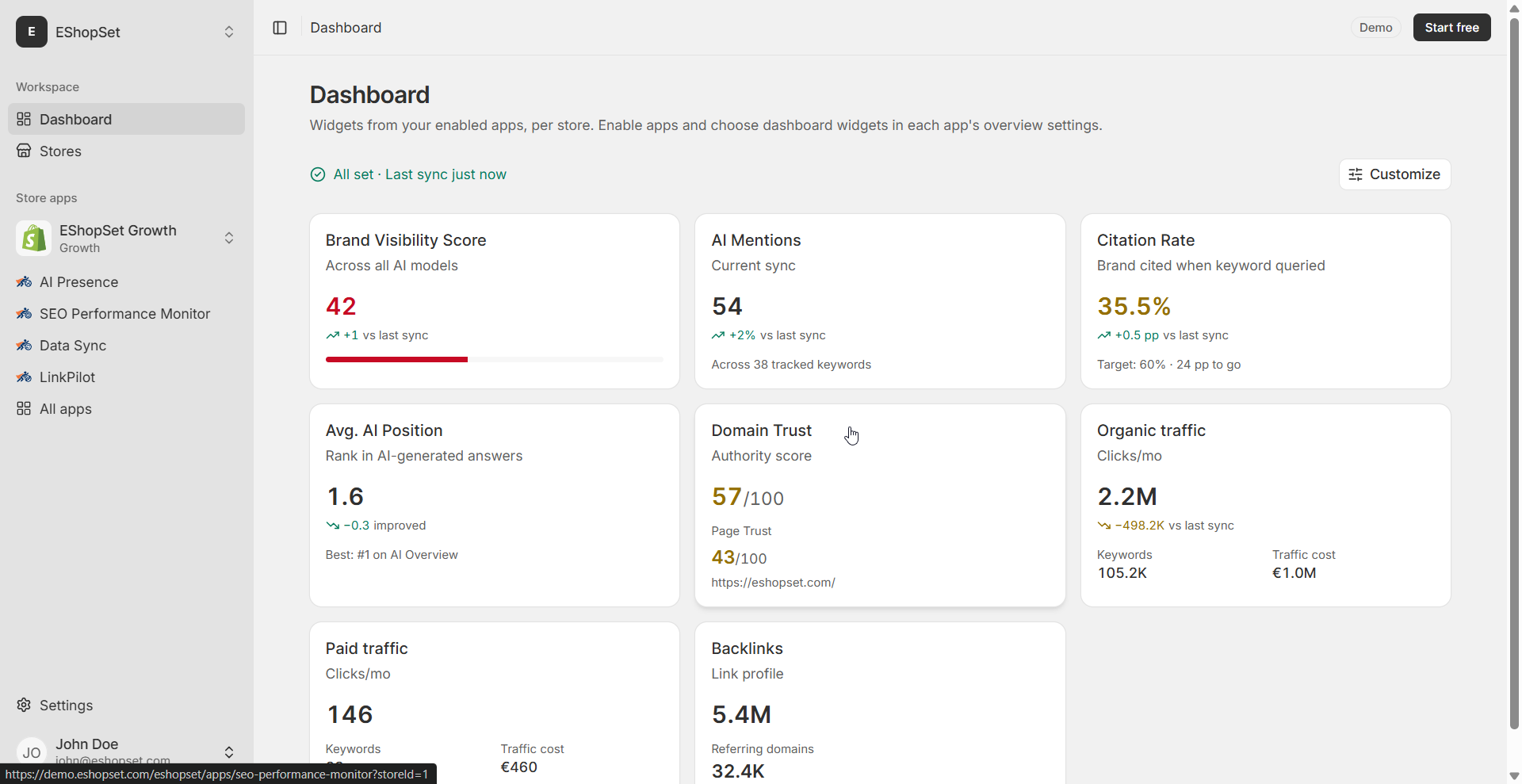
This discussion perfectly encapsulates the current tightrope walk for Shopify merchants using AI. While AI tools like our AI Presence app can be invaluable for generating initial content ideas and drafts, the community's insights reinforce our belief: human oversight and a strong editorial process are non-negotiable for quality and SEO. Don't just generate; refine, personalize, and ensure your content truly serves your customers. Our SEO Performance Monitor can then help you track how your refined content performs in search.
Ultimately, the goal isn't to avoid AI, but to use it smartly. Focus on creating genuinely helpful content that resonates with your audience and provides real value. Stay informed about these evolving AI guidelines, keep an eye on your content's performance, and always prioritize authenticity and quality. Your customers – and Google – will thank you for it.