Shopify SEO Success: Community Insights on Data Sync & AI Presence
Hey everyone, your friendly neighborhood ecommerce ops expert here! I was just browsing through a recent online community 'mega thread' dedicated to SEO help, and it really got me thinking about the kinds of questions and challenges Shopify merchants face daily. It's a goldmine of real-world issues, and while the original poster simply opened the floor for questions, the unspoken need for practical solutions was palpable.
Running a Shopify store means juggling a lot, and SEO often feels like a moving target. From what I've gathered from similar discussions, many of you are grappling with a few core areas. Let's break down some of the most common themes and how we can tackle them head-on.
Navigating Technical SEO Headaches
One of the most frequent types of questions we see revolves around technical SEO. Things like 'Why isn't this page ranking?' or 'How do I fix broken links?' are constant concerns. It’s easy to overlook the foundational elements when you're busy with sales and marketing.
Here’s a quick checklist for common technical SEO issues:
- Crawlability and Indexability: Is Google even able to find and understand your pages? Check your robots.txt and sitemap.
- Page Speed: Slow loading times kill conversions and rankings. Optimize images, use a fast theme, and consider lazy loading.
- Mobile-Friendliness: Most of your customers are on mobile. Is your site responsive and easy to navigate on small screens?
- Duplicate Content: Shopify can sometimes create duplicate URLs (e.g., for product variants). Use canonical tags correctly.
- Broken Links & Redirects: These create a poor user experience and waste crawl budget. Regularly audit your site.
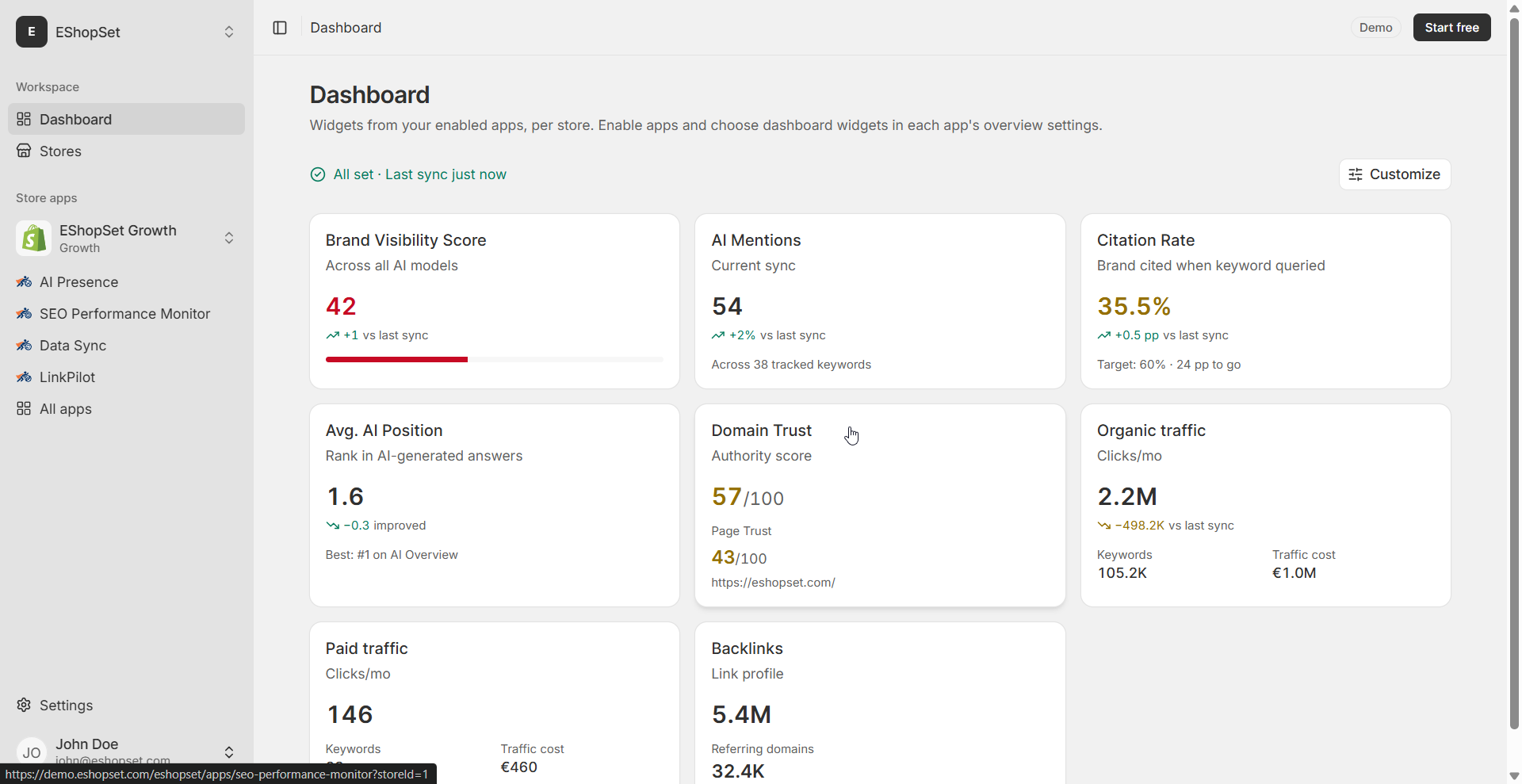
The key here is consistent monitoring. You can't fix what you don't know is broken. Having a tool that constantly scans your Shopify store for these issues, like EShopSet's SEO Performance Monitor, gives you a clear dashboard of what needs attention.
Mastering Content for Today's AI-Driven Search
Another big topic in SEO communities right now is how content needs to adapt to AI-powered search results and 'AI Overviews.' It's not just about traditional search results anymore; understanding how your store's content performs against competing domains in AI answers Shopify is becoming mission-critical. A community member recently asked, 'How do I get my products featured in AI answers?'
Here's how to approach it:
-
Focus on Clarity and Authority: AI models pull factual, concise information. Ensure your product descriptions, FAQs, and blog posts are clear, well-structured, and directly answer potential customer questions.
-
Schema Markup: Implement rich snippets for products (price, availability, reviews), FAQs, and how-to guides. This structured data helps AI understand your content better.
-
Topical Authority: Instead of just individual keywords, think about becoming an authority on specific topics relevant to your products. Create comprehensive content hubs.
-
User Intent: Understand not just what users search for, but *why* they're searching. Tailor your content to fulfill that intent.
This is where AI Presence comes in. It helps you analyze how your content is perceived by AI models and suggests ways to optimize for better visibility in those new search landscapes, ensuring your store is not just found, but cited.
Streamlining Product Data: The Power of a Shopify Data Sync App
Finally, a perennial pain point for many Shopify merchants, especially those with large catalogs or frequent inventory changes, is product data management. I often see questions like, 'How do I quickly update prices for 500 products?' or 'Is there an easier way to get new products onto my store without manual entry?'
Manual data entry is not only time-consuming but also prone to errors that can impact everything from your product listings to your SEO. Inaccurate product data can lead to poor customer experience, returns, and even search engine penalties if product information doesn't match up across platforms.
And that's where a robust Shopify Data Sync app like EShopSet's Sheet2Cart becomes indispensable. Instead of clicking through hundreds of product pages in your admin, imagine updating product details, managing inventory, or even uploading entirely new collections directly from a Google Sheet. It's a game-changer for efficiency and accuracy.
How Sheet2Cart Simplifies Your Operations:
-
Bulk Edits: Need to change a supplier, update prices across a category, or add a new tag to dozens of products? Do it all in one go from a spreadsheet.
-
New Product Uploads: Prepare your product data in a sheet and import it directly to your Shopify store in minutes, complete with images and variants.
-
Inventory Management: Keep your stock levels accurate by syncing with your internal sheets, preventing oversells and undersells.
-
SEO Optimization: Easily update meta titles, descriptions, and product handles in bulk to improve your search visibility.
EShopSet Team Comment
We believe that managing a successful Shopify store in today's environment demands more than just great products; it requires smart, integrated tools. Relying on piecemeal solutions or manual processes for critical tasks like SEO monitoring, AI presence optimization, and catalog management is inefficient and leaves growth opportunities on the table. EShopSet's bundle of apps is designed to empower merchants to tackle these challenges head-on, providing a unified approach to daily operations and ensuring you're always a step ahead.
The beauty of these tools is that they work together. Your SEO Performance Monitor identifies areas for improvement, AI Presence ensures your content is optimized for the future of search, and Sheet2Cart keeps your product data pristine and perfectly synced, acting as the backbone for all your efforts. By addressing these common pain points with integrated solutions, you free up valuable time to focus on what you do best: growing your business. Keep those questions coming, and let's keep building smarter, more efficient Shopify stores together!