Caught a Copycat: How Shopify Merchants Can Fight Brand Impersonation
Imagine waking up, checking your Google Alerts, and finding a website that looks just like yours – but it's not. It's using your logos, your product photos, your carefully crafted descriptions, all under a fake domain. This isn't just a nightmare scenario; it's a real threat, as one Shopify merchant recently shared in a community discussion.
The original poster in this discussion faced exactly this: a fraudulent .shop domain impersonating their Shopify store. They were understandably short on time and looking for a quick, effective solution to take it down, unsure whether to invest in ongoing monitoring services right away.
The Community Weighs In: DMCA to the Rescue
The good news? The community rallied with some incredibly practical advice, and a clear consensus emerged: the DMCA takedown notice is your first, best line of defense. Multiple respondents highlighted its effectiveness and relative ease of use.
- One community member shared, "Just look up a dmca takedown notice template. I've done a few of these and it's pretty easy."
- Another chimed in, suggesting to "Fill Google DMCA report form," which helps get the offending site delisted from search results.
- The sentiment was echoed by several others who affirmed that DMCA takedown notices are "pretty useful" and "really effective."
Beyond the DMCA: Targeting the Source
While a DMCA notice is powerful, some experts offered a more strategic approach. One respondent suggested going beyond just the front-end website:
- "I would use a tool like builtwith to see what cart they are using, often times these imposters don’t use shopify pay. Send the legal takedown letter to the cart provider, if you send it to the front end they can just spin up another store. Cart is more effective." This is brilliant advice – shutting down their underlying commerce platform makes it much harder for them to resurface quickly.
- Another helpful expert recommended contacting the domain registrar/host and any payment processor or other infrastructure provider involved. Why? "Because sometimes you can get faster results by going after the actual service provider rather than waiting on a general monitoring company."
The key takeaway here is to hit them where it hurts: their infrastructure. This makes it a much bigger headache for fraudsters to simply spin up another fake store.
Your Action Plan: What to Do When You Find a Fake
Based on the community's wisdom, here's a step-by-step guide for Shopify merchants facing brand impersonation:
- Gather Evidence Immediately: Before you do anything else, capture everything. Take screenshots of the fraudulent pages, note the domain details, and collect your original product images, logos, and any other assets that prove you are the legitimate business. This evidence is crucial for your takedown notices.
- Issue a DMCA Takedown Notice: Find a reliable DMCA template online. Clearly state the infringing content, your ownership, and demand its removal. Send this to the website host (which you can often find via a WHOIS lookup).
- Report to Google: Fill out Google's DMCA report form. This helps ensure the fake site doesn't appear in search results, reducing its visibility and potential harm.
- Identify the Backend (If Possible): Use tools like BuiltWith (as suggested by a community member) to see what e-commerce platform or payment processor the fraudulent site is using.
- Contact Infrastructure Providers: Send legal takedown letters not just to the website host, but also to their e-commerce platform (if identified), domain registrar, and any payment processors they might be using. This is a more comprehensive approach.
- Assess for Ongoing Threat: As one respondent wisely noted, if this is a one-off, a focused takedown might be sufficient. If it starts popping up repeatedly, that's when ongoing monitoring services become a more sensible investment.
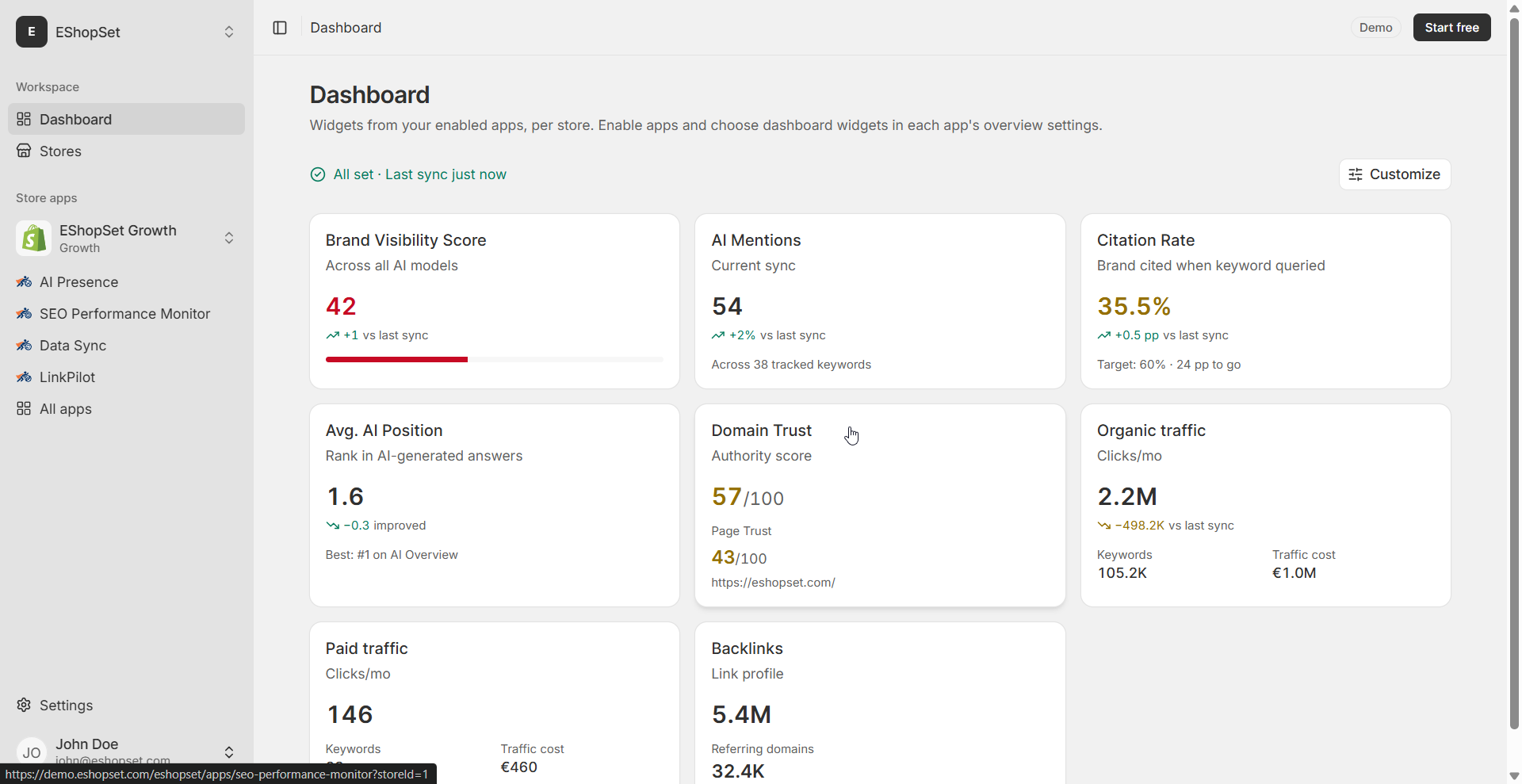
Protecting your brand isn't just about takedowns; it's also about maintaining your legitimate online presence. Ensuring your actual Shopify store is performing optimally, with accurate product data and strong SEO, helps reinforce your authenticity. For instance, regularly checking your Shopify keyword rank tracker can help you spot any unusual dips that might indicate a fraudulent site is siphoning traffic or confusing search engines.
EShopSet Team Comment
This discussion highlights a critical vulnerability for all Shopify merchants. We completely agree with the community's emphasis on immediate, decisive action using DMCA notices and targeting the infrastructure. Protecting your brand's integrity is paramount, and maintaining a robust, authentic online presence is key. Our SEO Performance Monitor, AI Presence, and Sheet2Cart are vital Shopify SEO AI and catalog apps that help you do just that, ensuring your real store's visibility, accuracy, and dominance over any fraudulent copies.
While encountering a fraudulent copy of your store is alarming, remember you have actionable steps to fight back. By being proactive, leveraging the right tools, and understanding where to direct your efforts, you can safeguard your brand, protect your customers, and keep your Shopify store thriving. Stay vigilant, merchants!