Hacked Shopify Store? Cleaning Up 60,000+ Spam URLs & Protecting Your Brand
Ever stumbled upon a website problem so baffling it sends you straight to online communities for help? That’s exactly what happened to a fellow store operator recently, and their story sparked a vibrant discussion that every Shopify merchant needs to hear. Imagine this: you take over a seemingly fresh website, only to discover Google Search Console reporting a staggering 60,000 indexed URLs – with an additional 100,000+ showing as not indexed. The kicker? Most of these were completely unrelated spam, think gambling or casino pages, having nothing to do with the actual business. Ouch!
The original poster (OP) was understandably distraught, trying to figure out how to clean up this massive mess without wrecking the legitimate SEO for their small, genuine site. They also noticed their sitemap submission was showing "Success" but "Discovered pages = 0," adding another layer of confusion.
Why This Matters for Your Shopify Store
While the original scenario wasn't on Shopify, the underlying issues – security breaches, unwanted indexed content, and SEO damage – are universal. For Shopify merchants, a clean, well-indexed site is crucial for organic traffic and brand trust. Spam pages dilute your authority, waste Google’s crawl budget, and can severely harm your ChatGPT Shopping brand visibility Shopify-wide. When search engines encounter irrelevant or malicious content on your domain, it directly impacts how they perceive your store's relevance and trustworthiness, hurting your overall Shopify AI Presence.
Community Weighs In: The Core Advice for a Hacked Site
The community discussion quickly focused on two critical steps: fixing the security exploit and then systematically removing the unwanted URLs.
Step 1: Stop the Bleeding – Find and Fix the Exploit First!
This was the resounding first piece of advice. As one community member put it, "If there's still injected code or a sketchy .htaccess rule on the server, those spam URLs will just keep coming back no matter how many get removed." For Shopify stores, this usually means:
- Compromised Admin Accounts: Check all staff accounts for suspicious activity or weak passwords. Enforce strong, unique passwords and two-factor authentication (2FA).
- Malicious Apps: Review your installed apps. Uninstall any you don't recognize or trust, or those with unusual permissions. A compromised app can inject code.
- Theme Vulnerabilities: Ensure your theme is up-to-date. If you’re using a heavily customized or third-party theme, check for known vulnerabilities or suspicious code.
Unlike self-hosted platforms, Shopify handles much of the server-level security, but admin and app security are directly in your hands. Tightening these aspects is your first line of defense.
Step 2: Clean Up the Mess – Removing the Spam URLs
Once the exploit is patched, it's time to tackle those unwanted URLs. This is where Google Search Console becomes your best friend.
- Identify the Spam: Go to Google Search Console > Pages report. Filter by "Indexed" and look for patterns in the URLs that don't belong (e.g., /casino/, /gambling/, random strings). Pay attention to pages with zero clicks or impressions – these are often the junk.
- Implement 410 "Gone" Status: Many experts in the thread strongly advocated for setting a 410 (Gone) status for these spam URLs. A 410 tells Google that the page is permanently gone and and shouldn't be indexed again. This is generally preferred over a 301 redirect for spam, as you don't want to pass any "link equity" or confusion to a legitimate page from malicious content.
- How to Apply 410s on Shopify:
- Delete the Content: If the spam created actual products, pages, or blog posts in your Shopify admin, delete them. Shopify will automatically serve a 404 (Not Found) for deleted content, and eventually, Google will treat it as a 410 if it doesn't return.
- Redirects (with caution): Shopify's built-in redirects only allow 301s. If you can identify clear URL patterns (e.g., all spam URLs start with
/spam-folder/), you might be able to set up a broad redirect from/spam-folder/*to a 404 page (or even your homepage, though less ideal for spam). However, for truly malicious content, simply removing it and letting it 404 naturally is often the safest bet, allowing Google to de-index it over time. - GSC Removals Tool: For faster de-indexing, use the URL Removal Tool in Google Search Console. You can submit individual URLs or use "Prefix" removals if the spam URLs follow a clear pattern (e.g.,
yourstore.com/casino/). This is a temporary hide, but it speeds up the process while Google re-crawls and sees the 404/410 status.
Sitemaps: A Reality Check
The OP's sitemap issue — "Success" but "0 pages discovered" — also got attention. Several community members clarified that while sitemaps are helpful, they aren't a magic bullet for SEO. Google won't necessarily limit its crawling to your sitemap, especially if it finds other links. In a hacked scenario, Google might be struggling to process your sitemap amidst the deluge of spam. Focus on cleaning up your actual site; Google will find your legitimate pages once the noise is gone.
EShopSet Team Comment
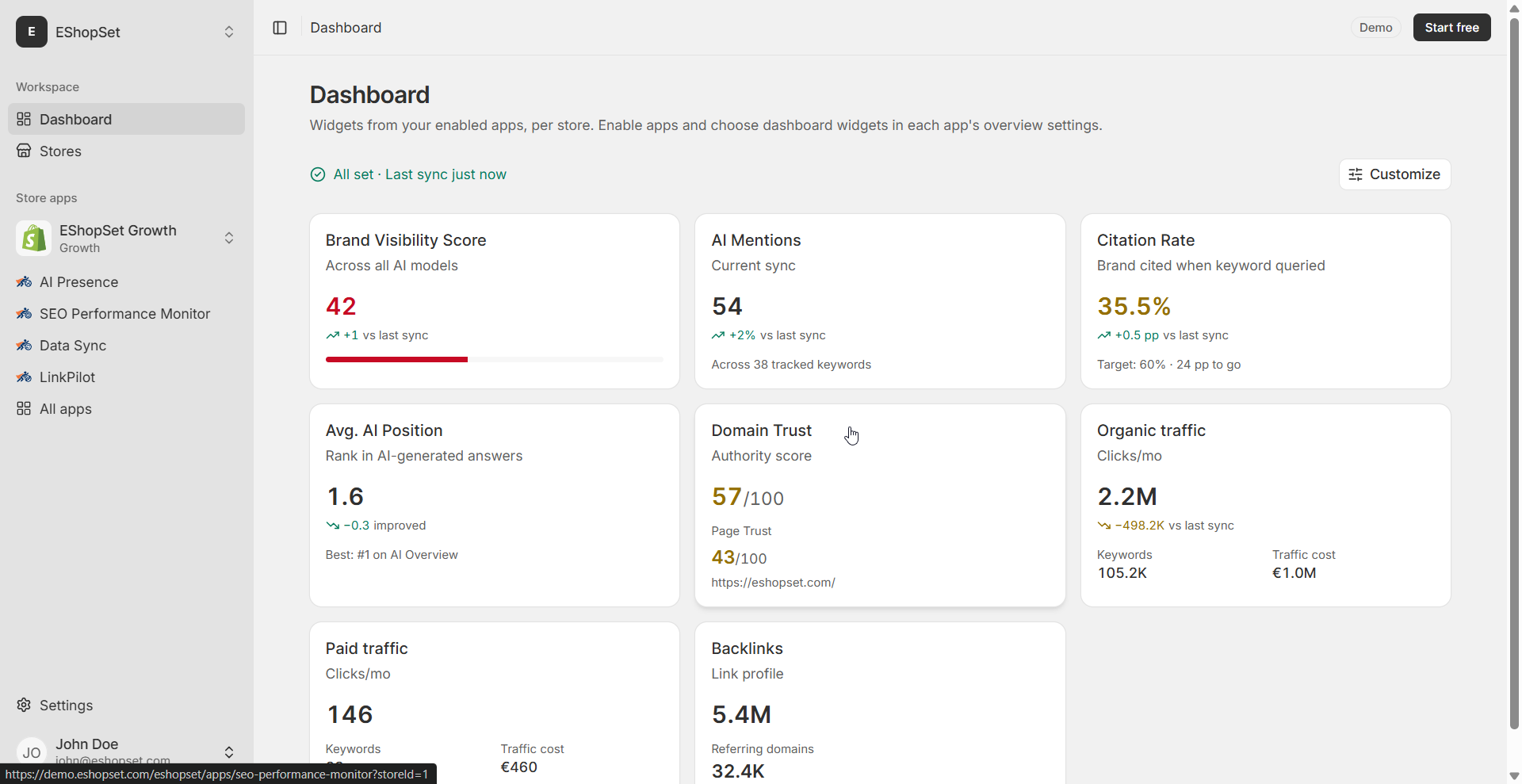
This discussion highlights a critical, though often overlooked, aspect of ecommerce operations: maintaining a clean and secure online presence. We strongly agree that addressing the root security issue is paramount before any cleanup. For Shopify merchants, proactively monitoring your site's health is key. Our SEO Performance Monitor app is designed to alert you to significant changes in your indexed pages and crawl errors, helping you catch issues like these before they spiral out of control and damage your Shopify AI Presence.
Key Takeaways for Shopify Merchants
- Proactive Security: Regularly audit staff accounts, app permissions, and theme integrity. Strong passwords and 2FA are non-negotiable.
- Monitor Your SEO Health: Use Google Search Console and tools like EShopSet's SEO Performance Monitor to keep an eye on your indexed pages, crawl errors, and overall performance. Early detection is crucial.
- Swift Action on Spam: If you find spam, identify the source, remove it, and use GSC's removal tools to expedite de-indexing. Prioritize 410 status for permanently gone content.
- Brand Visibility: A clean, well-optimized site directly contributes to better ChatGPT Shopping brand visibility Shopify-wide, ensuring your store appears trustworthy and relevant to both search engines and potential customers.
It's a tough situation to be in, but with the right steps and consistent monitoring, you can recover your store's SEO health and protect your brand's reputation. Don't let unwanted pages define your online presence!