Beyond Rankings: Why Website Security is a Cornerstone of Technical SEO for Shopify Merchants
Hey there, fellow Shopify merchants and store operators! Let's dive into a topic that recently sparked some great conversation in an online community, and it's one that often gets overlooked in the hustle and bustle of daily operations: the intersection of website security and technical SEO.
When we talk about technical SEO audits, our minds usually jump to things like making sure Google can crawl and index our pages, checking Core Web Vitals for speed, handling redirects, canonical tags, and structured data. These are all absolutely critical for getting your products seen.
But here’s a question that the original poster in a recent discussion brought up, and it’s a brilliant one: Should basic website security checks also be a standard part of a technical SEO audit? They were thinking about things like proper HTTPS configuration, security headers, mixed content issues (where secure pages load insecure resources), and general SSL problems. Even if these don't always directly hit your rankings, they certainly affect user trust and, by extension, your store's long-term health.
The Indivisible Link: Security as a Foundation for SEO
The consensus from the community discussion was pretty clear: while you might hope your webmaster or platform handles core security, these aren't just SEO things. As one community member aptly put it, they are "trust signals to everyone." Think about it: when a customer lands on your Shopify store, they expect a secure browsing experience. A broken SSL certificate, mixed content warnings, or a general sense of insecurity can instantly erode that trust, leading to abandoned carts and lost sales. This erosion of trust, while not a direct ranking factor in every instance, certainly impacts user behavior metrics that search engines observe, such as bounce rate and time on site. A secure site fosters confidence, encouraging longer visits and more conversions, which indirectly signals to search engines that your site provides a valuable user experience.
Beyond the Basics: Where Security Directly Impacts Your Search Presence
However, the discussion also highlighted where security issues absolutely become SEO issues. If your site gets compromised with malicious content injection – perhaps through a vulnerability that allows spammy links or even malware to appear in your search results or on your site – Google will take notice. Here are key areas where security directly intersects with your SEO:
- HTTPS and SSL Certificates: This is non-negotiable. Google confirmed HTTPS as a minor ranking factor years ago. More importantly, browsers flag non-HTTPS sites as "not secure," instantly turning away potential customers. While Shopify handles your core SSL, ensuring all your content loads securely is vital.
- Malware and Content Injection: This is a critical threat. If your Shopify store or an associated app is compromised, hackers can inject spammy links, malicious code, or even redirect users to nefarious sites. Google is quick to de-index compromised sites or display prominent "This site may be compromised" warnings in search results, effectively killing your organic traffic.
- Mixed Content Issues: Even with HTTPS, if your secure pages load insecure resources (images, scripts, stylesheets) via HTTP, browsers will display warnings, and some content may not load. This degrades user experience and can sometimes interfere with how search engines crawl and render your page, potentially impacting indexing.
- Security Headers and Site Health: While not direct ranking factors, proper security headers (like Content Security Policy, X-XSS-Protection) protect your site from various attacks such as cross-site scripting (XSS) and clickjacking. A site that is robustly protected against such vulnerabilities is inherently more stable and reliable, contributing to a consistently positive user experience that search engines favor.
Shopify Merchants: Your Role in a Secure Ecosystem
Shopify provides a robust, secure platform, handling much of the underlying infrastructure, including server security, network protection, and automatic SSL certificates. This is a huge advantage for merchants. However, your responsibility extends to how you manage your store within this ecosystem. This includes:
- App Security: Every app you install introduces a potential point of vulnerability. It's crucial to vet apps, keep them updated, and remove any you no longer use.
- Theme Security: Custom themes or heavily modified themes can introduce security flaws if not coded correctly or kept updated.
- Data Integrity: Ensuring the data flowing into and out of your store is secure and accurate.
- Access Management: Strong passwords, two-factor authentication (2FA), and limiting staff permissions are essential.
Leveraging EShopSet for a Secure and Optimized Shopify Store
At EShopSet, we understand that daily operations for Shopify merchants demand efficiency without compromising security or SEO. Our app bundle is designed to empower you with tools that support a secure and high-performing online store:
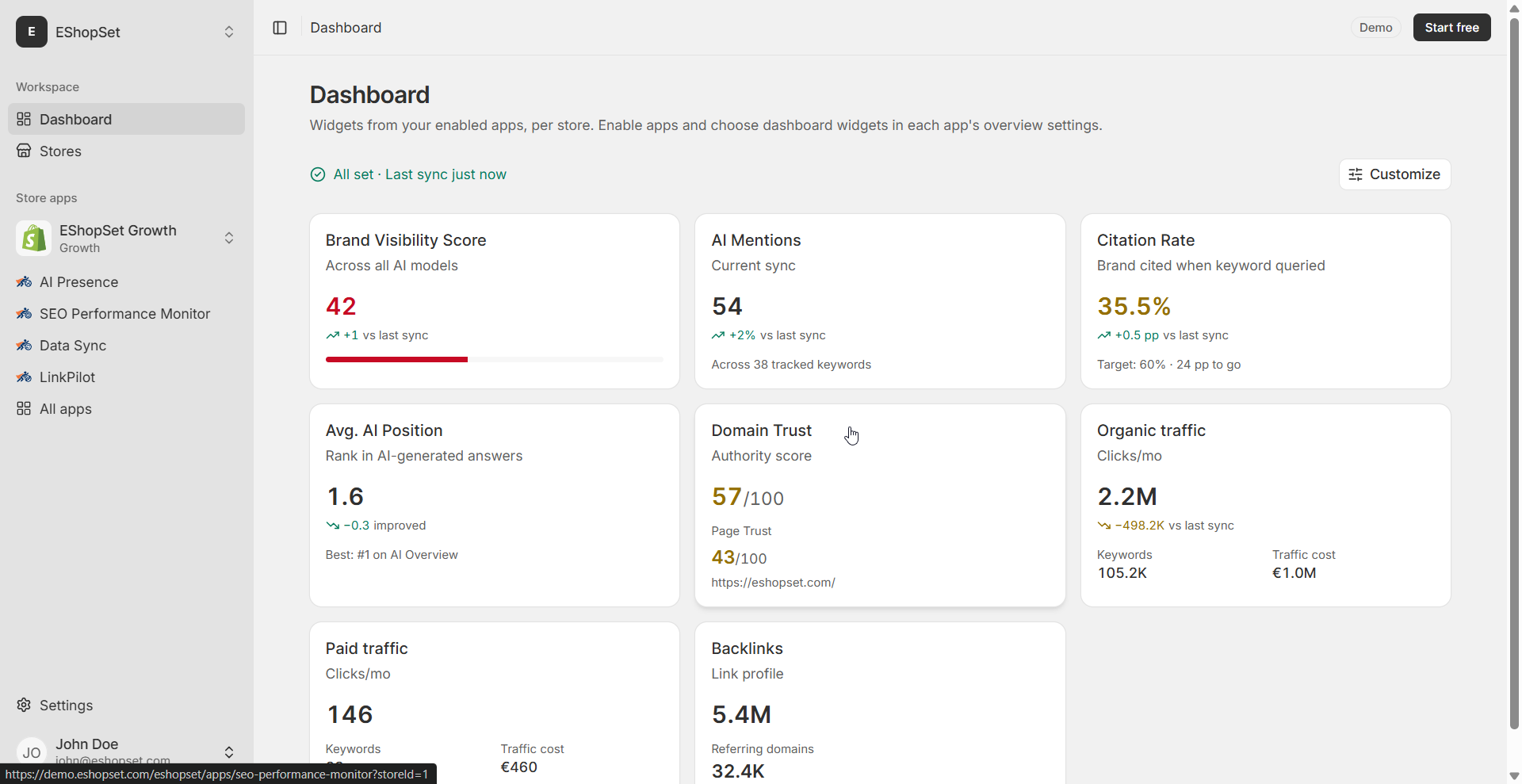
- SEO Performance Monitor: This app is your early warning system. While it focuses on SEO, it can indirectly help you spot potential security issues. Sudden drops in crawlability, unexpected changes in indexed content, or unusual sitemap activity could signal a compromise. By continuously monitoring your store's SEO health, you're also keeping an eye on its overall digital integrity.
- Sheet2Cart: For merchants relying on efficient product data management, Sheet2Cart is indispensable. It ensures secure and accurate product data flow, especially critical for scheduled Shopify product sync operations. Imagine a scenario where a compromised system injects malicious data into your product catalog. Sheet2Cart helps maintain the integrity of your product information, protecting against such vulnerabilities and ensuring your customers see the correct, secure listings.
- AI Presence: Your brand's digital identity is paramount. AI Presence helps you manage and optimize how your brand is perceived online. A secure website is fundamental to a positive brand image. If your site is compromised, it directly impacts your brand's credibility and the effectiveness of your AI-driven presence.
Actionable Security Best Practices for Your Shopify Store
To proactively safeguard your Shopify store and maintain robust SEO, consider these best practices:
- Regular App and Theme Audits: Periodically review all installed apps and themes. Remove unused ones and ensure active ones are from reputable developers and kept up-to-date.
- Strong Credentials and Two-Factor Authentication: Enforce strong, unique passwords for all staff accounts and enable 2FA wherever possible. This is a simple yet highly effective barrier against unauthorized access.
- Monitoring for Unusual Activity: Keep an eye on your Shopify admin logs for any suspicious logins, changes, or activities. Tools like SEO Performance Monitor can also flag unexpected content or indexing changes that might indicate a problem.
- Staying Informed: Keep up with Shopify's security announcements and general e-commerce security best practices. Knowledge is your first line of defense.
In conclusion, the conversation sparked by the original poster in that community thread underscores a vital truth for Shopify merchants: website security is not a separate, niche concern. It is inextricably linked to your store's technical SEO, customer trust, and ultimately, its commercial success. By integrating security considerations into your daily operations and leveraging tools like EShopSet's bundle, you build a more resilient, trustworthy, and discoverable online store.