When Your Shopify Store Goes Dark: Lessons from a .SHOP Domain Outage
Imagine this: you wake up, check your Shopify store, and it's gone. Not just slow, but completely unreachable. Your customers can't access it, and panic sets in. This exact scenario unfolded recently for many merchants using .shop domains, sparking a crucial discussion in an online community that offers vital lessons for every Shopify store owner.
The original poster in the community conversation described the terrifying situation: "Anyone else seeing this? Massive issue. WTF. Cannot access our websites, neither can customers." The immediate fear, understandably, was that something had gone terribly wrong with their individual Shopify store or settings. But as the conversation unfolded, a clearer, more systemic problem emerged.
Unpacking the .SHOP Domain Dilemma
It quickly became clear that this wasn't an isolated incident or a Shopify-specific problem. As one community member pointed out, "It's not a shopify problem. But yes the domains are down." The root cause, as explained by another respondent, was an issue with the .shop registry's name servers. Essentially, the fundamental system responsible for translating human-readable domain names (like yourstore.shop) into computer-readable IP addresses had a hiccup. This meant that no matter how perfectly configured your Shopify store was, the internet simply couldn't find it.
This type of outage, affecting an entire Top-Level Domain (TLD) like .shop, highlights a critical, often overlooked aspect of running an online business: the intricate web of third-party services your store relies on. From your domain registrar to your payment gateway, each component is a potential point of failure. One community member wisely noted, "A good reminder to think carefully about what systems your business relies on."
Don't Panic: Smart Diagnostics During an Outage
When your store goes down, the first instinct might be to frantically change settings, reconfigure DNS, or even contact Shopify support assuming it's an internal issue. However, as the community discussion showed, a widespread external outage calls for a different approach. One experienced member offered excellent advice:
- Avoid hasty changes: "If multiple unrelated .shop stores are unreachable at the same time, I'd avoid changing DNS or store settings until you know it's not a wider domain/registry issue. Definitely don't start randomly reconnecting domains while it's unstable."
- Check your default Shopify URL: "Does the store still load through its default platform URL?" This is a crucial diagnostic step. If your store loads fine at your .myshopify.com address, but not your custom .shop domain, it strongly points to a domain-level issue, not a Shopify platform problem.
- Identify the error type: "Are you seeing DNS errors, SSL errors, or just timeouts?" Knowing the specific error message can help pinpoint the problem. DNS errors, as in this case, indicate the domain isn't resolving.
Several merchants initially suspected their own recent actions or even AI tools they were experimenting with. One respondent humorously shared, "down for me too, i had chatgpt working, i thought it broke something lol." This common reaction underscores the importance of having a clear diagnostic process before jumping to conclusions.
EShopSet Team Comment
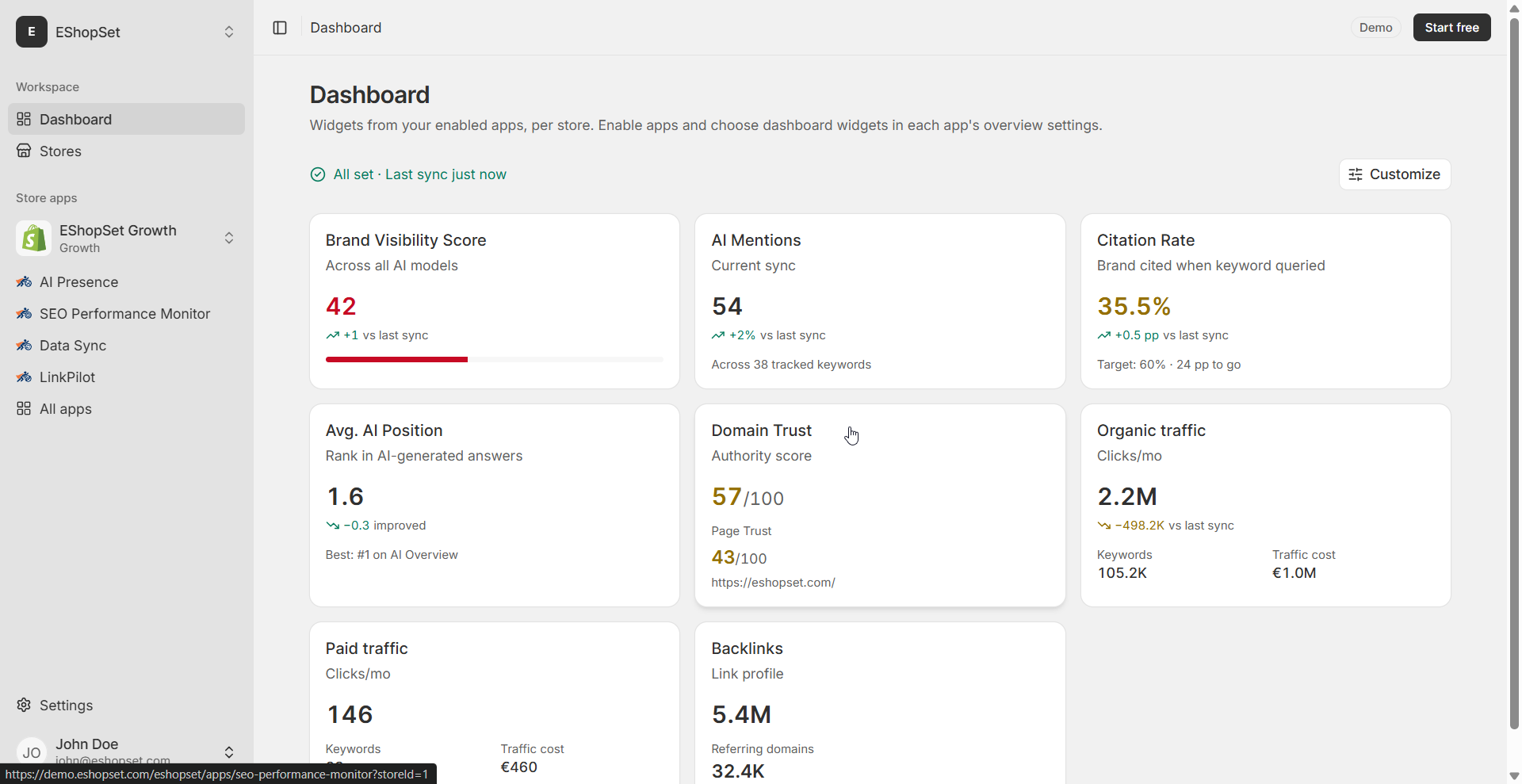
This community discussion is a powerful reminder that while Shopify provides an incredibly robust platform, external dependencies like domain registries are critical. A domain outage directly impacts your visibility and sales, making robust monitoring essential. Our SEO Performance Monitor would immediately flag a dramatic drop in traffic and accessibility, alerting you to investigate. Similarly, AI Presence relies on your store being online to analyze and optimize your content for AI visibility, and an outage would severely impact its effectiveness. Even for daily tasks like a Shopify product sync from spreadsheet, an inaccessible store means you can't verify your latest catalog updates. Proactive monitoring and understanding external risks are paramount for business continuity.
Beyond the Outage: Building Resilience
While you can't prevent a domain registry from having an issue, you can build resilience into your operations. This includes:
- Choosing a reliable domain registrar: Do your research. Look for registrars with strong track records and clear status pages.
- Understanding your tech stack: Know what services your store relies on, beyond just Shopify itself.
- Having a communication plan: If your store is down, how will you inform customers? Social media, email, or a temporary landing page can be crucial.
- Monitoring: Set up uptime monitoring for your domain. Many services will alert you the moment your site goes offline, often before your customers even notice.
The experience of the .shop domain outage is a stark reminder that in the world of ecommerce, a stable online presence is the bedrock of everything else. By learning from these community experiences and implementing smart diagnostic and preventative measures, you can better protect your Shopify store from unexpected disruptions and keep your customers happily shopping.