Unraveling the Mystery: Why Your New Shopify Pages Aren't Indexing (and What to Do)
Hey fellow Shopify merchants and store operators! Ever felt like you're doing everything right with your new product pages or landing content, only to see them languishing in Google Search Console's 'Discovered – currently not indexed' purgatory? You're not alone. This is a surprisingly common, and incredibly frustrating, challenge.
Recently, I stumbled upon a really insightful community discussion where a merchant, running an established site with millions of clicks, was facing this exact problem. Their older pages were indexing fine, but new ones, created since January, just weren't getting picked up automatically. The kicker? If they manually requested indexing, Google would crawl and index the page almost immediately. This tells us a lot about what might be going on, and it's not always a technical blocker.
The Core Issue: Crawl Prioritization, Not Always Technical Roadblocks
The original poster's experience, where manual indexing works instantly, is a huge clue. As one community member pointed out, this strongly suggests an issue with crawl prioritization rather than a fundamental technical problem. Google can crawl your pages; it just isn't choosing to do so through its regular discovery process.
Think of it like this: Google has an enormous web to crawl. It optimizes its resources by prioritizing pages it deems most important or popular. Pages with existing traffic and high authority get crawled frequently. New pages, especially if they don't immediately signal high importance, might get placed in a slower crawl queue. Manual submission essentially pushes them to the front of the line.
What Signals Might Be Missing?
The discussion highlighted a few key areas where signals might be weak or misleading:
- Sitemap `lastmod` Trustworthiness: This was a brilliant insight from one respondent. If the `lastmod` (last modified) date in your XML sitemap isn't accurate – perhaps it's being stamped with a build date or a date that doesn't reflect actual content changes – Google might stop trusting your sitemap as a reliable scheduling hint. When this happens, Google falls back on other signals, like internal links, which might not be enough for new pages. This could explain a sudden change in indexing behavior around a specific time, like the 'January' mentioned by the original poster.
- Internal Linking Strength: While the original poster had added stronger internal links, the consensus was that these links need to come from genuinely high-authority, frequently crawled pages on your site to truly make a difference for new content. Linking from less important pages might not be enough to signal urgency to Google.
- Content Quality and Relevance: Several experts emphasized that indexing isn't just about getting crawled; it's about *staying* indexed and being deemed relevant. If new pages aren't seen as high quality or highly relevant to your site's core topical authority, Google might index them after a manual request but then deprioritize them or even drop them from the index later. There isn't a 'quality check' at the initial crawl, but the importance and relevance to your site's authority are critical for long-term indexing and good Shopify product SEO rankings.
Actionable Steps for Your Shopify Store
Based on this illuminating discussion, here's what you can do to get your new Shopify pages indexed faster and more consistently:
- Audit Your Sitemap `lastmod` Dates: This is a crucial first step. If you have a staging environment or a development process that might be stamping incorrect `lastmod` dates on your sitemap, fix it. Ensure the `lastmod` date genuinely reflects when the content was last updated. Compare this behavior with any other sites you manage that are indexing well.
- Strengthen Internal Linking Strategically: Don't just add links; make them count. Link your new product pages and content from your most authoritative, frequently crawled pages. Think about your homepage, category pages, and popular blog posts. Make sure these links are contextually relevant and use good anchor text.
- Focus on Content Quality and Uniqueness: Ensure every new page offers substantial value, is unique, and is highly relevant to your site's overall topic. Thin content or pages that closely resemble others on your site can signal lower importance to Google.
- Monitor Your Crawl Stats in Search Console: Keep a close eye on your crawl stats and indexing reports. Use the URL Inspection tool not just for manual submission, but to understand Google's perspective on your pages. Look for patterns in 'Discovered – currently not indexed' versus 'Indexed.'
- Compare and Learn from Success: If you have another Shopify store or even a section of your current store that indexes well, meticulously compare its new page creation and linking strategy. Look for subtle differences in templates, URL patterns, or how `lastmod` dates are handled.
EShopSet Team Comment
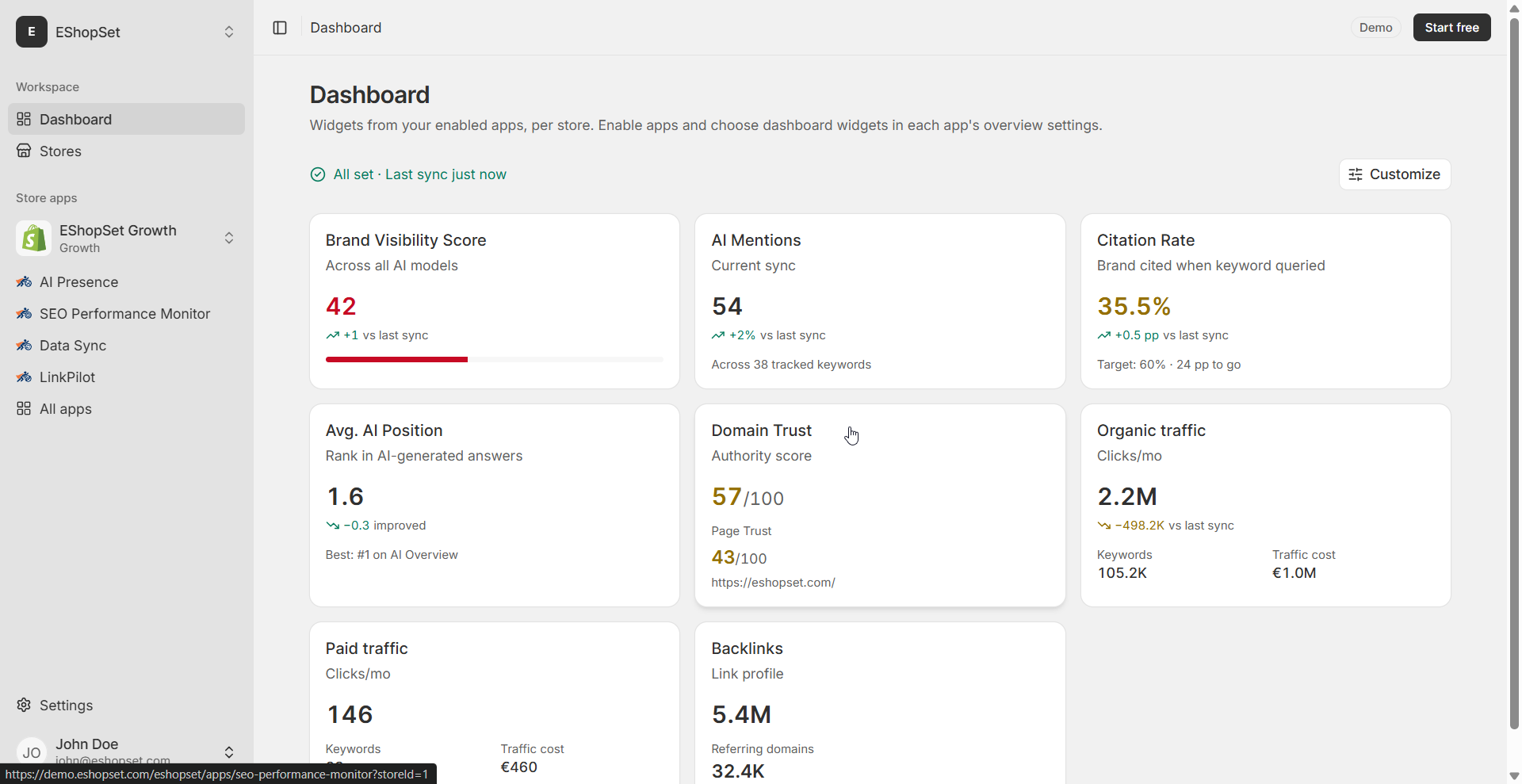
This discussion perfectly illustrates the nuanced challenges of SEO beyond just technical fixes. We strongly agree that crawl prioritization and the trustworthiness of signals like `lastmod` are paramount. For Shopify merchants, continuously monitoring your Shopify SEO overview dashboard within SEO Performance Monitor is crucial for identifying these indexing patterns early. Furthermore, leveraging AI Presence can help ensure your new content is consistently high-quality and unique, signaling greater relevance to Google, while Sheet2Cart ensures your product data, which forms the core of many new pages, is always accurate and optimized for discovery.
Getting your new pages indexed efficiently is fundamental to driving organic traffic and boosting your Shopify product SEO rankings. It's a blend of technical hygiene, strategic content creation, and diligent monitoring. By addressing these areas, you can move your new pages from 'discovered' to 'indexed' and start seeing them contribute to your store's success.