Sudden Shopify Ranking Drop? Unpacking Post-Migration SEO Challenges
Ever wake up to find your Shopify store's search rankings have taken an unexpected nosedive? It’s a gut-wrenching feeling, especially when you’ve put so much effort into your online presence. Recently, a fascinating discussion popped up in an online community that perfectly captures this anxiety, and it offers some valuable lessons for all of us running ecommerce operations.
The Mystery of the Disappearing Rankings
The original poster in the discussion was grappling with a significant Google ranking loss for a key page on their B2B services website. This page, which previously performed exceptionally well for "development-related searches," had suddenly become almost invisible for those exact queries. What made it particularly puzzling was that closely related "consulting queries" for the same page were still performing strongly, often ranking in the top positions.
The background included a recent migration from WordPress to Next.js and a change from a 'www' to a non-'www' domain. While the visibility started deteriorating around March–June, the exact cause remained elusive. The original poster had done their homework:
- Google Search Console (GSC) reported the page as indexed.
- The Google-selected canonical matched the intended URL.
- Old URLs were correctly redirecting to the new ones.
- Main content and internal links are present in the initial HTML.
- No 'noindex' directives or redirect loops were found.
Despite these checks, the core problem persisted: a previously strong development query averaged around position 54, while related consulting queries averaged around position 2. This was a classic case of query-specific visibility loss despite seemingly normal indexing.
What the Community Suggested: A Mix of Technical and Competitive Factors
When you're troubleshooting an issue like this, getting diverse perspectives is incredibly helpful. The community discussion brought forward a few key ideas that Shopify merchants can certainly learn from:
- The Migration Minefield: One community member, drawing on years of experience, highlighted how technical intricacies often get overlooked during platform updates or migrations. While their specific example was about WordPress updates, the sentiment is universally applicable: migrations, especially those involving domain changes (like www to non-www), can introduce subtle misconfigurations in meta tags, structured data, or other foundational SEO elements. Even if your basic redirects are in place, deeper issues might be lurking.
- The Ever-Changing Competitive Landscape: Another respondent offered a blunt, but often true, perspective: "Rankings do not last forever." They suggested that the site might simply be getting outranked, possibly due to increased competition or the impact of recent algorithm updates (like a "spam update") affecting backlink profiles. The original poster clarified that they still outranked competitors for related queries, but for the broad keyword, they didn't appear at all. This distinction is crucial – it points to a very specific relevancy or authority issue for that particular keyword, rather than a general site-wide decline.
Actionable Steps for Shopify Merchants Facing Similar Dips
So, what can you, as a Shopify merchant, take away from this discussion if you find yourself in a similar predicament?
1. Conduct a Rigorous Post-Migration Technical Audit
If you've recently migrated platforms or made significant URL structure changes, a deep technical SEO audit is non-negotiable. Don't just check a few redirects; verify all of them. Ensure your canonical tags are correctly implemented across your entire store, especially for pages that are experiencing ranking drops. Look for broken internal links, review your robots.txt file to ensure no critical pages are accidentally blocked, and re-examine your structured data markup. This level of detail is critical for catching the subtle issues that can derail your SEO. Tools like our SEO Performance Monitor come into play, giving you clear visibility.
2. Re-evaluate Content Clarity and User Intent
The original poster mentioned revising content and clarifying page intent, which is a fantastic step. Google's algorithms are constantly improving their understanding of user intent. If your page previously served multiple purposes (e.g., both "development" and "consulting" services) and your new content or site structure has subtly shifted its primary focus, it might lose relevance for one set of queries. Ensure your target page clearly and unambiguously addresses the specific keywords it used to rank for. Sometimes, a page might need to be split into two more focused pages to better serve distinct user intents.
3. Perform a Targeted Competitive and Backlink Analysis
Even if you're dominating for some keywords, a specific broad keyword might have new, stronger competitors you haven't noticed. Use competitive analysis tools to see who is ranking for your lost keywords. Have they gained powerful new backlinks? Also, scrutinize your own backlink profile for the affected page. Have you lost valuable links, or have any recent algorithm updates negatively impacted the value of your existing links? This deeper dive can reveal shifts in the competitive landscape or your own authority profile.
4. Embrace Continuous SEO Monitoring
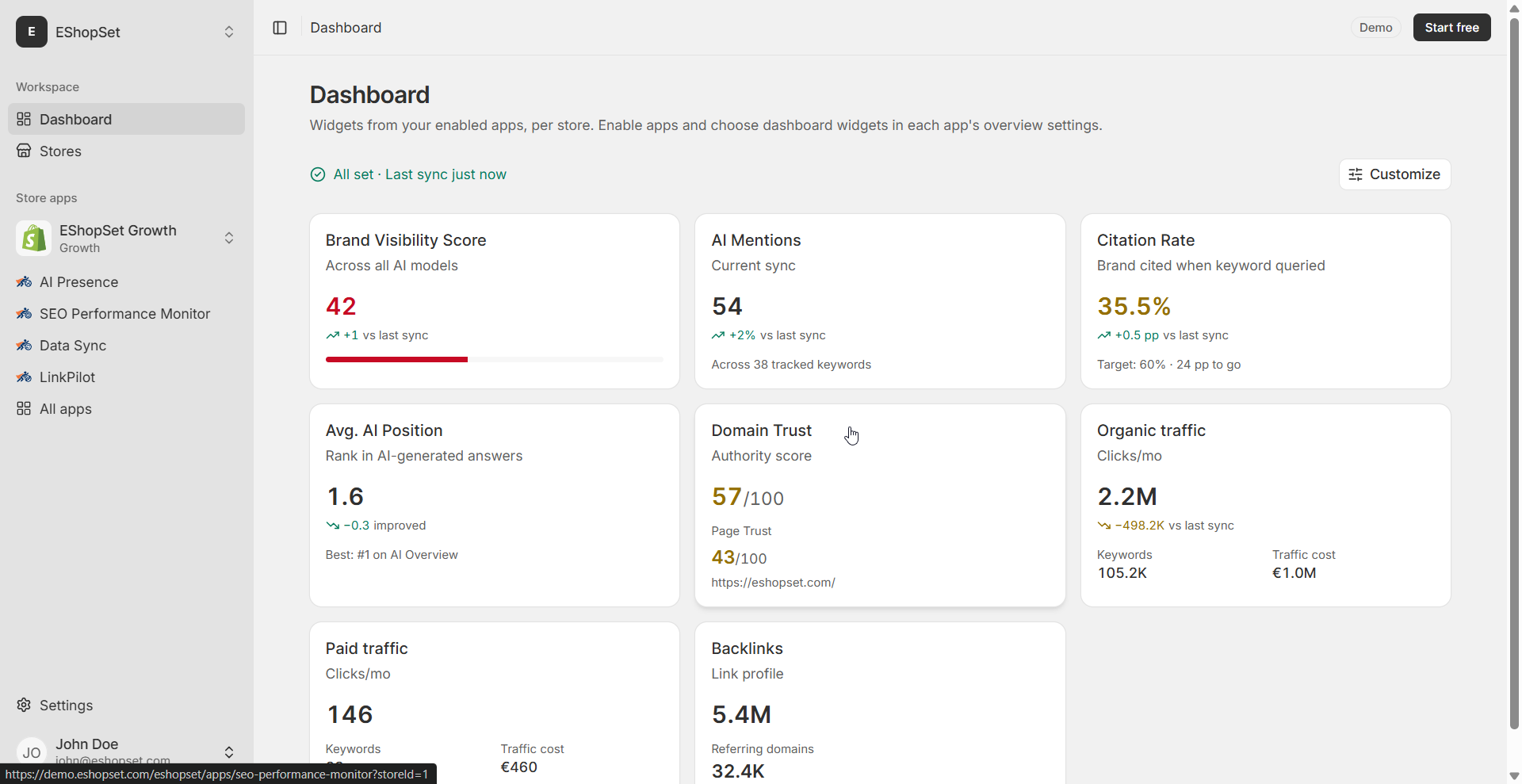
The biggest lesson here is that waiting for a drastic ranking drop is a costly mistake. Proactive and continuous monitoring helps you catch issues early, often before they significantly impact your traffic and sales. This is where comprehensive EShopSet Shopify apps like our SEO Performance Monitor become indispensable. It tracks your keyword positions, identifies indexing issues, and alerts you to changes that could impact your visibility. Investing in an EShopSet Starter plan Shopify can give you access to these essential tools, ensuring you stay ahead of potential problems and maintain your hard-earned rankings.
EShopSet Team Comment
At EShopSet, we see this kind of post-migration ranking mystery all too often. While the community offered valid points on competitive shifts and technical nuances, the key takeaway for Shopify merchants is the absolute necessity of rigorous, continuous SEO monitoring. Our SEO Performance Monitor app is built precisely for this, helping you track keyword positions, identify issues like these early, and ensure your hard work on content and site structure pays off. Don't wait for a drastic drop; proactive vigilance with the right EShopSet Shopify apps can save you a lot of headaches.
Ultimately, SEO is a dynamic and ongoing process. What works today might need adjustment tomorrow. By staying vigilant, understanding the technical underpinnings of your Shopify store, and leveraging the right tools for continuous monitoring, you can navigate these challenges and keep your store visible to the customers who matter most.