Reviving Stalled Pages: An Expert's Guide to Boosting Your Shopify Store's SEO
Ever stare at a Shopify product page or blog post, convinced it's a masterpiece, only for it to stubbornly refuse to climb the search rankings? Or worse, a page that was once a superstar starts to fade? This isn't just you; it's a common dilemma that sparked a lively discussion in an online community recently, where merchants and SEO pros shared their go-to moves when a page just isn't doing what they want.
The original poster perfectly captured the frustration: sometimes 'everything looks fine on paper but the page just doesn’t move.' Other times, a once-successful page starts slipping, competitors jump ahead, or traffic slowly fades. It's a universal challenge in the world of online retail.
First Reactions: Beyond the Frustration
One community member, perhaps speaking for us all, humorously suggested 'Crying and cursing' as a first step – and honestly, who hasn't been there? It’s a valid point because the emotional toll of a page underperforming can be real, especially when you've poured time and effort into it. But once the initial frustration subsides, the real work begins. The original poster highlighted that everyone seems to have a different approach: some wait it out, some tweak immediately, others dive into competitor analysis or historical data.
Deconstructing the Dilemma: Key Questions to Ask
A thoughtful respondent jumped in with some pointed questions, framing the problem from several angles that are incredibly relevant for Shopify merchants:
- 'Are they pogo-sticking for certain queries?' This is crucial. 'Pogo-sticking' means users are quickly bouncing back to search results after landing on your page, indicating your content isn't meeting their intent. For a Shopify store, this could mean a product page is showing up for a search query that implies a different product, or a blog post isn't answering the user's question directly enough.
- 'Should you republish or tweak your title to exclude queries that don't match or have lower CTR?' A brilliant point. Sometimes, your title might be attracting the wrong kind of traffic, leading to high bounce rates and poor engagement. Or, your title simply isn't compelling enough to earn the click, even if you're ranking.
- 'Do you need more topical authority?' This is about depth and breadth. Does your store have enough related content to signal to search engines that you're an expert in your niche? If you sell custom jewelry, do you have blog posts about jewelry care, different metals, or gift guides?
- And, of course, the ever-important: 'What are your competitors doing?'
While another community member rightly pointed out that the approach 'varies depending on the circumstances,' we can distill these insights into a powerful, actionable framework for Shopify merchants facing a stubborn page.
Your Action Plan: Reviving Underperforming Shopify Pages
1. Monitor Your Performance Relentlessly
Before you even think about tweaking, you need to know what isn't working and why. This means regularly checking your page's performance metrics. Are impressions up but clicks down? Is your bounce rate unusually high for specific keywords? A robust daily Shopify SEO report isn't just a nice-to-have; it's your early warning system. Look for patterns: when did the dip start? What changes (on your site or in the market) happened around that time? Tools that provide detailed analytics can highlight these shifts quickly.
2. Understand User Intent (and Pogo-sticking)
If users are hitting your page and immediately returning to Google, your content isn't satisfying their query. Re-evaluate the keywords you're targeting for that page. Is your product description truly answering the questions a potential customer might have? Is your blog post delivering on the promise of its title? For example, if a page about 'men's running shoes' is getting hits for 'best running shoes for flat feet,' your content might need to address that specific niche or you might need to create a dedicated page. Consider enhancing your content with richer descriptions, better images, or even short videos to keep users engaged and reduce pogo-sticking.
3. Refine Your Titles and Meta Descriptions
Your title and meta description are your storefront in the search results. If they're attracting the wrong audience, or if your CTR is low, it's time for a refresh. Ensure they accurately reflect the page's content and entice the right kind of visitor. Focus on clarity and value proposition. A/B test different versions if you can, paying attention to how small changes can impact click-through rates and user engagement.
4. Build Topical Authority
Google loves experts. If you have a single page about 'organic dog treats,' but your competitors have dozens of articles on dog nutrition, ingredient sourcing, health benefits, and different types of treats, they'll likely outrank you for broader terms. Think about creating a cluster of related content around your core products. This could be a series of blog posts, comprehensive guides, or even FAQs that link back to your main product pages. This signals to search engines that you're a comprehensive, trustworthy resource in your niche, building your domain's overall authority.
5. Spy on Your Competitors (Ethically, of course!)
What are your top-ranking competitors doing differently for the same keywords or product categories? Are their product pages more detailed? Do they have more customer reviews or user-generated content? Are they targeting slightly different keywords or using different content formats (e.g., video reviews)? Analyze their content structure, backlink profiles (if possible), and how they address user intent. This isn't about copying; it's about identifying gaps in your own strategy and opportunities to differentiate and improve.
EShopSet Team Comment
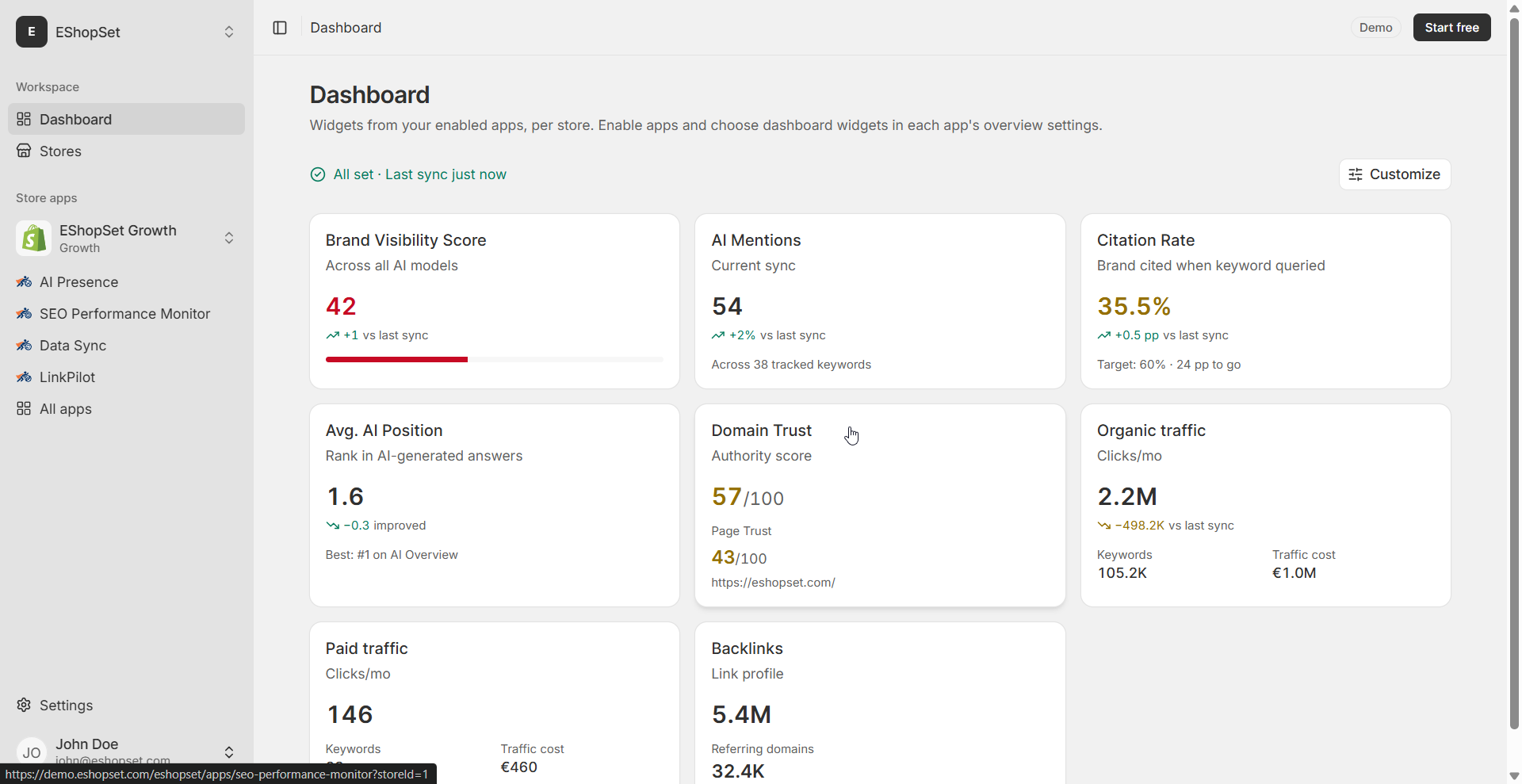
This discussion perfectly captures the ongoing battle of SEO for Shopify merchants. We absolutely agree that a reactive 'fix-it' approach without data is a recipe for frustration. Proactive monitoring and insightful analysis are paramount. Our SEO Performance Monitor app is built precisely for this, giving you that essential daily Shopify SEO report and insights to spot issues before they become major problems. For improving content and topical authority, AI Presence can help craft compelling descriptions and blog posts, while Sheet2Cart ensures your product data is always pristine and optimized for search.
Ultimately, SEO isn't a 'set it and forget it' game. It's a continuous cycle of monitoring, analyzing, adapting, and improving. It can be frustrating, but by applying a structured approach informed by data and competitive insights, you can turn those stubborn pages into star performers and drive more organic traffic to your Shopify store.