Navigating the New E-commerce Landscape: Why Sales are Down Despite Optimization
It’s a tough spot to be in: you’ve poured your heart and soul into optimizing every corner of your Shopify store, investing in SEO, content, and even AI visibility, yet sales are slipping. This isn’t just a hunch; it’s a real concern echoed across the e-commerce community. Recently, a seasoned store owner shared their story in an online forum, detailing a 40% sales drop after 18 years of consistent growth, despite rigorous optimization efforts. Their cry for help resonated, sparking a valuable discussion among fellow merchants and experts.
The Core Problem: Traffic Up, Conversions Down
The original poster highlighted a crucial distinction: their traffic was stable, even good, but conversion rates had plummeted. This immediately reframed the problem from "how do I get more eyes on my products?" to "why aren't these eyes turning into buyers?" It’s a common pitfall to focus solely on traffic, but as one community member wisely pointed out, no amount of product page work fixes people not showing up, and conversely, good traffic means nothing if they don't buy.
What the Community Had to Say: Key Insights
The discussion quickly illuminated several potential culprits:
1. The Economic Headwind
Many respondents pointed to broader macroeconomic factors. Terms like "recession" and "tightening purse strings" came up repeatedly. For businesses in the luxury sector, like the original poster’s, this hit particularly hard. One jewelry industry expert described a "K-shaped economy," where ultra high-end and under-$100 price points might be doing okay, but the middle ground has "bottomed out." People are pulling back on discretionary spending, and some "true" luxury is shifting from goods to exclusive experiences.
2. The AI Revolution in Product Discovery
This was a particularly insightful thread. A community member highlighted how customers are increasingly using AI tools like ChatGPT and Perplexity to ask "best X for Y under $Z" queries. These AI tools then funnel users to a handful of brands, often those with strong online citations or those heavily represented in AI’s training data. The original poster confirmed they were indeed being recommended by AI, but conversions were still down. This suggests that simply being visible to AI isn't enough; you need to optimize for how AI recommends and how customers convert from those recommendations.
3. Competitors and Conversion Killers
Beyond the macro shifts, some members raised internal and competitive factors. Are new competitors winning market share? Are existing ones upping their game or dropping prices? For a conversion drop, it’s critical to look at the funnel. If "add to cart" numbers are holding steady but checkouts are dropping, it often points to issues like unexpected shipping costs or a lack of trust in the final stages. If "add to cart" itself is down, the problem might be with the product page, pricing strategy, or the perceived value of the product itself.
4. The Peril of Constant Tweaks
One respondent offered a different perspective: "Making changes almost every day may be part of the reason things are not working." While continuous improvement is vital, constantly changing elements without giving them enough time to generate meaningful data can make it impossible to identify what’s truly working or failing. It’s about measured iteration, not endless tinkering.
Actionable Steps for Shopify Merchants
So, what can you do if you’re facing a similar situation? Here’s a plan, drawing from the community’s best advice:
- Deep Dive into Analytics:
- Traffic vs. Conversion: Confirm if your issue is indeed conversion. If traffic is down, that’s a different problem requiring SEO and marketing channel review.
- Funnel Analysis: Pinpoint where in the conversion funnel customers are dropping off. Is it product page views, add-to-cart, or checkout?
- Source & Segment Breakdown: Is the conversion drop uniform across all traffic sources (paid, organic, social, email) and customer segments (new vs. returning, device, country)? This helps identify specific weak points.
- Optimize for AI-Driven Discovery:
- Understand AI Citations: How are AI search tools (ChatGPT, Perplexity, Gemini) citing and recommending products in your niche? What prompts are leading to competitor recommendations?
- Craft AI-Friendly Content: Create content specifically designed to answer "best X for Y" queries. Think about the specific attributes AI models look for when recommending products. This isn't just traditional SEO; it's about optimizing for conversational AI.
- Re-evaluate Product & Pricing Strategy:
- Market Fit: Are your products still aligned with current consumer trends and tastes, especially in a tightening economy?
- Pricing Review: Consider if your pricing strategy needs adjustment, perhaps by introducing more accessible options or emphasizing the unique value proposition of your luxury items to justify their cost.
- Enhance Trust & Transparency:
- Shipping Clarity: Be crystal clear about shipping costs and delivery times early in the customer journey.
- Trust Signals: Bolster product reviews, testimonials, and clear return policies. For high-value items, consider adding enhanced security badges or detailed product information to build confidence.
- Measured Iteration:
- Implement changes strategically. Give each significant change enough time to gather data before making further adjustments.
- Use A/B testing to compare the performance of different elements systematically.
EShopSet Team Comment
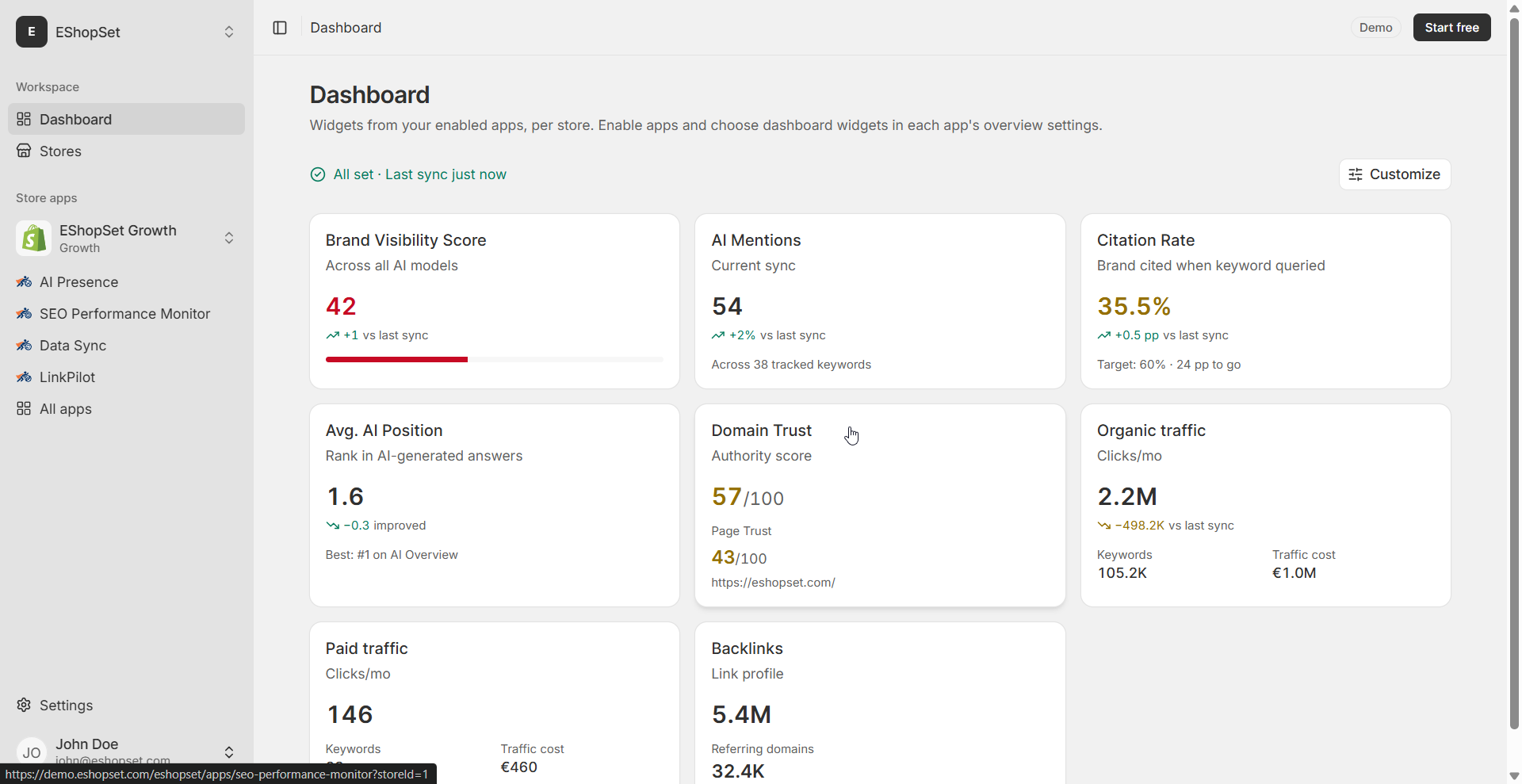
This discussion perfectly illustrates the complex challenges Shopify merchants face in a dynamic market. We strongly agree that simply boosting traffic isn't enough; the focus must shift to understanding and optimizing for conversion, especially with the rise of AI in product discovery. Our SEO Performance Monitor helps you track not just rankings, but how specific SEO changes impact your actual sales funnel, providing crucial insights. For the emerging challenge of AI citations, our AI Presence app is designed to help your products get discovered and recommended by AI search, directly addressing the core issue of converting AI-driven traffic. And when it comes to adapting your product mix or pricing based on market feedback, Sheet2Cart simplifies updating your Shopify catalog efficiently, ensuring your store remains competitive. These are all embedded Shopify Admin apps, making them seamless to integrate into your daily operations.
The e-commerce landscape is indeed changing, but it’s not dying. It’s evolving. By focusing on deep analytics, adapting to new discovery methods like AI, and strategically reviewing your offerings, you can navigate these shifts and not only recover but thrive. Keep learning, keep adapting, and stay connected with the merchant community – that’s where the most valuable insights often emerge.