Navigating SEO Services: What Shopify Merchants Need to Know Beyond the Price Tag
Ever felt overwhelmed trying to figure out what a fair price is for SEO services? You’re not alone. We recently stumbled upon a fascinating community discussion where a store owner asked for advice after being quoted $2,600 per month for 20 hours of SEO work. The responses were a goldmine of insights, and it got us thinking about what Shopify merchants really need to consider when investing in their online visibility.
Is $2,600/Month for SEO a Fair Price? The Community Weighs In
The original poster shared that the $2,600 monthly fee covered an in-depth website audit, backlink building, content creation and publishing, and technical SEO. They also mentioned their site had a perfect 100 score on PageSpeed Insights, thinking that might mean less work was needed.
The community's reactions were diverse. Some respondents felt the price was reasonable, even low, especially for quality work that includes genuine link building. Others thought it was too high or warned against vague promises. A few even offered to do the work for less, highlighting the wide range of services and pricing in the SEO market.
Beyond the Hourly Rate: What Really Matters
One of the strongest themes in the discussion was that focusing purely on hours or a flat rate misses the point. As one community member put it, "Hours mean nothing, and price means very little without clear performance targets & deliverables." Many experts emphasized that merchants should care more about the results an SEO service will generate, not just the time spent. Will it lead to more customers? What's the projected ROI?
This is crucial for Shopify merchants. You're not buying hours; you're investing in increased organic traffic, better conversion rates, and ultimately, more sales. The question isn't "how many hours?" but "what will those hours achieve for my Shopify product SEO rankings?"
The Problem with Vague Deliverables
The original poster's agency pitch included generic terms like "technical SEO" and "content creation." This vagueness was a major red flag for many respondents. What does "technical SEO" entail if the site already has a perfect PageSpeed score? How many articles will be published? What kind of backlinks will be built, and from what quality of sites?
A good SEO strategy needs specific answers to these questions. For instance, when discussing backlink building, knowing the target domain authority (DA) of referring sites and how they plan to acquire them is vital. Monitoring your own Shopify referring domains tracker is key to understanding your site's authority and what kind of links you need. Without clarity, you risk paying for generalized efforts that don't align with your specific business goals.
PageSpeed 100 ≠ SEO Done
A common misconception highlighted in the thread was the original poster's belief that a 100 score on PageSpeed Insights meant their SEO was largely complete. Multiple experts quickly clarified that PageSpeed focuses solely on technical performance – how fast and efficiently your site loads. It says nothing about your keyword strategy, content quality, backlink profile, or whether your content truly matches user intent. A fast site is great, but it's just one piece of the much larger SEO puzzle.
Key Takeaways for Shopify Merchants
So, what can you, a busy Shopify store operator, take away from this discussion?
- Demand Specifics, Not Just Hours: Before signing any contract, ask for a detailed breakdown of monthly deliverables. How many pieces of content? What kind of backlinks? Which keywords will be targeted to improve your Shopify product SEO rankings?
- Focus on Measurable Results: Ask about Key Performance Indicators (KPIs). Will they track organic traffic growth, keyword rankings, conversions, or revenue? Request case studies from similar businesses.
- Understand the Long Game: SEO takes time. Most experts agree you won't see significant results for 4-6 months, sometimes longer. Ensure the contract terms allow for this while also providing an exit if no progress is made.
- Educate Yourself (Even a Little): You don't need to become an SEO expert, but understanding the basics helps you ask the right questions and evaluate proposals. Knowing the difference between technical SEO, on-page SEO, and off-page SEO (like backlink building) empowers you.
EShopSet Team Comment
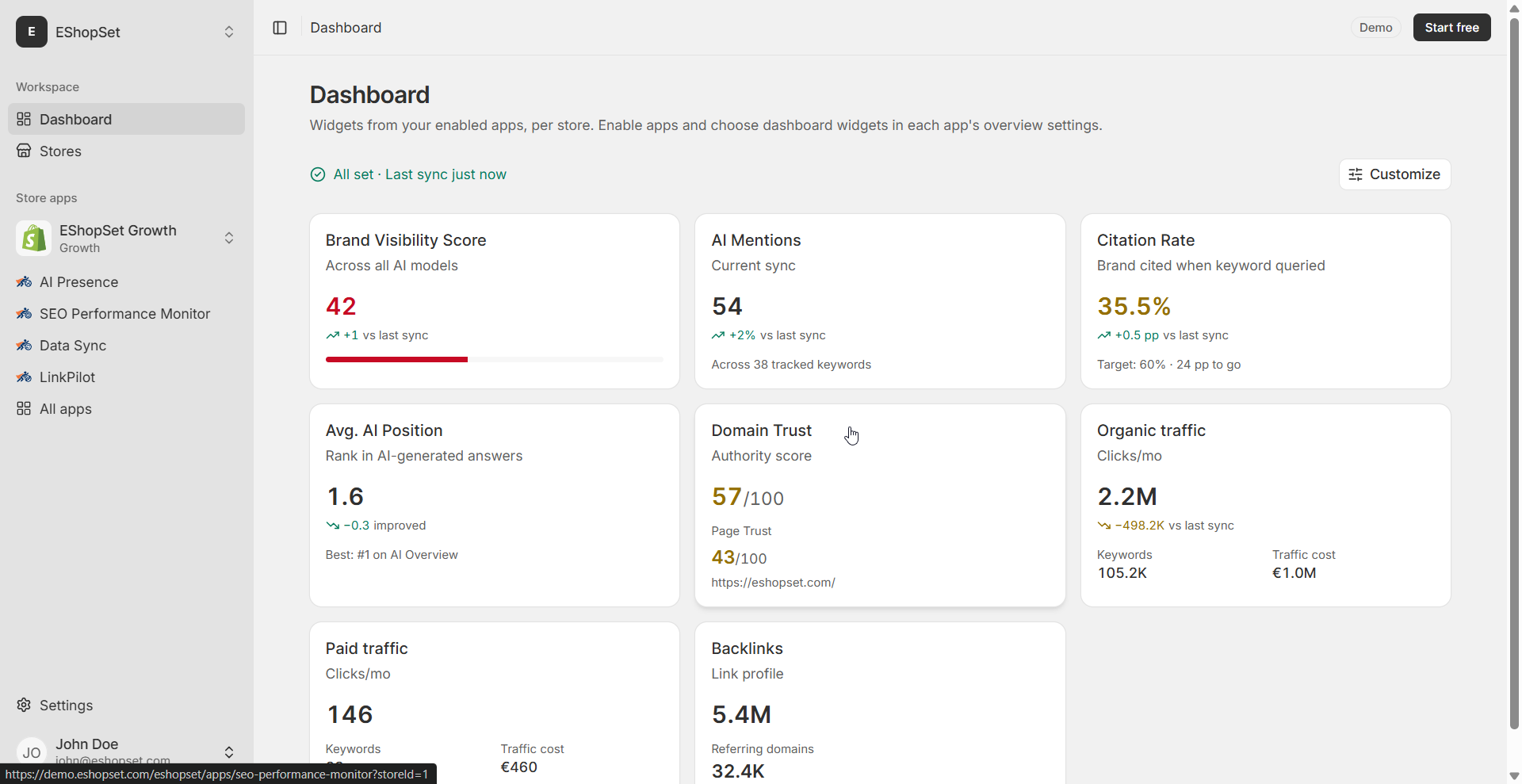
This discussion perfectly illustrates why Shopify merchants need clear visibility into their SEO performance and powerful tools at their fingertips. Relying solely on vague agency promises or hourly rates without defined deliverables is a risky game. With EShopSet, our apps like SEO Performance Monitor give merchants the ability to track their Shopify product SEO rankings, monitor competitors, and keep an eye on crucial metrics like Shopify referring domains tracker, enabling them to either manage their SEO more effectively in-house or hold agencies accountable. Our AI Presence app helps with content optimization for search and AI visibility, and Sheet2Cart streamlines product data management, which is foundational for strong SEO.
Ultimately, whether you choose to work with an agency or manage your SEO in-house, the goal is the same: grow your Shopify store. By being an informed merchant who prioritizes clear deliverables, measurable results, and leverages smart tools, you're much better positioned for success.