Cracking the Code: How Long Until Your Shopify Store Sees Consistent Sales?
It’s a question every Shopify merchant asks, often in the quiet moments between orders: “How long will it take before my store starts making consistent sales?” The journey to predictable revenue can feel like navigating a maze, full of exciting peaks and frustrating plateaus. We recently stumbled upon a community discussion where store owners openly shared their experiences, and the insights are gold for anyone on this path.
The Real Talk: How Long Does Consistency Take?
The original poster kicked off the conversation, expressing a common struggle: sporadic sales, with some days bringing a few orders and others, none. They were curious about others' timelines and the turning points that led to consistent sales.
The answers varied widely, painting a realistic picture of ecommerce entrepreneurship. One community member humorously quipped, “35 years lol jk. 5 years.” While a bit of an exaggeration, it underscored the long-term commitment many experience. Another respondent shared a more encouraging timeline, stating it took about four months to go from random 2-order days to predictable daily orders, citing two major shifts.
What’s clear is that there’s no magic number. As one insightful contributor put it, “There wasn’t really a magic month where it suddenly became consistent. Usually it happens when you find one product/offer and one traffic source that work well enough to repeat, then stop changing everything every few days.” It’s less about a fixed duration and more about the strategic actions you take during that time.
Turning Points: Strategies for Steady Sales
1. Deep Dive into Customer Understanding
Several merchants highlighted the critical importance of understanding what customers truly want. One respondent noted that during their first year, it was “a lot of testing.” In their second year, they shifted focus to “the questions people were asking, the products they kept looking for and the problems they wanted solve.” Customer feedback, they stressed, was invaluable for identifying improvement areas.
Actionable Takeaway: Don't just guess. Actively solicit and analyze customer feedback. Look at search queries within your store, frequently asked questions, and even social media comments to pinpoint unmet needs or popular products.
2. Optimize Your Store & Product Presentation
The visual appeal and clarity of your product pages emerged as a significant factor. A community member emphasized that “improving product photos and descriptions can help a lot. people need to understand what they're buying and feel confident enough to place an order.” Another added that fixing “post-click leaks” on product pages made a huge difference, specifically by providing exact shipping delivery windows and answering top sizing/material questions upfront.
Actionable Takeaway:
- Review your product images: Are they high-quality, clear, and showcasing the product from multiple angles?
- Enhance descriptions: Are they informative, benefit-oriented, and addressing potential customer concerns?
- Boost transparency: Clearly display shipping costs, delivery times, and return policies.
- Leverage social proof: Integrate customer reviews prominently.
3. Diversify & Strategize Your Traffic Sources
The debate between paid ads and organic traffic was lively. While some felt that “mostly depends on ads, and marketing. Stop using them, you will be forgotten in 2 days,” others found impressive growth without them. One merchant reported significant turnover increases over three years, stating, “I do not run ads. Have tested, no results, stopped. I believe the organic SEO is driving traffic and general improvements, new products increase those numbers.” They attributed their success to finding a niche with proven demand and becoming an expert in it.
This highlights a crucial point: ads can accelerate growth, but sustainable consistency often comes from a blend of strategies. Many mentioned social media (FB, IG) and word-of-mouth alongside SEO. Focusing on a niche with “very few keywords” that are constantly searched can be a powerful organic strategy. For merchants looking to understand their organic visibility, robust Shopify link intelligence for merchants is key to tracking where your traffic comes from and how your site ranks for those vital keywords.
Actionable Takeaway:
- Don't put all your eggs in the ads basket. Explore a balanced approach.
- Invest in SEO: Optimize product pages, blog content, and site structure for search engines.
- Niche down: Become the go-to expert for a specific product type or customer need.
- Leverage social channels naturally, not just for paid promotion.
4. Optimize for Conversion & Retention
Beyond getting traffic, converting visitors into buyers and retaining them is paramount. Recommendations included focusing marketing budget on “one core audience or proven hero product,” and setting up automated email flows for abandoned carts and post-purchase follow-ups. Enabling single-click checkout options like Shop Pay was also noted as a way to remove friction.
Actionable Takeaway:
- Identify your star products and channels, then double down on them.
- Implement (or improve) abandoned cart recovery sequences.
- Nurture customer relationships with post-purchase emails.
- Streamline the checkout process to minimize drop-offs.
EShopSet Team Comment
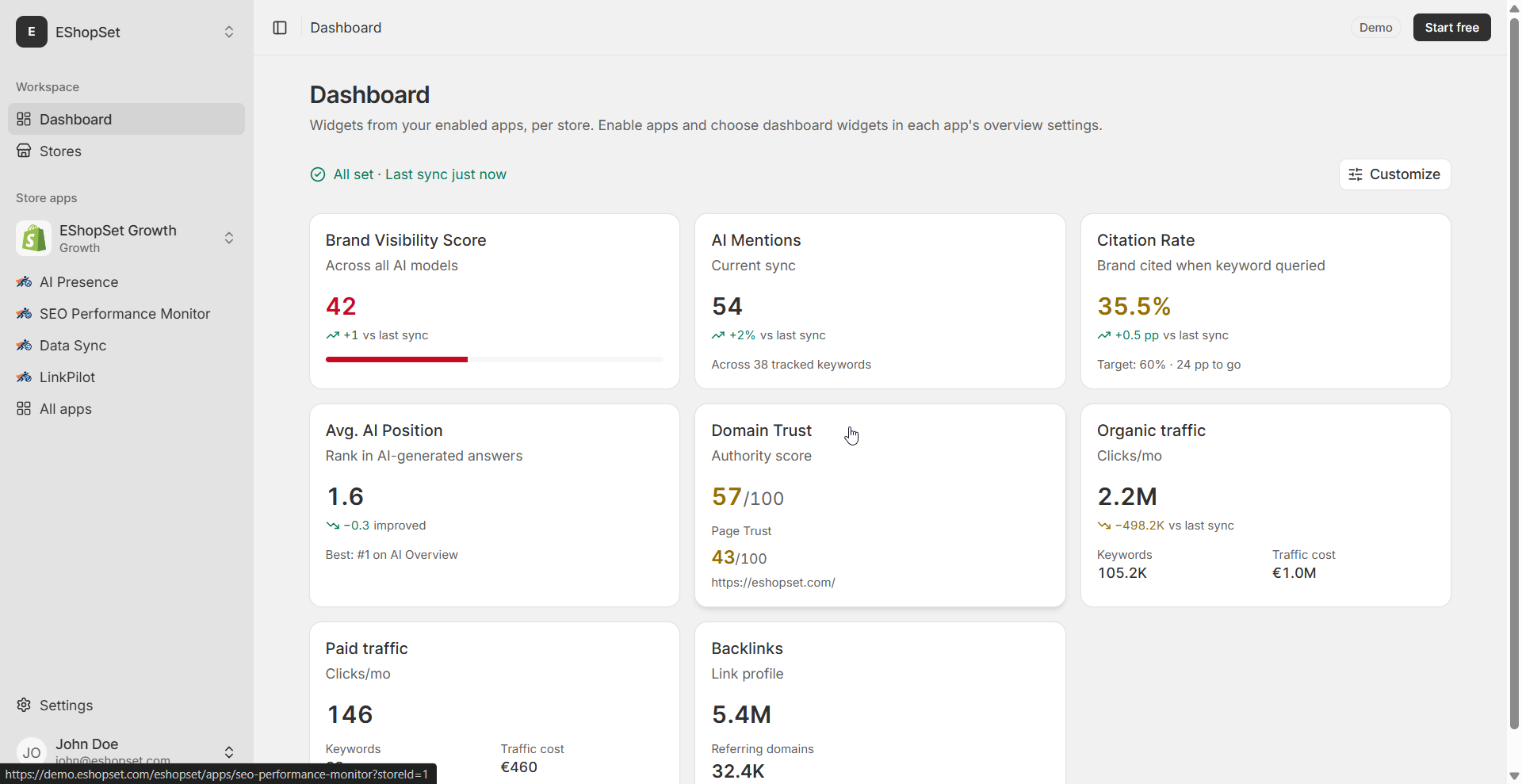
We absolutely agree with the community: consistent sales are a journey of continuous learning and optimization, not an overnight sprint. The emphasis on strong SEO, understanding customer needs, and maintaining brand visibility resonates deeply with what we believe drives sustainable growth. EShopSet's apps are built to streamline these efforts: SEO Performance Monitor helps you track and improve your organic search visibility, while AI Presence ensures your brand is seen and understood across the digital landscape, including through crucial Shopify AI citation tracking. Data Sync keeps your catalog consistent and accurate, freeing you to focus on strategy. These tools are designed to give Shopify merchants the clarity and efficiency needed to move from sporadic sales to predictable revenue streams.
Ultimately, the discussion shows that consistency isn't a destination, but a result of ongoing effort across multiple fronts. It's about listening to your customers, optimizing your store, strategically driving traffic, and making it easy for people to buy and come back. Keep testing, keep refining, and remember that every sale, consistent or not, is a valuable data point on your path to sustained success.