Navigating Google's 'Thin Content' Manual Action: Insights from a Community Discussion
Running a Shopify store means juggling a lot, and sometimes, despite your best efforts, you hit a wall. One of the toughest walls to climb is a Google Manual Action, especially for something as broad as "Thin content with little or no added value." We recently saw a really honest and insightful discussion unfold in an online community where a store owner was grappling with this exact issue, having faced six reconsideration request rejections.
Their situation was tough: thousands of indexed pages in Google Search Console (GSC), but only a handful showing up in actual search results. They had deleted thousands of "SEO articles," then tried rewriting a few, but Google kept saying no. It’s a scenario many merchants dread, and the community offered some stark, but crucial, advice.
The Hard Truth About "Thin Content" and Repeated Rejections
When Google rejects a reconsideration request six times, it's a clear signal: the underlying issues haven't been resolved. As several community members pointed out, Google's reviewers aren't looking for apologies; they're looking at the actual state of your website. Submitting every two weeks, as the original poster did, doesn't give you enough time to make meaningful, structural changes.
Beyond "SEO Articles": What Google Really Wants
The original poster initially focused on removing "SEO pages" and then tried rewriting "SEO articles." This phrase itself, as one respondent noted, can be a red flag. Content shouldn't just exist for SEO; it needs to genuinely serve the user. Many respondents highlighted that even product pages and user guides, which the original poster kept, can be considered "thin" if they lack depth, unique value, or practical, up-to-date information.
The core takeaway here is that every piece of content on your Shopify store, whether it's a product description or a blog post, needs to demonstrate E-E-A-T: Expertise, Experience, Authoritativeness, and Trustworthiness. If your product pages just list specs, or your user guides are outdated screenshots, they might not be adding enough value in Google's eyes. This is also key for things like, how to get your product recommended by chatgpt; AI models also prioritize high-quality, authoritative content.
The AI Content Conundrum
The original poster mentioned using AI for content creation, albeit with a "comprehensive AI-assisted content workflow." Despite this, they still received a manual action. The community's response was blunt: "Everyone thinks their AI content is not crap. It almost always is." This isn't to say AI content is inherently bad, but it often lacks the unique insights, data, and human experience that Google values. It's crucial to ensure AI-generated content is heavily edited, fact-checked, and infused with genuine expertise to avoid it being perceived as generic or thin.
Actionable Steps for Shopify Merchants Facing Similar Issues
So, what should you do if you're in a similar boat, or want to prevent getting there?
- Conduct a Deep Content Audit: Don'n just remove "SEO pages." Every page on your site needs scrutiny. Ask: Does this page offer unique value? Is it genuinely helpful? Does it demonstrate E-E-A-T? For a thorough free shopify seo audit, look beyond just keyword density. Consider the depth, originality, and user experience of each page.
- Enhance Product & User Guide Pages: Don't assume these are safe. Add detailed comparisons, real-world use cases, unique insights, high-quality images, and customer testimonials. Make them truly comprehensive resources.
- Address Technical SEO Gaps: The original poster had 2,000 indexed pages in GSC but only 10 showing up in search. This disparity is critical. Ensure deleted pages return 404 or 410 status codes and are removed from your sitemap. Check for canonical issues, ensure crawlers can access all important content, and verify your backlink profile isn't pointing to "bad neighborhoods."
- Focus on E-E-A-T for Authorship: If you have informational content, ensure authors are credible and verifiable. Link to their LinkedIn profiles or other authoritative sources. This builds trust and signals expertise.
- Be Patient & Thorough: Don't rush reconsideration requests. A community member rightly pointed out that "nothing about a site gets meaningfully cleaner in two weeks." Take your time, make substantial changes, and document everything you've done.
EShopSet Team Comment
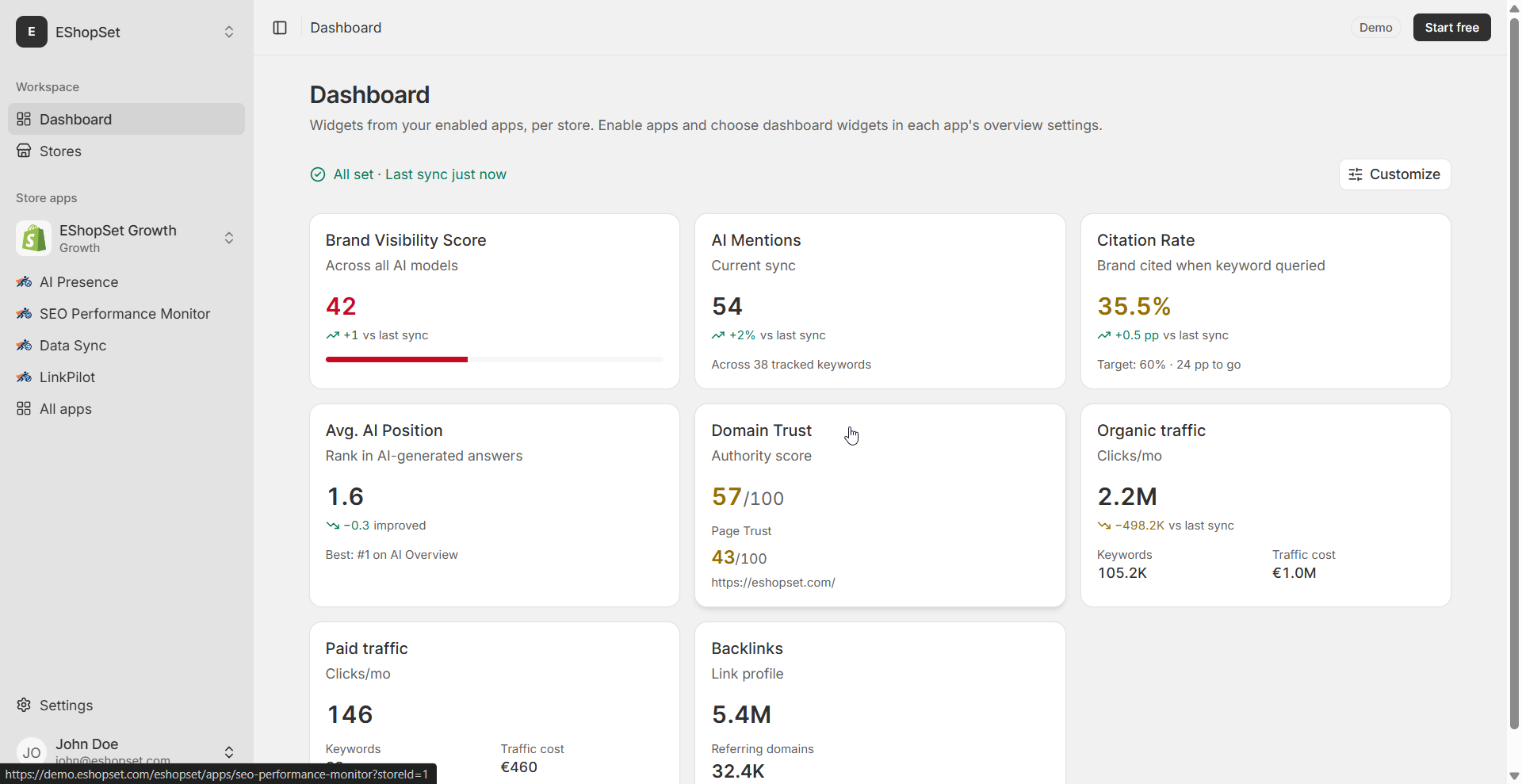
This discussion highlights a critical lesson: Google prioritizes genuine user value and expertise above all. Repeated rejections mean the core issue hasn't been fixed, and simply rephrasing old content or rushing the process won't work. For Shopify merchants, a robust strategy involves not just monitoring but actively improving content quality and technical foundations. Our SEO Performance Monitor can help identify those 'thin' or underperforming pages and track changes, while AI Presence can assist in crafting genuinely valuable, authoritative content that stands out, improving your overall AI presence score Shopify store and avoiding the pitfalls of generic AI content.
Recovering from a manual action is a marathon, not a sprint. It requires a fundamental shift in how you view your website's content – from a collection of "SEO articles" to a comprehensive, valuable resource for your customers. By focusing on quality, transparency, and user experience, you not only satisfy Google but also build a stronger, more trustworthy brand for your Shopify store.