Traffic vs. Sales: Why Your Shopify Product SEO Rankings Aren't Always Enough
Ever feel like you’re doing everything right with your Shopify store’s SEO, seeing those traffic numbers climb, but the sales just aren’t following? It’s a common frustration, and one that recently sparked a lively discussion in an online community, highlighting a crucial disconnect between SEO efforts and actual business outcomes.
The original poster shared a tough situation: they’d successfully boosted a client’s organic traffic by 20% in just four weeks through technical SEO. Sounds like a win, right? Not for the client, who ended the contract because they weren’t seeing more leads or contact form submissions. The original poster’s CEO, unfortunately, placed the blame squarely on them, despite the client’s website being a basic setup with a high bounce rate (over 60%) and lacking clear calls to action (CTAs).
The Truth About Traffic vs. Leads
This scenario immediately resonated with many experts in the community. Time and again, respondents emphasized a fundamental truth: SEO is primarily a visibility driver. Its job is to get your store, and specifically your Shopify product SEO rankings, in front of the right people searching on Google. As one community member put it, “SEO brings the traffic, it doesn’t make the customer want to proceed.”
Increasing organic traffic by 20% in a month is a significant achievement, especially in a competitive niche like finance (as was the case for the original poster). However, if that traffic lands on a page that isn’t engaging, trustworthy, or clear about the next steps, those visitors will bounce. Many community members were quick to point out that a 60% bounce rate isn’t something you fix with meta tags; it’s a symptom of deeper issues with the website’s user experience (UX) and conversion rate optimization (CRO).
Beyond the Click: What Happens Next?
For Shopify merchants, this insight is golden. Getting visitors to your store is just the first hurdle. What happens once they arrive? That’s where conversion optimization comes in. If your product pages aren’t compelling, your CTAs are hard to find, or your site feels slow and untrustworthy, even the highest Shopify product SEO rankings won’t translate into sales. As several people noted, “If your brand, site, product, etc sucks, all the #1 rankings in the world won’t get you sales.”
Think about it: when you’re shopping online, do you just click on the first search result and buy? Probably not. You evaluate the product, read descriptions, check reviews, look at shipping policies, and assess the overall professionalism of the site. If any of these elements fall short, you’re likely to leave. This is why a holistic approach is so vital.
Setting Realistic Expectations for SEO Success
Another crucial takeaway from the discussion was the challenge of managing expectations. Many respondents highlighted that expecting significant lead generation or sales from SEO in just a month or two, particularly in a crowded market, is simply unrealistic. SEO is a long-term strategy that builds authority and trust over time. Immediate leads are often better driven by paid advertising (PPC) with highly optimized landing pages.
For Shopify store operators, this means having patience and understanding that SEO is an investment that compounds over time. While you might see initial traffic increases, the real conversion gains often follow after sustained efforts in content creation, technical improvements, and user experience enhancements.
A Holistic Approach for Your Shopify Store
So, what’s the actionable advice for Shopify merchants?
- Understand SEO’s Role: View SEO as your visibility engine. It gets qualified eyes on your store by improving your Shopify product SEO rankings.
- Prioritize User Experience (UX): Ensure your website is intuitive, fast, mobile-friendly, and aesthetically pleasing. A high bounce rate is a red flag.
- Optimize for Conversions (CRO): Craft compelling product descriptions, use high-quality images, include clear and persuasive CTAs, and make the purchasing process seamless. Test your contact forms and ensure they work!
- Create Engaging Content: Beyond product descriptions, develop blog posts, guides, and FAQs that solve customer problems and build trust.
- Set Realistic Goals: Understand that SEO builds momentum. While quick wins are possible, substantial revenue growth from organic search takes time and consistent effort.
EShopSet Team Comment
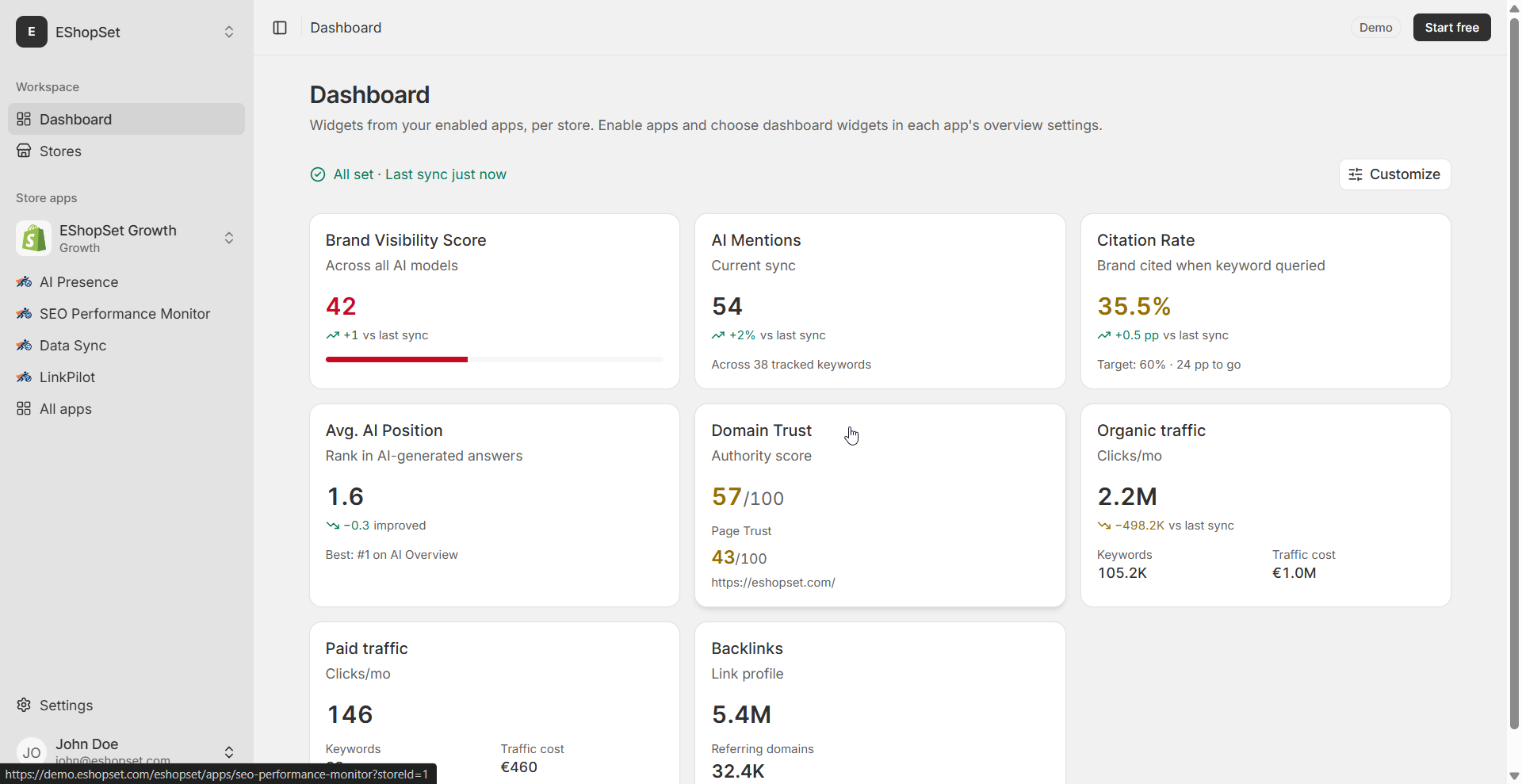
This discussion perfectly illustrates a common challenge for Shopify merchants: bridging the gap between strong SEO performance and actual sales. We at EShopSet firmly believe that while improving Shopify product SEO rankings is non-negotiable, it must be paired with an engaging user experience and persuasive content. Tools like SEO Performance Monitor help you track your visibility gains and monitor your rankings, while AI Presence empowers you to craft compelling product descriptions and marketing copy that converts that traffic into loyal customers. And Data Sync ensures your product information is always accurate and consistent across your store, building trust and improving conversion potential.
Ultimately, the lesson for any Shopify merchant is clear: don't just chase traffic. Build a store that converts. Focus on providing value, a great experience, and clear pathways to purchase, and those SEO-driven visitors will become loyal customers.