Beyond Broad Strokes: Pinpointing Your Shopify Store's Ideal Customer Profile for SEO Success
Hey there, fellow Shopify merchants and store operators! Ever felt like you're shouting into the void, hoping your products reach the right people? It’s a common challenge, especially when your offerings feel broad, or your marketing messages aren't quite hitting home. I recently stumbled upon a fascinating discussion in an online community that really hit this point home for SEO professionals, but the insights are gold for anyone running an online store.
The original poster in this thread brought up a classic dilemma: how do you define an Ideal Customer Profile (ICP) for a business with a very broad offering and a website that might not clearly articulate its niche? They highlighted how this vague positioning creates a 'big challenge' for SEO implementation right from the start. And honestly, isn't that a feeling we've all had when trying to optimize our Shopify stores?
It's easy to get caught up in what you think your customers want or what your website says you do. But as one community member wisely put it, relying solely on 'marketing copy is the least reliable artifact.' So, where do you turn when your website isn't giving you the clear answers?
The Data Doesn't Lie: Uncovering Your True ICP
The consensus from the experts in the discussion was clear: look at the data. Don't guess; analyze. Here's a breakdown of their actionable advice, tailored for us Shopify store owners:
- Talk to Your Sales (or Yourself!): If you have a sales team, or if you're the one handling customer interactions, you likely know which products or services truly resonate. One respondent suggested pushing for a workshop with the sales team, noting they 'usually know which 20% of the services bring in 80% of the revenue.' For many Shopify merchants, this means reflecting on your best-selling items, the types of customers who leave rave reviews, or the product lines that consistently achieve higher margins. What are those 'quietly carrying' parts of your business?
- Dive into Your Revenue Data: This is where the real magic happens. Forget what your marketing materials intend to do; look at what your customers actually buy. Pull up your sales data from the last 12-24 months. Segment it!
- By Product/Collection: Which products or collections are consistently generating the most revenue and profit? This can help refine your Shopify collection SEO tracking efforts, focusing on what truly sells.
- By Customer Demographics/Behavior: If you have this data (e.g., from analytics or CRM), look for patterns. Are certain age groups, locations, or past purchase behaviors associated with higher-value transactions or repeat purchases?
- By Deal Value and Retention: Which customers have the highest average order value (AOV) or the best retention rates? These are your gold-standard customers, your true ICP.
As another contributor emphasized, 'Pull closed-won deals... and segment by industry, size, service line, deal value and retention.' For Shopify merchants, this translates to analyzing your order history, customer segments, and product performance reports.
- Identify Your Niche, Even Within Broad Offerings: The goal isn't to abandon your diverse product range, but to understand which parts attract your most valuable customers. If you sell a wide variety of goods, you might find that while your website broadly showcases 'home decor,' your ICP is actually 'millennial apartment dwellers seeking sustainable, minimalist kitchenware.' This clarity makes all the difference for your SEO and marketing. Knowing your ICP helps you understand your Shopify competitors by shared keywords, allowing you to tailor your content and product descriptions more effectively.
EShopSet Team Comment
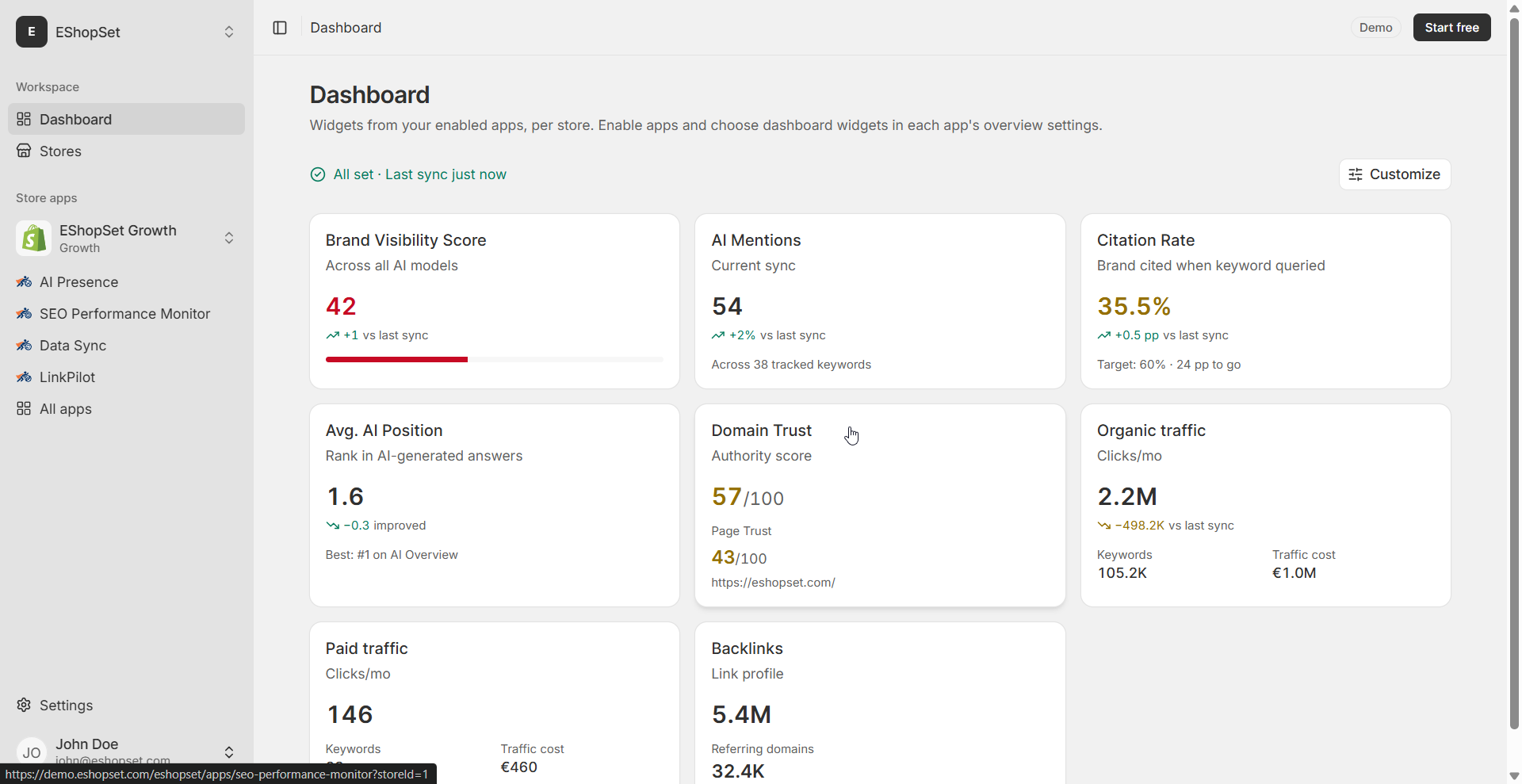
This discussion perfectly highlights that successful ecommerce operations aren't just about having great products; they're about knowing who those products are for. We completely agree that data, especially revenue data, trumps assumptions. For Shopify merchants, this means leveraging your existing store data. Our EShopSet apps can be instrumental here: use SEO Performance Monitor to track how your refined keywords are performing against your competitors, AI Presence to craft messaging that truly resonates with your identified ICP, and Sheet2Cart to efficiently manage and update product data once you've honed in on your best-selling lines, making tasks like a Shopify one-time product import Sheets operation seamless.
Applying the Insights to Your Shopify Store
So, once you've done the digging and identified your ICP, what next? This newfound clarity empowers every aspect of your store operations:
- Refined SEO Strategy: Instead of broad keywords, you can target highly specific, long-tail keywords that your ICP is actually searching for. This improves your chances of ranking for relevant searches and attracting qualified traffic. Your Shopify collection SEO tracking becomes far more effective when you know exactly which collections appeal to your most valuable customers.
- Targeted Marketing Campaigns: Your ad spend becomes more efficient when you know precisely who to target with your Facebook, Instagram, or Google Ads.
- Optimized Product Descriptions and Store Copy: Your website content, product descriptions, and even blog posts can speak directly to the needs, pain points, and desires of your ICP. This is where tools like AI Presence can really shine, helping you generate compelling copy that converts.
- Smarter Product Development: Understanding your best customers can even guide future product sourcing or development, ensuring you're adding items they'll love.
- Efficient Catalog Management: For store owners managing vast catalogs, especially those doing a Shopify one-time product import Sheets update or regular bulk edits, knowing your ICP helps prioritize which products to focus on, ensuring data accuracy and rich descriptions for your most valuable items. Sheet2Cart makes this process smooth, allowing you to quickly update and sync product information from Google Sheets to your Shopify store.
Defining your ICP isn't a one-and-done task; it's an ongoing process of listening to your data and adapting. But by taking the time to truly understand who your best customers are, you'll transform your Shopify store from a 'broad offering' to a finely tuned machine, attracting exactly the right people and driving sustainable growth. Happy analyzing!