Best Sellers vs. Slow Movers: Decoding Your Shopify Product Marketing Strategy
Ever found yourself staring at your Shopify dashboard, wondering whether to pour more ad spend into your rockstar best sellers or try to move those slower-selling items gathering digital dust? It’s a classic dilemma for any merchant, and it was the hot topic in a recent community discussion that really got people talking.
The original poster kicked off the conversation, asking if brands should primarily feature their top products in ads and content, hoping for a halo effect on the rest of the collection, or intentionally mix in slower items to clear inventory. The responses offered a fantastic blend of strategic thinking and practical advice, proving there’s no one-size-fits-all answer, but definitely some smart approaches.
The ABCs of Product Strategy: A Foundational Approach
One community member introduced the concept of ABC analysis from inventory management, which provides a brilliant framework for tackling this. Think of your products categorized by their contribution to sales:
- Your As: The Best Sellers. These are your champions, typically accounting for a significant portion of your revenue (think the 80/20 rule). They bring in traffic and conversions most efficiently. The consensus? Absolutely push these. They've proven demand, customer language, and reviews that make marketing them cheaper and more effective.
- Your Bs: The Middle Ground. These products have potential. They might be essential for a complete range or emerging items that just need a visibility boost. The question here is: what’s holding them back? Pricing? Positioning? Visibility?
- Your Cs: The Slow Movers. These are your lowest contributors. They tie up cash and inventory space. The hard truth is, spending more on ads for a product nobody wants usually just makes that inventory more expensive.
As one respondent wisely put it, “You can make more money by selling things for less than you bought them for than you can by letting them slowly sell.” The goal for Cs isn't usually more ad spend, but strategic clearance to free up capital for more As.
Strategic Moves for Each Product Category
1. Amplify Your 'A' Products
The overwhelming sentiment was to prioritize your best sellers. These products already have proven demand. As a community member noted, “ads scale demand, they do not create it.”
- Max Out Ad Spend: Allocate the majority of your marketing budget here. These are your most efficient converters.
- Creator Content & Shoots: Feature them prominently. Their proven appeal makes creative development easier and more impactful.
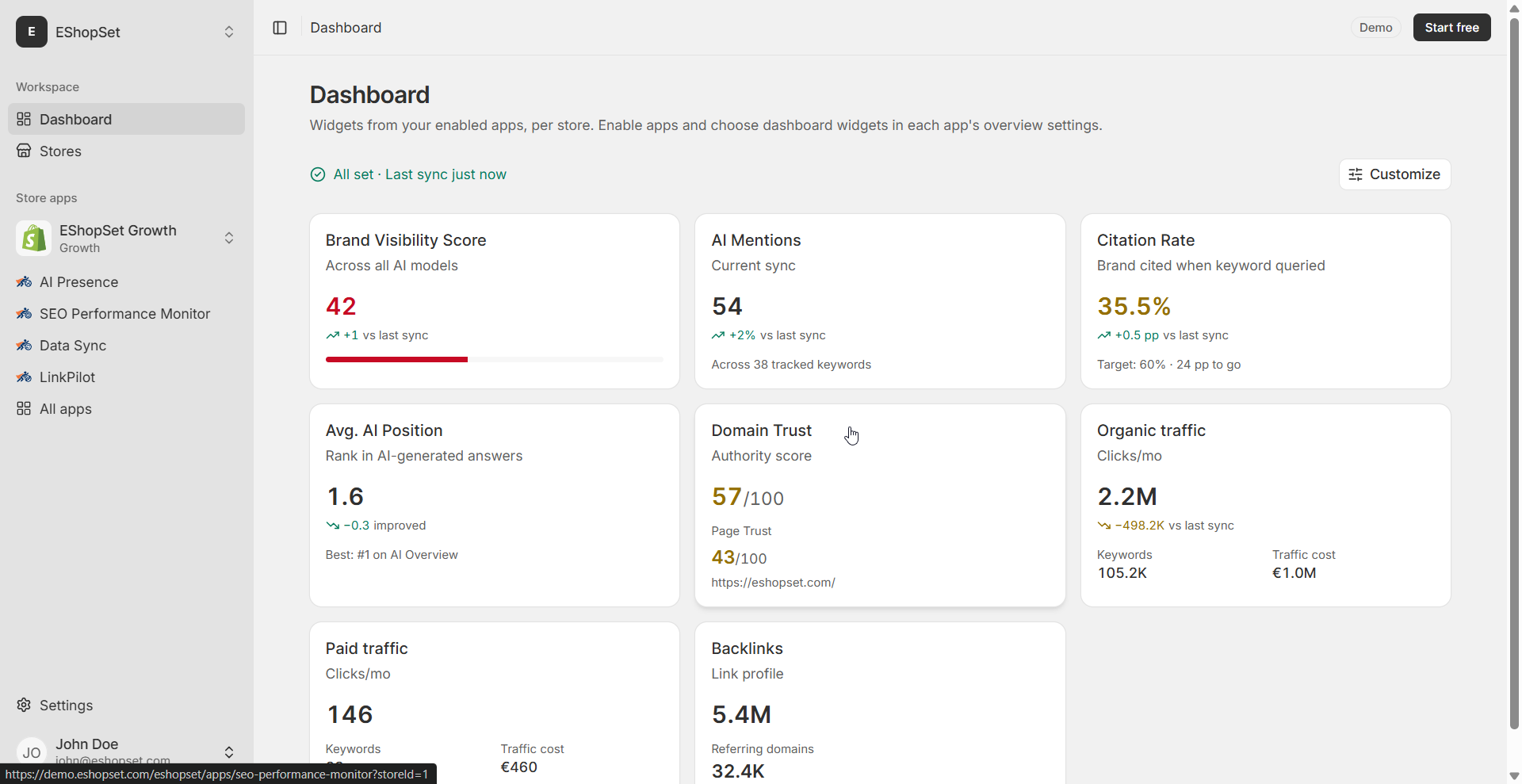
- Optimize Visibility: Ensure these products are always easy to find. Tools like EShopSet’s SEO Performance Monitor can help you keep a close eye on their search performance and identify opportunities to maintain or improve their rankings for critical keywords, ensuring your best sellers stay visible.
2. Clear Out Your 'C' Products (Strategically)
For items that just aren't moving, the goal is cash recovery, not necessarily boosting sales at all costs.
- Markdowns & Clearance: Don't be afraid to take a loss to free up cash. This capital can then be reinvested into more of your best sellers.
- Bundling: This was a highly popular suggestion. Pair a slow-moving item with a best seller. For instance, an adult store owner shared how they bundle slow-moving accessories like lube or toy cleaner with their top-selling toys. People perceive it as a good deal, and the slow items trickle out.
- Email & Organic Content: Use your existing customer base for promotions or create content that explains the value of these items without heavy ad spend.
3. Nurture Your 'B' Products
These are your potential future 'A's. They need attention, but perhaps not the same heavy ad investment as your best sellers.
- Test & Rotate: For new launches or 'B' products, one suggestion was to rotate product positions within collections for a few days to see what performs best.
- Analyze Conversion Rates: Base decisions on product-specific conversion data. Give more visibility to high-converting products, even if they're currently buried on a second page.
- Merchandising Magic: Integrate 'B' products into photoshoots alongside your 'A' products. This offers them visibility in a desirable context without direct ad spend.
The Power of Data and Efficient Operations
Ultimately, making informed decisions comes down to data. Regularly auditing your products and their performance is crucial. For Shopify merchants, this means:
- Monitoring Performance: Keep track of what's getting clicks but not converting. This ongoing process helps you refine your ad spend and product focus.
- Efficient Catalog Management: When you decide to mark down items, create bundles, or adjust product descriptions based on performance, you need to implement these changes quickly and accurately. This is where tools like EShopSet's Sheet2Cart become invaluable. It allows for seamless Shopify Google Sheets product import and enables a smooth weekly Shopify catalog sync, making bulk updates for pricing, inventory, or product details a breeze. Even on an EShopSet Starter plan Shopify, you can manage these critical updates with ease.
- AI-Powered Content: For refreshing product descriptions, creating engaging content for bundles, or optimizing existing listings, EShopSet’s AI Presence can help you generate compelling copy that resonates with customers and improves conversion rates, whether for your 'A's, 'B's, or 'C's.
EShopSet Team Comment
We absolutely agree with the community's emphasis on a data-driven, balanced approach. Prioritizing best sellers for direct ad spend while strategically managing slower stock through bundles and markdowns is the smart play. EShopSet's bundle of apps directly supports this: SEO Performance Monitor ensures your top products maintain visibility, AI Presence helps craft compelling content for all items, and Sheet2Cart makes rapid Shopify Google Sheets product import and weekly Shopify catalog sync effortless for implementing price changes or new bundles.
The conversation highlights that successful ecommerce isn't just about selling; it's about smart inventory flow and strategic marketing. By understanding the role of each product in your catalog and leveraging the right tools, Shopify merchants can optimize their operations, free up cash, and drive sustainable growth. It's an ongoing process of testing, analyzing, and adapting – and we're here to help you every step of the way.