Unlocking AI Visibility: Why Your Shopify Store Needs Separate AI Crawler Tracking
Hey there, fellow Shopify merchants and store operators! Let's talk about something that's quickly becoming a hot topic in the world of online visibility: AI crawler traffic. We're all used to keeping a close eye on our organic search traffic, but with AI models increasingly scraping the web to answer user queries and generate content, a new question arises: should we be tracking AI crawler activity separately?
This very question sparked a lively discussion in an expert community recently, and the insights shared are incredibly valuable for anyone running an ecommerce store. The original poster kicked things off by highlighting that standard analytics often don't provide the granular context needed for AI-driven traffic. They wanted to know:
- Which specific AI systems (like GPTBot, ClaudeBot, PerplexityBot) are crawling their site?
- Which pages are these AI bots most interested in?
- How frequently are they returning?
- Are those pages actually getting cited in AI answers?
- And crucially, does any of this AI activity eventually lead to useful human traffic and conversions?
It's a fantastic set of questions that really gets to the heart of understanding this evolving landscape. Let's dive into what the community had to say.
The Consensus: Yes, Separate Tracking is Key
The overwhelming sentiment from the community was a resounding 'yes' – AI crawler traffic absolutely should be monitored separately from your traditional website analytics. Why? As one respondent put it, "AI crawlers aren't real users, so mixing them with normal traffic can distort the picture." This makes perfect sense; a bot visiting your product page isn't the same as a potential customer browsing with intent to buy.
Another community member elaborated, explaining that AI crawlers serve different purposes than traditional search bots. By tracking them distinctly, you can better understand their crawl patterns and identify important pages that might be gaining 'AI visibility.' They emphasized that while AI crawler activity alone isn't a success metric, combining it with citation and referral data provides truly valuable insights.
Several experts also pointed out the technical specifics. It's vital that whatever tool you're using for tracking can differentiate between various crawlers based on their IP addresses and user agent strings. This allows you to identify specific bots like Google-Extended, GPTBot, or others, and understand their unique behavior on your Shopify store.
Connecting the Dots: From Crawler to Customer
The most insightful takeaway from the discussion was the emphasis on connecting the entire journey. As one expert succinctly put it, the "useful part is connecting crawler → page → AI citation → referral → conversion." This entire chain is what truly matters for your Shopify store. Visibility in AI answers is interesting, but if it doesn't lead to real customers and sales, then its practical value is limited.
For Shopify merchants, this means not just knowing that an AI bot visited your site, but understanding if that visit led to your content being cited, if that citation drove a user to your store, and ultimately, if that user made a purchase. This holistic view is essential for optimizing your online presence in an AI-driven world.
Practical Steps for Your Shopify Store
So, what can you do as a Shopify merchant or store operator to start tracking AI crawler traffic effectively?
- Review Your Analytics: Check if your current analytics platform offers robust bot filtering or custom segmentation options to isolate AI crawler traffic. Some tools, like CloudFlare (even on their free plan, as noted by a community member), provide capabilities for this.
- Consider Specialized Tools: The discussion mentioned tools that specifically tie AI visibility with search data. While setting up custom solutions might be complex for many merchants, it highlights the need for dedicated platforms.
- Focus on the Full Funnel: Always keep the 'crawler to conversion' path in mind. Your goal isn't just AI visibility, but AI visibility that drives revenue.
EShopSet Team Comment
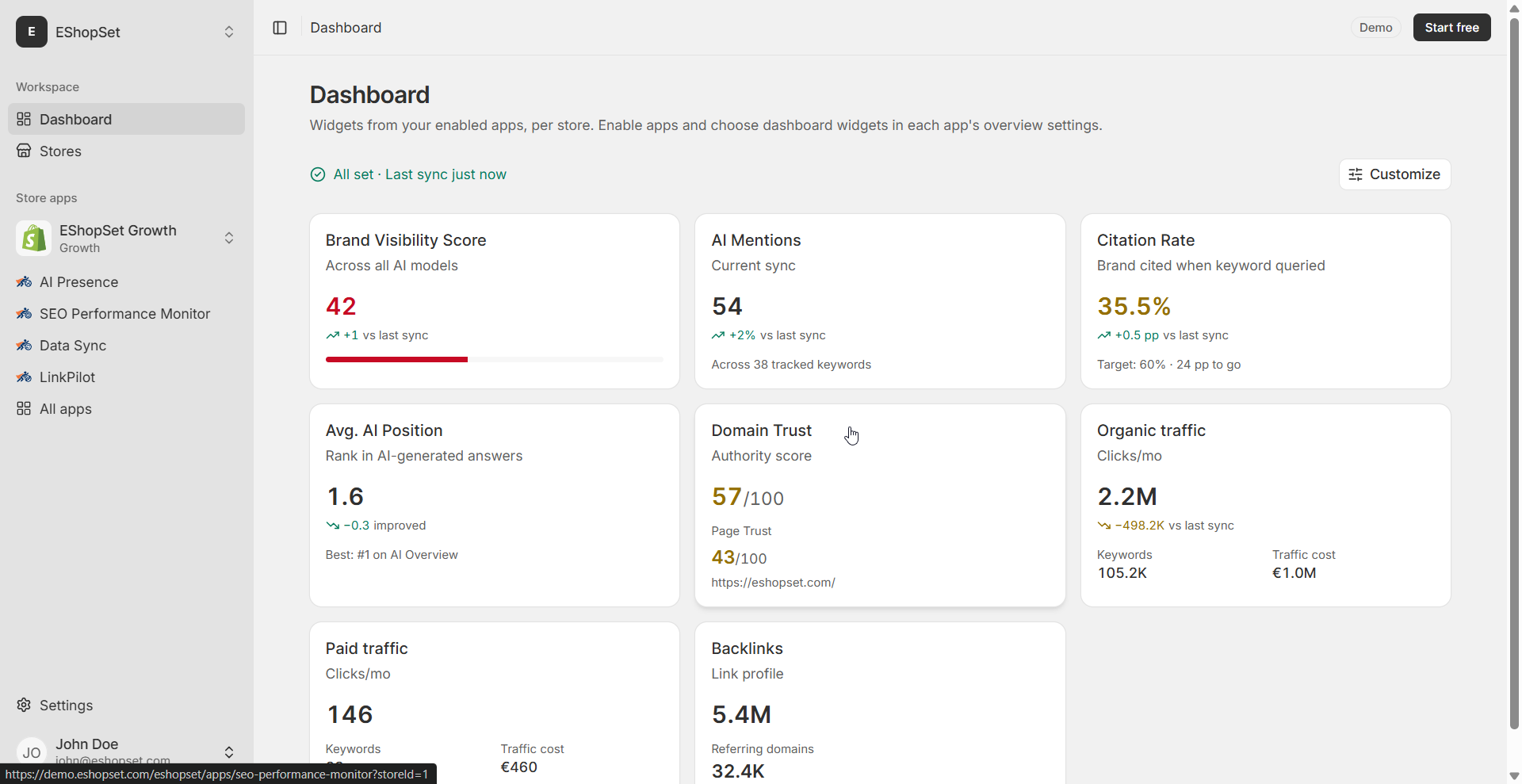
At EShopSet, we couldn't agree more with the community's strong stance: separate tracking of AI crawler activity is no longer a 'nice-to-have' but a crucial component of modern ecommerce operations. The rise of AI Overviews and generative search means that understanding how AI models interact with your store's content directly impacts your discoverability. Our AI Presence app is specifically designed to give Shopify merchants the visibility they need into this new frontier, helping you monitor your content's engagement with AI systems and track potential citations. This complements your traditional SEO efforts, which you can manage with our Shopify SEO Performance Monitor, giving you a complete picture of your store's online performance.
The digital landscape is constantly evolving, and AI is playing an increasingly significant role in how customers discover products and make purchasing decisions. By proactively tracking AI crawler traffic separately, you're not just staying ahead of the curve; you're equipping your Shopify store with the insights needed to thrive in this new era. Incorporating this into your strategy is one of the best Shopify apps for store ops you can make for long-term success. It's about understanding every facet of your online presence and ensuring that visibility translates into tangible results for your business.