Shopify & AI Bots: Should You Offer Markdown for Better Traffic & Citations?
Hey there, fellow Shopify merchants and store operators! Let's talk about something that's been buzzing in the tech SEO community: the idea of serving Markdown files to AI bots. It sounds a bit niche, right? But with AI playing a bigger role in how customers find information and products, understanding how to optimize your store for these advanced crawlers is becoming crucial for your Shopify organic traffic monitor efforts.
Recently, a lively discussion popped up among experts about whether converting HTML pages to Markdown and serving them to AI bots could be a game-changer. The original poster was curious about two main things: could it help with getting more AI citations, and could it stop AI bots from aggressively hammering their site, potentially reducing bandwidth?
The Great Markdown Debate: What the Community Says
The consensus from the discussion was pretty illuminating, separating fact from hopeful speculation.
Do AI Bots Ask for Markdown? Not Usually!
One of the first things clarified by several community members, including a well-known figure in SEO, was that major AI crawlers typically don't send an Accept: text/markdown header. This means the bots aren't explicitly requesting Markdown files using standard content negotiation. If you set up your server to only serve Markdown when that specific header is present, you might be waiting a long time!
As one respondent put it, on their test sites, the only crawlers claiming to accept Markdown were often SEO tools, not the major AI bots themselves. Another expert noted they hadn't seen a single AI bot showing an 'accepts markdown' header.
The Real Wins: Bandwidth, Not Direct Citations (Mostly)
When it comes to boosting AI citations, the community largely agreed with the original poster's initial research: Markdown itself isn't a magic bullet. What truly moves the needle for extraction and citations is structure. Think clear headings phrased as questions, direct answers near the top of your content, and well-organized FAQ sections. Markdown can make that structure cheaper for a bot to parse, but it doesn't create the structure itself.
However, there's a significant, often underrated, win: bandwidth reduction. The original poster estimated they could cut file sizes by about a third, and another expert confirmed this. If AI bots are indeed hammering your site, blocking them entirely can mean losing potential visibility. Providing them with a lightweight Markdown corpus and a clear map to it can be a much better equilibrium. You cut transfer costs and keep your content accessible to the crawlers you want reading you.
One community member even shared a positive anecdote, noting an increase in signups from AI assistants after implementing Markdown files on their website, suggesting some indirect benefits might exist.
Actionable Strategy: How to Serve Markdown to AI Bots
Since AI crawlers aren't typically asking for Markdown directly, a different approach is needed. One expert, who runs this setup in production, outlined a practical, three-step strategy:
- Serve Markdown Twins at Separate URLs: Instead of relying on content negotiation, create a Markdown version for each relevant HTML page. For example, if you have
yourstore.com/product-page.html, also serveyourstore.com/product-page.md. - Point to Markdown from HTML Head: In the
section of your HTML page, include a link that points to its Markdown twin. This acts as a discovery mechanism for bots: - Ship an
llms.txtFile: At the root of your domain (e.g.,yourstore.com/llms.txt), create a file listing all your Markdown URLs. This follows thellmstxt.orgconvention and is the primary discovery mechanism AI crawlers actually use. Think of it as a sitemap specifically for AI models.
This approach avoids common content negotiation pains like cache poisoning and allows for easier testing. While a community member raised concerns about Markdown files appearing as 'Crawled – currently not indexed' in Google Search Console, the expert noted that blocking the file type in robots.txt is an option, though not always necessary if you want the content accessible to AI models.
EShopSet Team Comment
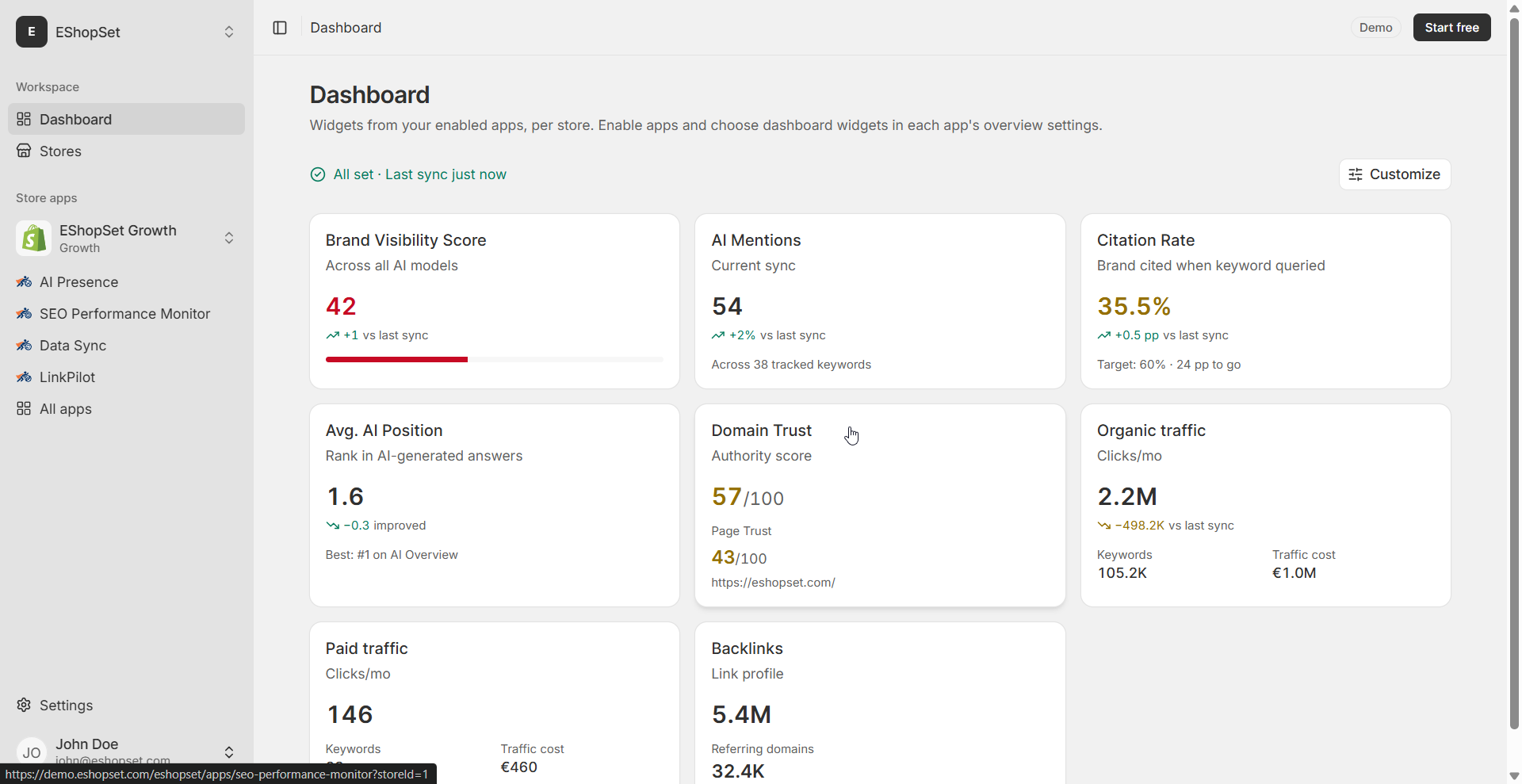
This discussion highlights a proactive approach for Shopify merchants navigating the evolving AI landscape. While direct citation boosts from Markdown are still unproven, the undeniable benefit of reducing server load and making content more efficiently consumable by AI bots is a significant win. Our AI Presence app is designed to help your store optimize for AI visibility by focusing on structured data and content, and this Markdown strategy complements those efforts by ensuring your content is efficiently delivered. Furthermore, monitoring your site's interaction with various crawlers, including AI bots, is something our SEO Performance Monitor can help you keep an eye on, ensuring your site remains healthy and discoverable.
Wrapping Up Your AI Content Strategy
For Shopify store owners, the takeaway is clear: while Markdown isn't a silver bullet for instant AI citations, it offers a pragmatic way to manage bot traffic and prepare your content for future AI consumption. The strategy of using parallel Markdown URLs, tags, and an llms.txt file provides a robust framework. It's about smart, efficient content delivery that respects your server resources while making your valuable product information and blog content more digestible for the ever-growing army of AI crawlers.
Keep a close watch on your analytics and consider implementing these steps, especially if you're seeing high bot activity. Tools like EShopSet's SEO Performance Monitor can help you track your Shopify organic traffic monitor metrics and understand how these changes impact your site's visibility and performance. By staying ahead of the curve, you're not just optimizing for today's search engines, but building a more resilient and AI-friendly presence for tomorrow.