Navigating the New Frontier: Advertising on ChatGPT for Your Shopify Store
Hey there, fellow Shopify merchants! We’ve all been hearing the buzz about AI, and it’s natural to wonder how these powerful new tools can actually drive sales for our stores. Recently, a fascinating discussion popped up in a community forum that really got us thinking: Is advertising on ChatGPT a viable channel for Shopify businesses? What are people’s experiences, and is it worth the investment?
The original poster kicked off the conversation, asking if anyone had found new customers via chatbots, what their average cost-per-click (CPC) was, and if they planned to continue using it. It’s a smart question, especially as AI becomes more integrated into how customers discover products and information.
Early Impressions: Proceed with Caution, but Keep an Eye Out
One of the first things that became clear from the discussion is that advertising on platforms like ChatGPT isn't quite like your traditional Google or Meta ad campaigns yet. As one insightful community member pointed out, it's not a “normal paid traffic channel.” The volume of traffic can still be relatively small, and focusing solely on CPC might not give you the full picture. Instead, they wisely suggested looking beyond just sessions and really diving into metrics like add-to-cart rates, conversion rates, and overall revenue generated. Even a small amount of high-intent traffic can be far more valuable than a flood of low-quality clicks.
Another respondent, who had spent a lot of time with OpenAI’s measurement stack, highlighted a crucial distinction: are you getting traffic because ChatGPT organically named your store in an answer, or are you paying for a click? It turns out, both happen! Organic referrals from chatgpt.com have been a thing for a while, even without active advertising. When you switch on paid ads, your ChatGPT referral numbers might go up, but it’s hard to tell how much of that was already coming your way for free. This makes attribution tricky, and the data you get back from OpenAI might not be as granular or reliable as what you're used to from more established ad platforms. They cautioned that “this month's figure is not a promise about next month's,” underscoring the newness and volatility of the channel.
A key question that came up was about customer lifetime value. Is this channel driving repeat purchases, or just first-time buyers? At this early stage, many experiences seem to be focused on initial orders, making it even more important to monitor beyond that first transaction.
Finding Success with a Conversational Approach
Despite the caveats, there’s definite promise! One community member shared very positive results, starting with a small-value product to test the waters and then gradually expanding their full catalog. Their success hinged on being “well versed in long tail, and conversational” content. This makes perfect sense when you think about how people interact with AI – they ask questions, they have conversations, and they’re looking for detailed, natural language answers.
Interestingly, the discussion also touched on ad blockers. Some users, particularly those with premium accounts or ad blockers, might not even see ads. This suggests that for now, the audience for paid placements might be more concentrated among non-premium users, which is something to keep in mind when planning your strategy.
What This Means for Your Shopify Store
So, where does this leave us? Advertising on ChatGPT is definitely an emerging frontier, not a fully mature landscape. Here’s a breakdown of actionable takeaways for Shopify merchants:
- Monitor Organic AI Referrals: Even if you're not paying for ads, keep an eye on your analytics for traffic coming from chatgpt.com or similar AI sources. This indicates your store is already being cited organically, which is fantastic!
- Experiment Cautiously with Paid Ads: If you decide to explore paid placements, start small, perhaps with a high-value or easily convertible product, as one successful merchant did. Don't go all-in until you have solid data.
- Focus on Conversational, Long-Tail Content: This is where your SEO strategy truly shines. Optimize your product descriptions, blog posts, and FAQs to answer specific questions customers might ask an AI. Think about natural language queries rather than just keywords.
- Track Beyond CPC: As advised, look at the full funnel: add-to-cart, conversion rates, average order value, and crucially, repeat purchases. Understanding your Shopify traffic by country SEO and how different segments convert can provide invaluable insights.
- Embrace AI Presence: Your store’s visibility in AI-driven search results and recommendations is becoming as important as traditional search engine rankings. Ensuring your product data is rich and accurately represents your offerings can significantly boost your organic AI visibility.
- Regular Reporting: Implement a system for a daily Shopify SEO report to track changes in traffic sources, keyword performance, and overall store health as you experiment with new channels like AI advertising.
EShopSet Team Comment
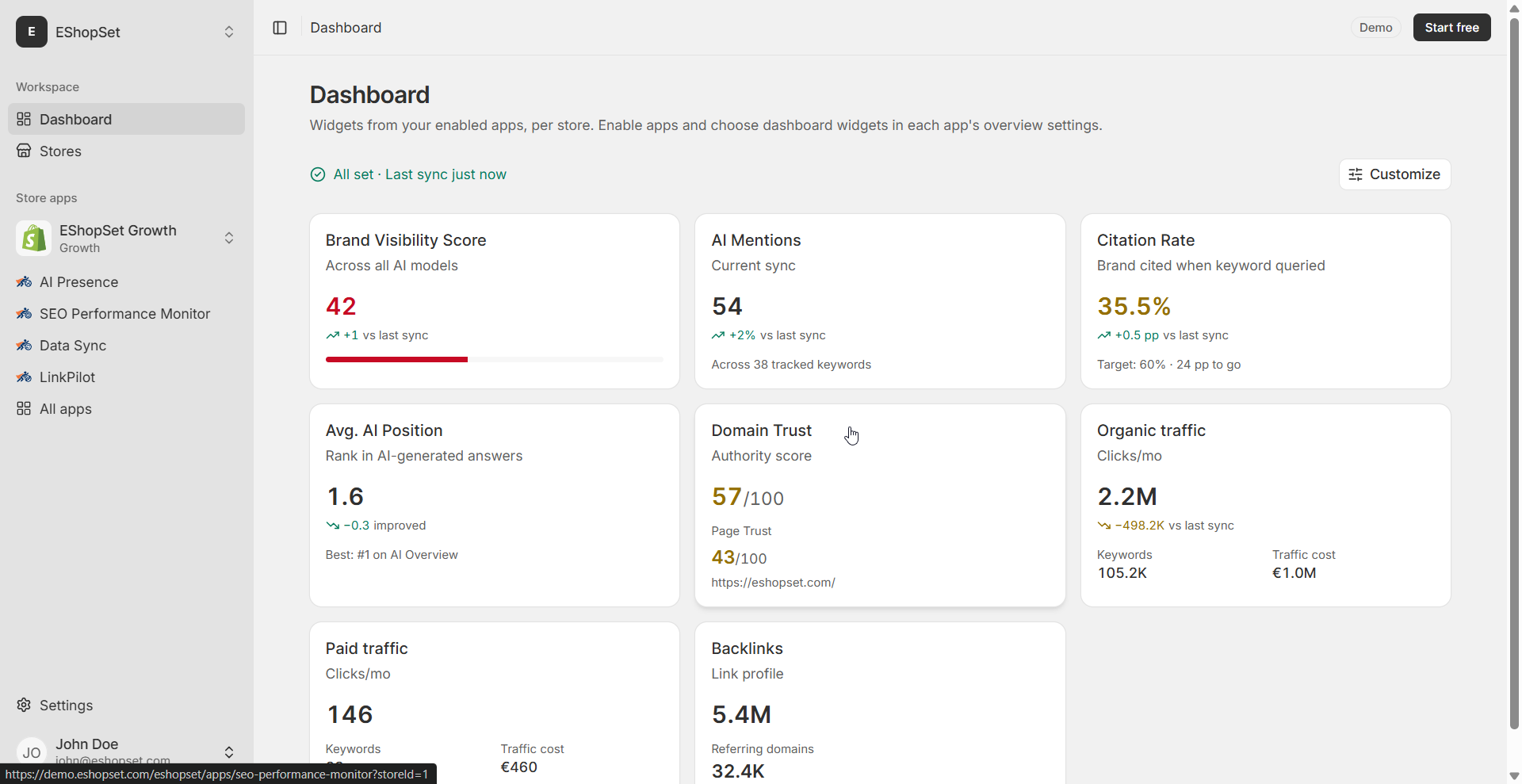
This discussion perfectly illustrates the dynamic nature of ecommerce marketing. While direct advertising on ChatGPT is still in its infancy with attribution challenges, the underlying trend of AI influencing customer discovery is undeniable. We strongly believe merchants should prioritize optimizing their store for AI visibility, which is precisely where our AI Presence app comes in. Coupled with SEO Performance Monitor for tracking diverse traffic sources and Sheet2Cart for keeping product data pristine, merchants can proactively adapt to this evolving landscape rather than react.
The rise of AI as a discovery tool isn't just about ads; it's about how your brand is perceived and presented when an AI is asked about products or solutions you offer. By focusing on detailed, conversational content and meticulously tracking your performance across all channels, you’ll be well-positioned to leverage whatever comes next in the world of AI-driven commerce. Keep experimenting, keep learning, and keep those insights coming!