Cracking the AI Search Code: How Shopify Merchants Can Boost Product Visibility
Ever wondered why some competitors, seemingly with less brand power, pop up repeatedly in AI search recommendations for your product category? It's a question that recently sparked a lively discussion among ecommerce operators, and it hits home for many Shopify merchants trying to navigate the evolving landscape of online discovery.
The original poster in a recent community discussion shared this exact anxiety. They noticed that when searching for their product category using plain, customer-like questions, certain sites kept appearing, and they weren't sure what these sites were doing differently. This feeling of being left behind is incredibly common as AI search engines become more sophisticated.
The AI Search Shift: It's Not Just About Keywords Anymore
One of the first things many community members pointed out is the shift from purely keyword-driven SEO to a more semantic, answer-focused approach. AI isn't just matching keywords; it's trying to understand intent and provide direct answers. This means your content needs to be incredibly specific and clear.
- Specificity is King: Several respondents highlighted the importance of detailed product descriptions, a robust 'About Us' page, and comprehensive FAQs. As one member put it, if your copy is "vague or full of fluff, AI has nothing concrete to pull from." Another added that they saw a real difference after rewriting most of their product copy to be more specific. Think about the exact questions a customer might ask and ensure your content directly answers them.
- Structured Data and Schema Markup: Beyond just text, how you structure your information matters. Tables, bullet points, and FAQs were mentioned as elements that chatbots tend to favor because they present information in a straightforward, digestible way. Crucially, a community member emphasized, "Don't skip on schema markup. It helps the LLMs categorize what you sell instead of guessing." This structured data provides clear signals to AI about what your products are and how they relate to user queries.
Beyond Your Site: The Power of External Validation
While on-site content is vital, the discussion also highlighted that AI doesn't live in a vacuum. It pulls information from a vast array of sources.
- Third-Party Mentions: "AI tools also pull heavily from third-party sources," noted one expert. This means editorial 'best of' lists, comparison posts, community mentions, and even YouTube reviews can significantly influence how AI perceives and recommends your brand. If your brand is only described well on your own site, you might be missing a big piece of the puzzle.
- Answering Questions, Not Just Selling: A key takeaway was that successful sites are often "answering the exact question instead of selling." When users type plain questions, AI pulls from sources that literally answer those questions in a clean structure. This means creating content that addresses common queries like "how do I choose X?" or "what is X good for?" rather than just listing product features. Looking at 'People Also Ask' sections in search results can be a great starting point for identifying these patterns.
The Crucial Step: Understanding AI's Sources
Perhaps the most insightful piece of advice came from a respondent who urged everyone to "look at where the answer came from." This involves actively checking the citations provided by AI search engines (like Perplexity or ChatGPT when it browses the web) for your competitors' recommendations.
The fix, they argued, is completely different depending on the source:
- If the sources are "best X for Y" roundup articles, it's a PR problem. Your goal should be to get included in those articles.
- If Amazon, Etsy, or Google Shopping listings are the source, it's a listing title problem. Optimizing your titles on those platforms is key.
- Only if the engine is citing the competitor's own product pages does a direct copy comparison matter.
This approach highlights that a comprehensive EShopSet Growth plan Shopify requires not just optimizing your own site, but also understanding the broader ecosystem where AI gathers its information.
EShopSet Team Comment
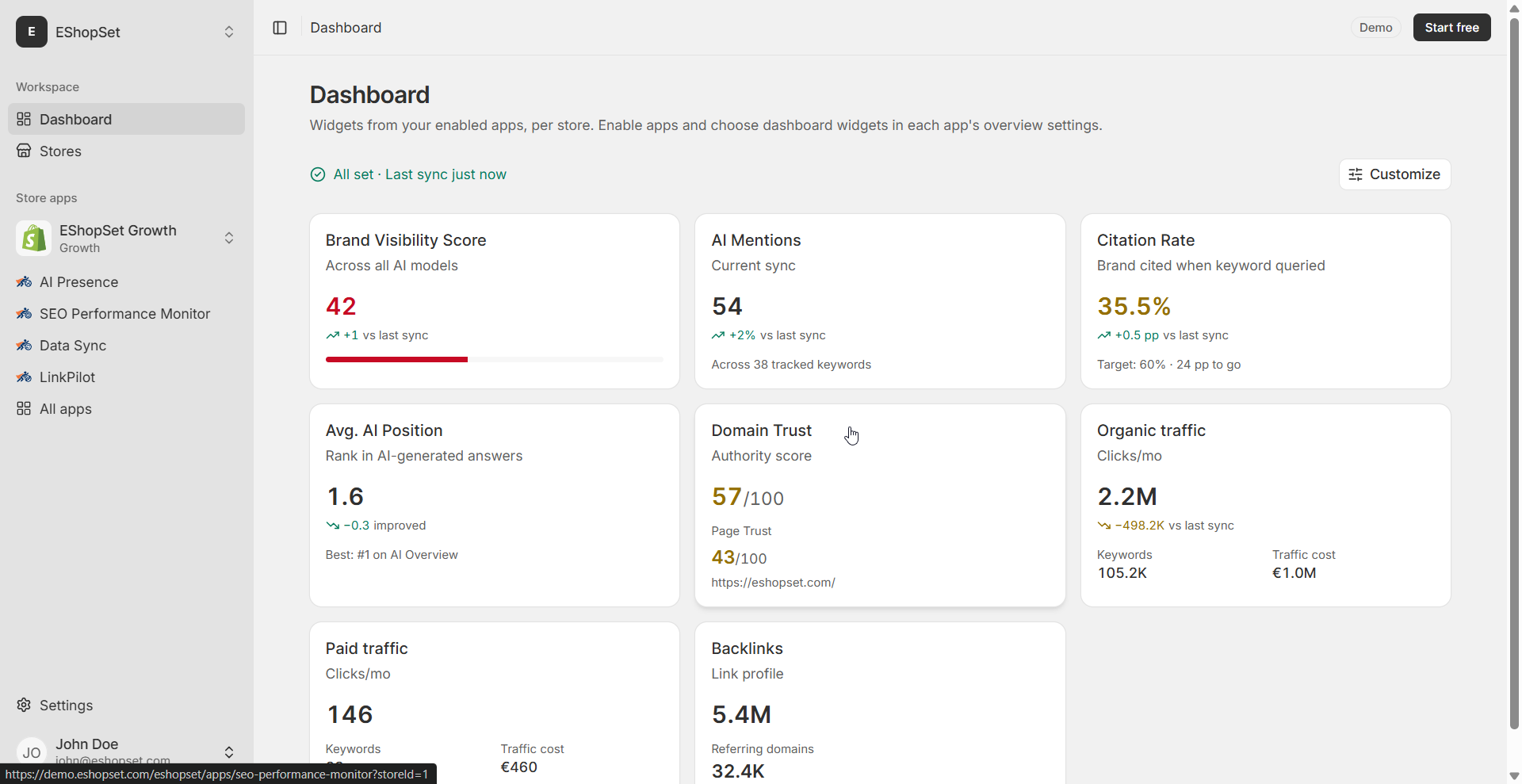
We absolutely agree with the emphasis on understanding AI's sources and adapting your strategy accordingly. The days of simply stuffing keywords are over; AI demands clarity, specificity, and external validation. For Shopify merchants, this means a multi-pronged approach: perfecting on-site content with tools like AI Presence to ensure your product descriptions and FAQs are AI-friendly, and using SEO Performance Monitor to track how these changes impact your visibility. Furthermore, ensuring your core product data is meticulously managed, perhaps even importing products from Google Sheets with Sheet2Cart, forms the essential foundation for any AI optimization efforts.
For Shopify merchants, the path forward is clear: be specific, be structured, and be present across the digital landscape where AI gathers its insights. Regularly audit your content, not just for human readers, but for how AI might interpret and synthesize it. By doing so, you're not just improving your search rankings; you're building a more robust and discoverable online presence for your store.