Protecting Your Shopify Store: A Guide to Combating Online Impersonation and Fraud
Imagine waking up, checking your Google Alerts, and finding a website that looks just like yours – but it's not. It's using your logos, your product photos, your carefully crafted descriptions, all under a fake domain. This isn't just a nightmare scenario; it's a real threat that can erode customer trust, divert sales, and damage your brand's reputation. For Shopify merchants focused on daily operations, from optimizing SEO to managing product catalogs, such a breach can feel overwhelming.
This exact situation recently unfolded for a Shopify merchant who shared their predicament in a community discussion. They discovered a fraudulent .shop domain impersonating their store, complete with their branding and product details. Understandably, they were short on time and urgently seeking an effective, one-off solution for takedown, unsure about committing to ongoing monitoring services immediately.
The Nightmare Scenario: Your Store, Stolen Identity
The original poster's experience highlights a critical vulnerability for any online business: brand impersonation. These fraudulent sites aim to deceive customers, often by mimicking legitimate stores to phish for personal information, sell counterfeit goods, or simply capitalize on established brand trust. For a Shopify merchant, whose livelihood depends on their online presence, this is more than an inconvenience – it's a direct attack on their business.
The community discussion quickly rallied, offering practical and actionable advice, with a clear consensus emerging around the effectiveness of the DMCA takedown notice.
Immediate Defense: The Power of a DMCA Takedown Notice
When faced with online impersonation, your first and most potent weapon is often a DMCA (Digital Millennium Copyright Act) takedown notice. This legal mechanism allows copyright holders to request that infringing material be removed from websites or search engines. Several community members underscored its utility:
- One respondent shared, "Just look up a dmca takedown notice template. I've done a few of these and it's pretty easy."
- Another advised, "Fill Google DMCA report form," emphasizing the importance of delisting the offending site from search results.
- The sentiment was widely echoed, with multiple members affirming DMCA notices as "pretty useful" and "really effective."
A DMCA notice is typically sent to the website's hosting provider or the search engine (like Google) that indexes the fraudulent site. It asserts your copyright over your content (logos, product photos, descriptions) and demands its removal. While effective, it requires you to actively identify the infringement and initiate the process.
Beyond the DMCA: Strategic Takedowns for Lasting Impact
While a DMCA notice is crucial, some experts in the discussion offered a more strategic, multi-pronged approach to ensure the fraudulent site is not merely moved but truly dismantled. This involves targeting the infrastructure supporting the imposter:
- Identify the Underlying Platform: As one community member wisely suggested, "I would use a tool like builtwith to see what cart they are using, often times these imposters don’t use shopify pay. Send the legal takedown letter to the cart provider, if you send it to the front end they can just spin up another store. Cart is more effective." Identifying the e-commerce platform or payment gateway they use allows you to target the source, making it harder for them to simply "spin up another store."
- Contact Domain Registrars and Hosts: Another crucial step is to contact the domain registrar (the company that registered the fake domain) and the web hosting provider. These entities often have terms of service that prohibit illegal activities like impersonation and may take action to suspend the domain or hosting.
- Engage Payment Processors: If the fraudulent site is attempting to process payments, contacting their payment processor (e.g., Stripe, PayPal, or a specific bank) can lead to the termination of their merchant account, effectively cutting off their ability to monetize their fraud.
- Gather Comprehensive Evidence: Before initiating any takedown, meticulously document everything. Take screenshots of the fraudulent pages, record the domain details (using WHOIS lookups), and compile evidence of your original product images, logos, and any other materials proving your legitimate business. This evidence is vital for any formal complaint.
Proactive Protection: Securing Your Shopify Brand with EShopSet
While reactive measures are essential, a proactive stance is your best defense against brand impersonation. EShopSet provides a suite of Shopify apps designed to empower merchants in their daily operations, which indirectly contributes to a stronger, more secure brand presence.
Leveraging EShopSet for Brand Integrity
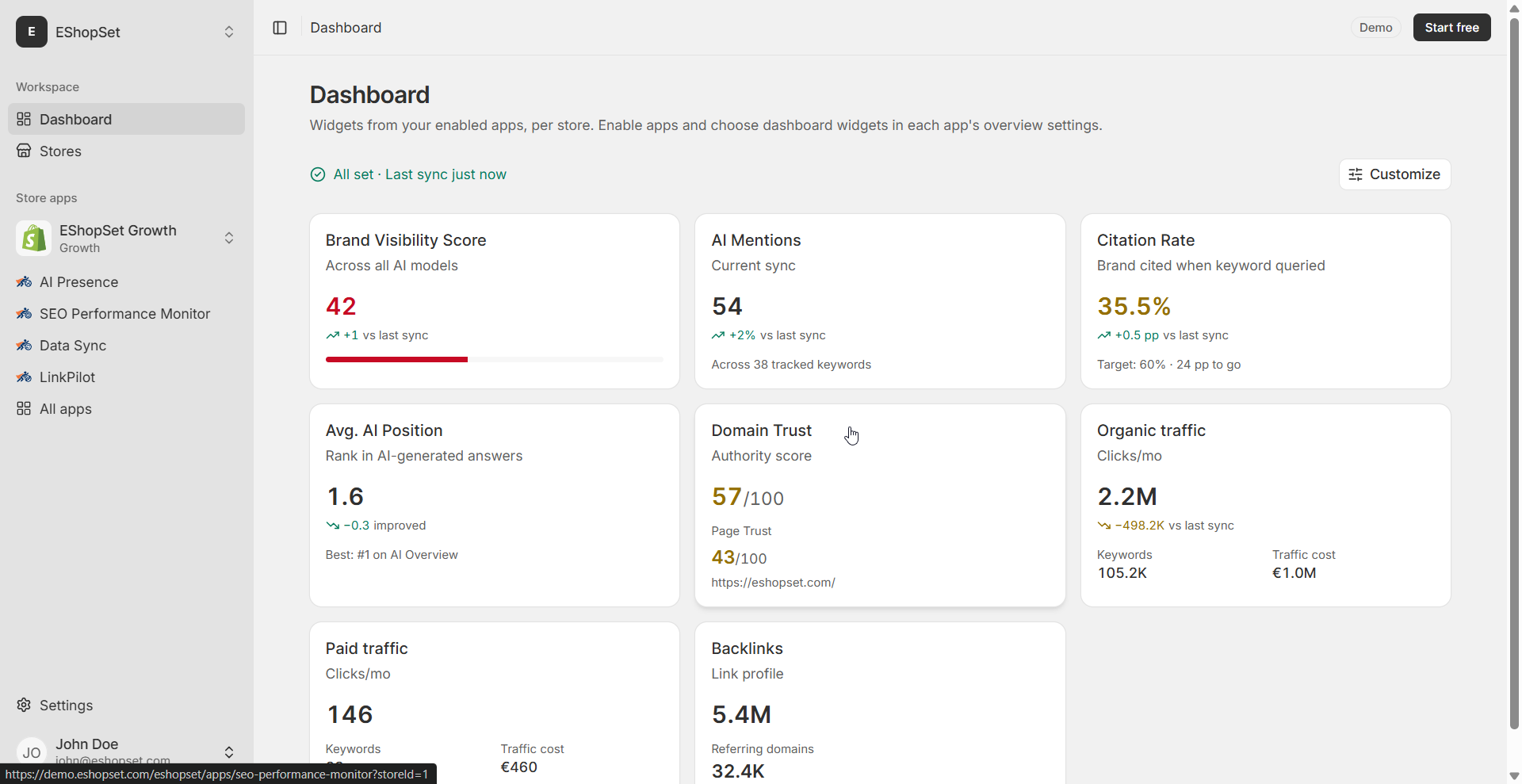
- SEO Performance Monitor: A robust Shopify SEO overview dashboard is more than just a ranking tool. By consistently monitoring your keywords, backlinks, and overall search presence, you can quickly spot anomalies. If a fraudulent site starts to gain traction for your brand terms, your SEO Performance Monitor can alert you, allowing for early detection and swift action. Maintaining strong SEO helps your legitimate store dominate search results, pushing fraudulent sites further down.
- AI Presence: Your brand's voice and content are unique identifiers. EShopSet's AI Presence helps you maintain a consistent, high-quality digital footprint across all your channels. By ensuring your legitimate brand messaging is strong and pervasive, you create a distinct identity that is harder for impersonators to convincingly replicate, making their attempts stand out as fake to discerning customers.
- Sheet2Cart: While primarily a tool for efficient product data management, Sheet2Cart contributes to security by ensuring your product catalog is always accurate and up-to-date. Secure and streamlined data flows reduce the risk of internal data discrepancies that could be exploited by fraudsters or make it harder to differentiate your legitimate products from counterfeit listings.
Beyond EShopSet's specific tools, general security best practices are paramount:
- Strong Passwords and Two-Factor Authentication (2FA): Implement these across all your Shopify accounts, apps, and related services.
- Regular App Audits: Periodically review the Shopify apps you have installed. Ensure they are legitimate, updated, and only have necessary permissions.
- Stay Updated: Keep your Shopify store and any installed apps updated to benefit from the latest security patches.
- Monitor Your Brand: Beyond Google Alerts, consider dedicated brand monitoring services if the threat of impersonation is significant or recurring.
Your Action Plan: What to Do When Fraud Strikes
If you discover a fraudulent copy of your Shopify store, act swiftly and systematically:
- Document Everything: Take screenshots, record URLs, and gather WHOIS information for the fake domain.
- Send DMCA Takedown Notices: Target Google, the web host, and the domain registrar.
- Identify and Contact the Cart Provider/Payment Processor: Use tools like BuiltWith to find their e-commerce platform and payment gateway, then send formal takedown requests.
- Consult Legal Counsel: For complex or persistent cases, professional legal advice is invaluable.
- Consider Ongoing Monitoring: If this is not an isolated incident, invest in a brand monitoring service to detect future impersonations early.
Stay Vigilant, Stay Secure
The digital landscape is constantly evolving, and so are the tactics of those who seek to exploit it. For Shopify merchants, protecting your brand from impersonation is an ongoing commitment. By understanding the tools at your disposal, from DMCA notices to strategic takedowns, and by leveraging proactive solutions like EShopSet's app bundle, you can build a more resilient and secure online presence. EShopSet is here to support your daily operations, ensuring that your focus remains on growing your business, not battling fraudsters.