Unlocking AI-Driven Sales: A Shopify Merchant's Guide to AI-Enhanced Optimization
Hey fellow Shopify merchants and store operators! The digital landscape is constantly evolving, and one topic that frequently sparks debate in our community is the role of Artificial Intelligence in driving sales. Many, like the original poster in a recent community discussion, express valid skepticism. Running a small Shopify store, selling products like candles and diffusers, and experiencing dips in organic traffic while traditional ad channels become less reliable, makes one question new 'hyped' channels.
The original poster shared their experience: asking AI tools about their products often yielded inconsistent answers, sometimes highlighting competitors, or even presenting outdated information about their own brand. This naturally leads to the question: is AI truly a viable sales channel, or just another buzzword?
Are Shopify Stores Actually Getting Orders from AI?
The short answer, based on insights from various community members, is a resounding yes, but it’s far from passive. Several merchants confirmed seeing direct sales and referral traffic. One community member, working with clients, noted a significant portion of sales originating from AI after consistent, targeted effort. Another, an industrial manufacturer, even reported a substantial order directly attributed to AI referrals. These examples underscore that while it might not be an immediate floodgate for every store, the potential for AI-driven sales is very real for Shopify merchants willing to adapt.
Understanding AI-Enhanced Optimization (AEO)
So, how do you tap into this potential? The consensus points to a strategic blend of robust SEO, proactive content creation, and meticulous data management. One community member aptly summarized it: AI-Enhanced Optimization (AEO) is essentially 'SEO plus PR.' This means that AI models, much like traditional search engines, feed on well-structured, fresh, and widely distributed information about your products and brand. If your Shopify store is excelling in SEO and consistently creating valuable, accurate content across your website and other digital touchpoints, AI models are far more likely to pick up and feature your products.
Actionable Steps for Shopify Merchants
1. Audit Your AI Presence
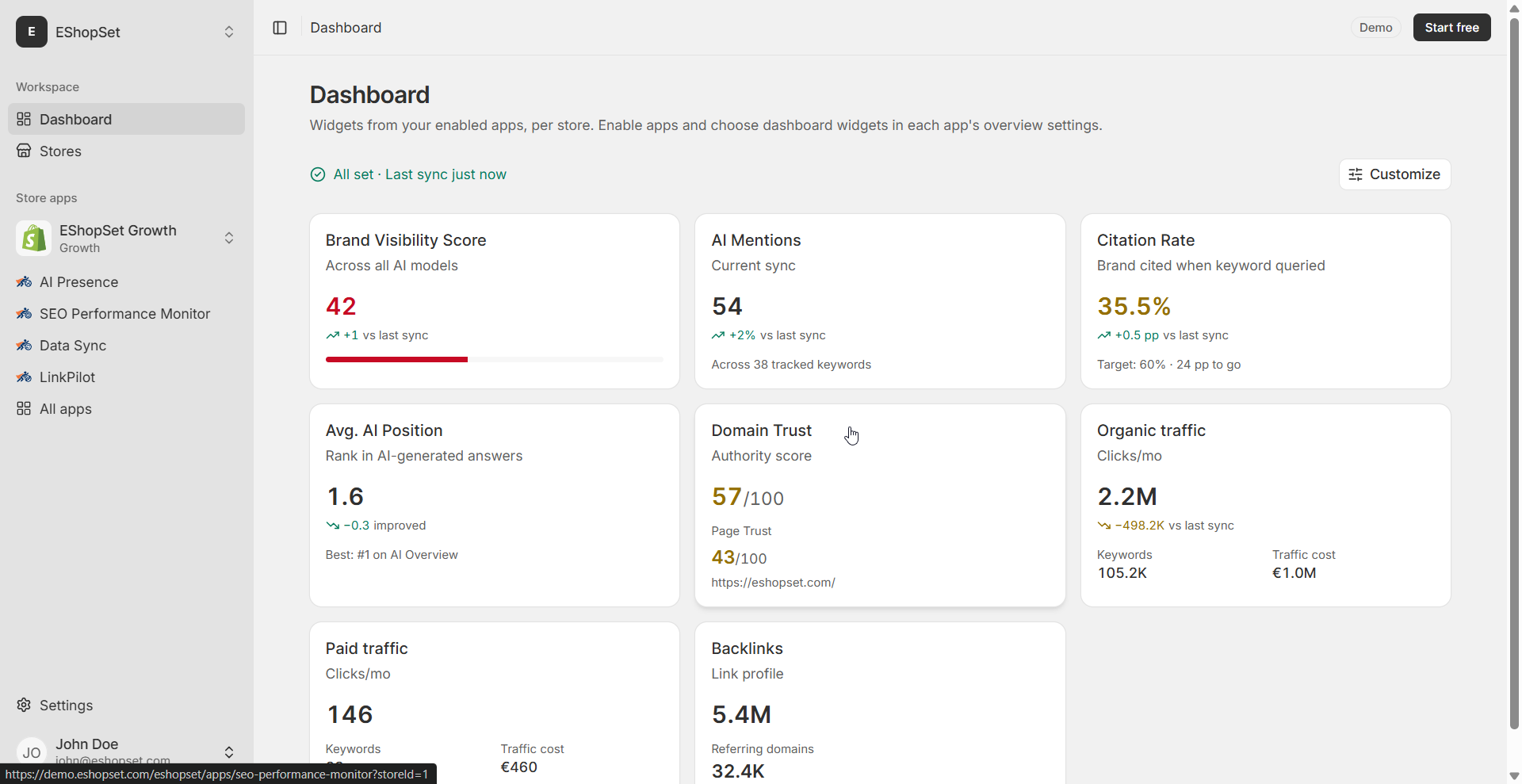
The first step is to understand what AI currently says about your business. As one experienced merchant suggested, run a series of buying-intent prompts (e.g., 'best [your product type] for [specific use case]') in various AI tools. Pay close attention to which brands are named, and crucially, if your own store's information is accurate and up-to-date. Are you seeing competing domains in AI answers Shopify queries that should feature your brand? If AI models are pulling outdated product descriptions, old scent names, or missing key schema, they will likely repeat that inaccurate or incomplete information. Tools like EShopSet’s AI Presence app can help Shopify merchants monitor their brand’s visibility and accuracy across AI-powered search, providing insights into how AI models perceive your store and products.
2. Optimize Content for AI
AI models thrive on structured, answer-first content. This means:
- Structured Product Pages: Ensure your product pages have rich, detailed descriptions, high-quality images, and robust schema markup.
- Comprehensive FAQs: Create dedicated FAQ sections that directly answer common customer questions about your products.
- Comparison Pages: Develop 'vs.' pages that compare your products to alternatives, providing clear differentiators.
- Fresh Reviews: Encourage and feature recent customer reviews that include specific product details and use cases. AI models often pull from these for fresh insights.
By providing clear, concise, and easily digestible information, you make it simpler for AI to accurately represent your brand.
3. Maintain Freshness & Accuracy with Consistent Data Management
Outdated information is a killer for AI presence. The original poster noted AI sometimes described their store with information from a year ago. This highlights the critical need for constant data freshness. If your product catalog changes frequently, or you need to update prices, inventory, or descriptions across many items, manual updates can be a bottleneck. This is where tools like EShopSet’s Sheet2Cart become invaluable. It allows for hourly Shopify product sync from Sheets, ensuring your product data on Shopify is always current and accurate, which in turn feeds the most up-to-date information to AI models. This automation saves significant time and prevents AI from citing stale details about your offerings.
4. Monitor SEO Performance
At its core, AEO builds upon strong SEO. If your website isn't discoverable by traditional search engines, it's unlikely to be picked up by AI models. Regularly monitor your Shopify organic keyword rankings, track your site's crawlability, and identify opportunities for improvement. EShopSet’s SEO Performance Monitor app provides Shopify merchants with the tools to keep a close eye on their search engine visibility, identify ranking changes, and understand how their SEO efforts are impacting their overall digital presence. A strong SEO foundation is the bedrock for effective AI-Enhanced Optimization.
Tracking & Measurement
One community member likened tracking AI sales to tracking billboard impact – if they don't tell you, you won't know. While direct attribution can be challenging, it’s not impossible.
- Consistent Query Tracking: Regularly run your buying-intent prompts and note changes in AI responses.
- Analytics Monitoring: Keep a close eye on your analytics (e.g., Google Analytics 4) for referral traffic and sales originating from AI tools. Look for direct referrals from AI platforms or keywords that indicate AI search intent.
- Brand Mentions: Track where and how your brand is being mentioned across the web, as this feeds into AI models.
If you start seeing referral traffic or, more importantly, direct sales from these sources, that's a clear indicator that your AEO efforts are paying off.
Conclusion
The shift towards AI-powered search and recommendations is undeniable. For Shopify merchants, ignoring this trend is no longer an option. While the initial skepticism is understandable, the evidence from the community suggests that proactive engagement with AI-Enhanced Optimization can indeed lead to tangible sales. By focusing on robust SEO, creating AI-friendly content, ensuring your product data is always fresh, and actively monitoring your AI presence, you can transform AI from a confusing buzzword into a powerful sales channel for your Shopify store. EShopSet provides the integrated tools – SEO Performance Monitor, AI Presence, and Sheet2Cart – to empower you on this journey. Start optimizing your Shopify store for the AI era today, and unlock new avenues for growth.