Mastering Shopify SEO: Fix Non-Indexed Pages, Soft 404s, and Traffic Drops
Running a Shopify store is a dynamic balancing act, where daily operations often intersect with the intricate world of search engine optimization. It's common for merchants to encounter technical SEO challenges that can feel overwhelming. Recently, a compelling discussion in an online community brought to light some critical issues many Shopify store owners face: a significant number of non-indexed pages, the elusive "Soft 404" errors, and a perplexing drop in traffic for previously high-performing pages. This scenario is incredibly relatable, and the insights shared by community members offer a valuable roadmap for diagnosis and resolution.
Navigating the Labyrinth of Non-Indexed Pages
The original poster in the community thread highlighted a common concern: hundreds of non-indexed pages in Google Search Console (GSC) alongside their indexed counterparts, prompting the question of whether all pages should be indexed. This is a crucial distinction. As a community member aptly pointed out, not every page on your Shopify store needs to be discoverable by search engines.
Consider pages like customer login portals, specific filtered search results (e.g., "red dresses under $50"), or internal administrative sections. Indexing these can dilute your store's SEO authority and waste Google's crawl budget. The goal is strategic indexing – ensuring only valuable, unique content is presented to search engines.
Step-by-Step Approach to Non-Indexed Pages:
- Audit in GSC: Begin by thoroughly examining the "Not Indexed" report within Google Search Console. Google typically provides a specific reason for exclusion (e.g., "Blocked by robots.txt", "Noindex tag").
- Identify Intentional Exclusions: For pages you deliberately want to keep out of search results (like internal utility pages), ensure they have a
tag or are disallowed in yourrobots.txtfile. Shopify often handles many of these automatically, but verification is key. - Address Unintentional Exclusions: If important product or collection pages are unintentionally non-indexed, investigate the reported reason. Common culprits include accidental
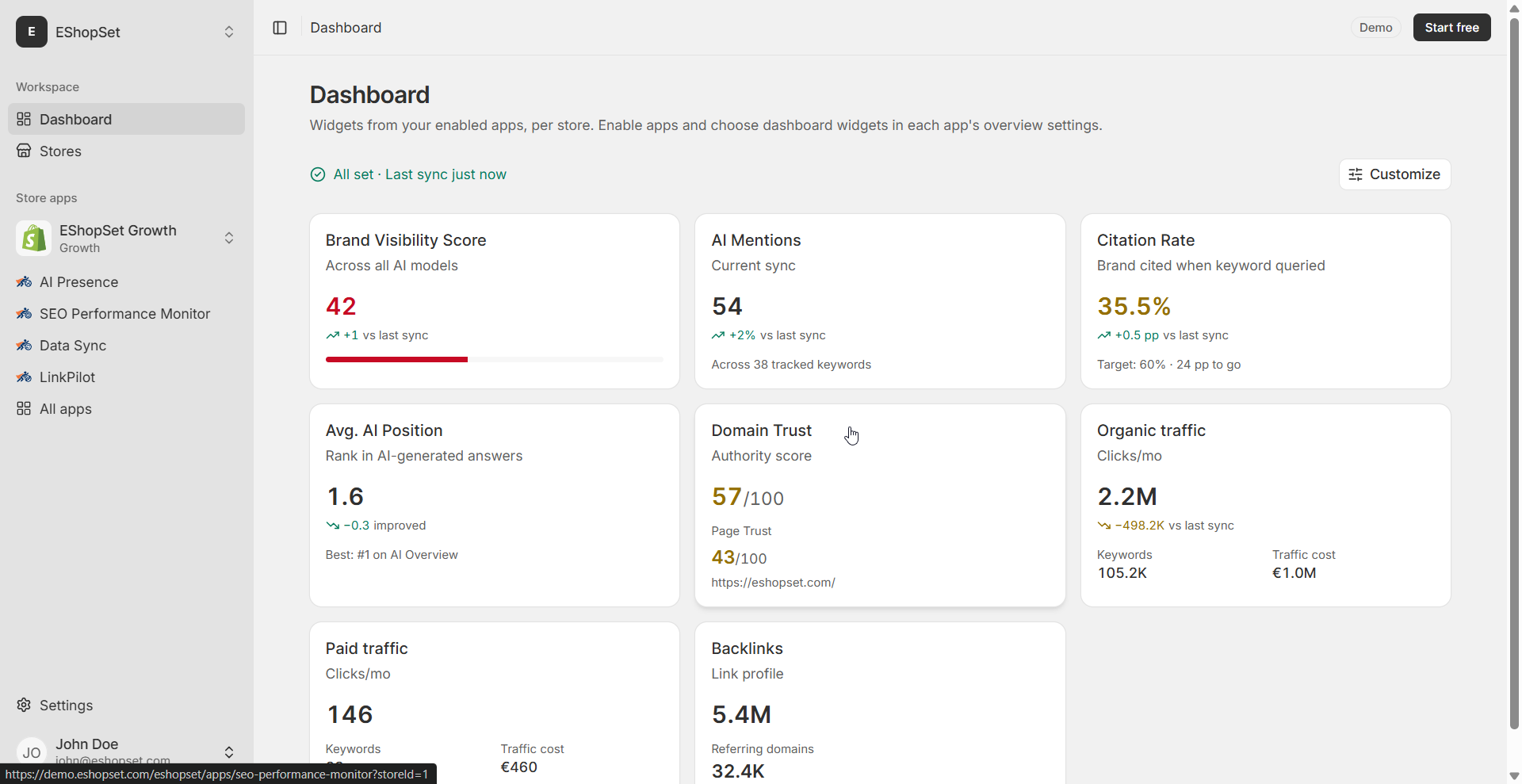
noindextags or internal linking issues. Tools like EShopSet's SEO Performance Monitor can help you quickly identify such critical indexing issues across your Shopify store, providing actionable insights. - Prioritize and Validate: Focus on fixing issues for vital pages. Once changes are made, use GSC's "Validate Fix" feature.
Deciphering and Resolving "Soft 404" Errors
Another significant concern raised by the original poster was the presence of numerous "Soft 404" errors. A community member provided an excellent explanation: a Soft 404 occurs when a page returns a "200 OK" status code to Google but displays minimal or no content, often redirecting users to the homepage. This confuses search engines, leading to wasted crawl budget and potential ranking issues.
Soft 404s are particularly prevalent in e-commerce due to frequently changing product catalogs. When a product is discontinued or a page is removed without proper handling, a Soft 404 can easily arise.
How to Identify and Fix Soft 404s:
- GSC's Coverage Report: Google Search Console is your primary tool for detecting Soft 404s.
- Determine Intent: For each Soft 404, ask: Is this page truly gone? Is there a direct replacement or a highly relevant alternative?
- Implement 301 Redirects: If a page has been moved or replaced, implement a 301 Permanent Redirect. This tells search engines and users that the content has permanently moved, passing on any accumulated link equity. Shopify's built-in URL redirects feature is excellent for this.
- Create a Proper 404 Page: If a page is genuinely gone with no suitable replacement, ensure your Shopify store displays a true 404 "Page Not Found" error. A well-designed 404 page should offer helpful navigation and search functionality. EShopSet's SEO Performance Monitor can help you keep an eye on these critical errors, ensuring your store communicates correctly with search engines.
Reviving Lost Traffic and Boosting Visibility
The most distressing issue for any merchant is a sudden drop in traffic for pages that previously performed well. This signals a problem that needs immediate attention. As community members suggested, the causes can be multifaceted, ranging from technical glitches and content quality issues to changes in search engine algorithms.
Diagnosing and Recovering Lost Traffic:
- Check for Technical Issues: Start with the basics. Has anything changed on your site recently? Are there new crawling or indexing errors in GSC? A community member wisely asked about internal linking – strong, relevant internal links are crucial for both user navigation and search engine discovery.
- Content Quality and User Experience: Assess the content of the affected pages. Is it unique, valuable, and does it directly answer searchers' questions? As another community member highlighted, "Do the pages have 2-5 unique personalized facts that help searchers?" and "Is the cross browser and device experience work well?" Ensuring your content is engaging, well-structured, and provides a seamless experience across all devices is paramount. This is where EShopSet's AI Presence app can be a game-changer. It helps you craft compelling, unique product descriptions and content that resonates with your audience and stands out in search results.
- Maintain Up-to-Date Product Data: Inconsistent or outdated product information can severely impact traffic. If a product is listed incorrectly, or if pricing and availability are not current, it can lead to poor user experience and high bounce rates. This is where efficient product data management comes into play. With EShopSet's Sheet2Cart, you can easily manage your entire product catalog through spreadsheets, enabling bulk updates and ensuring your product listings are always accurate and optimized. This includes facilitating a robust scheduled Shopify product sync, which is essential for maintaining consistency across your store and preventing issues that deter both customers and search engines.
Proactive monitoring and maintenance are not just best practices; they are essential for the sustained success of your Shopify store. Issues like non-indexed pages, Soft 404s, and traffic drops are often symptoms of underlying technical or content-related challenges that, once identified, can be systematically addressed.
Empowering Your Shopify Store with EShopSet
Managing the technical intricacies of SEO, optimizing content for AI-driven search, and maintaining a pristine product catalog can seem like a monumental task for any Shopify merchant. However, with the right tools, these challenges become manageable opportunities for growth.
EShopSet offers a comprehensive bundle of Shopify apps designed to streamline your daily operations and boost your online presence:
- SEO Performance Monitor: Your vigilant guardian for technical SEO, identifying indexing issues, crawl errors, and providing insights to improve your search visibility.
- AI Presence: Elevate your content strategy with AI-powered tools that help you generate engaging product descriptions, optimize for search intent, and create a compelling digital presence.
- Sheet2Cart: Simplify your product management with powerful spreadsheet-based bulk editing and a reliable scheduled Shopify product sync, ensuring your catalog is always accurate and up-to-date.
By leveraging EShopSet's integrated solutions, Shopify merchants can confidently navigate the complexities of e-commerce, ensuring their stores are not only operational but also optimized for maximum reach and revenue. Explore how EShopSet can transform your store's performance today at eshopset.com/apps/.