Taking the Leap: Real Talk on Launching Your Shopify Store and Mastering Daily Operations
Ever felt that mix of excitement and absolute terror when you’re about to launch something big? You’re not alone. We recently saw a fantastic discussion in an online community, where an original poster shared their 'YOLO' moment: opening an LLC, ordering 500 units of a customized product from China, and planning a Kickstarter campaign before a full Shopify store launch. It’s a feeling many of us in the e-commerce world can relate to, especially when diving into a saturated market with a passion project.
The Big Leap: Passion, Product, and Prudence
The original poster (OP) shared a really transparent look at their situation: a stable full-time job, low personal overheads, and a clear desire to see if they could 'make a thing and make it gain traction.' This low-risk personal setup resonated with many, with one community member noting, "Sounds like you’re in a position that it’s fairly low risk, I don’t see why you wouldn’t." This highlights a crucial point for new merchants: understanding your personal risk tolerance and financial runway is paramount.
The OP had already ordered inventory, which sparked a great debate. Some asked why not use Kickstarter first to gauge demand. The OP’s reasoning was insightful: Kickstarter offers a niche audience not solely focused on 'cheap things,' provides visibility, and offers control over fulfillment dates. As they put it, "I feel like there are a ton of advantages to Kickstarter--especially if you already have inventory." However, other seasoned entrepreneurs warned that if your product isn't unique, successful Kickstarter campaigns can quickly lead to copycats.
Marketing: The Real Battleground
One of the strongest takeaways from the discussion was the overwhelming consensus that marketing, not just the product, makes or breaks a business. As one respondent wisely stated, "Marketing matters more than the product." Another echoed this, saying, "D2C is won and lost on marketing and brand." This is especially true in a saturated market like the OP's travel gear niche.
The conversation then shifted to advertising channels. While some suggested sticking to Google and Meta, a community member made a compelling case for Reddit ads, claiming properly targeted ads on the platform "will massively outperform either of those for ROAS." It just goes to show that experimenting with diverse marketing channels is key to finding what works for your specific product and audience.
Beyond paid ads, consistent content creation was a recurring theme. One successful entrepreneur shared their journey, scaling from $80/day to $250/day in ad spend, but also increasing organic content posting from once a day to twice, aiming for three times daily. They emphasized that "Organic content is definitely important. Feel like your paid ads and content is all part of the same stratosphere/pixel." This holistic approach to content, testing different styles and hooks, is vital for building brand presence and driving sales.
Operational Excellence: Beyond the Launch
While the excitement of launching is infectious, the thread also touched on the less glamorous but equally critical aspects of daily operations. Managing manufacturing quality, especially when sourcing from overseas, was a key concern. The OP highlighted their strategy of ordering samples and understanding the industry to mitigate risks.
Another crucial piece of advice came from a community member: "One thing I would recommend, since you are just starting out, is to make sure you organise your costs and invoices correctly so you know the true landed cost." This seemingly small detail can have a huge impact on profitability and scaling. For Shopify merchants, maintaining accurate product data, inventory levels, and pricing across all your sales channels is a continuous task. Tools that facilitate a daily Google Sheets Shopify sync can be a game-changer here, simplifying updates and ensuring your store reflects the latest information. Getting your Shopify column mapping Google Sheets set up correctly can save countless hours and prevent errors.
Ultimately, the journey is an experiment. As the OP put it, "This step--this 500 units is about proving the demand. About seeing if i can build a thing and make it gain traction with consistent effort." It's about learning the real costs, not just monetary, but life-wise, and understanding if this path aligns with your long-term goals.
EShopSet Team Comment
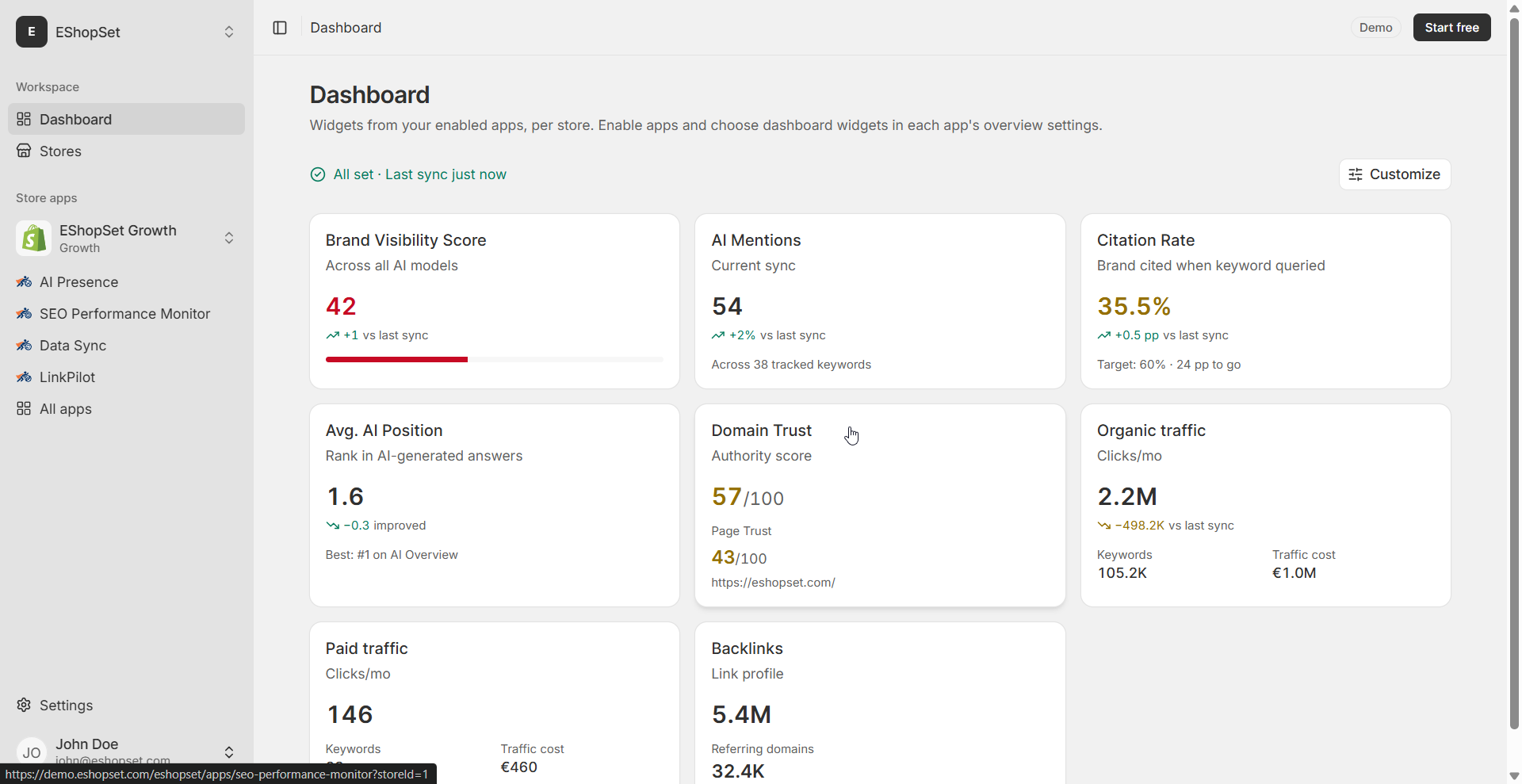
We at EShopSet see this all the time: the leap into e-commerce is exciting, but the daily grind of making it profitable requires smart, consistent effort and the right tools. For a new brand, keeping a constant eye on your visibility and competitive landscape with a tool like the SEO Performance Monitor is absolutely critical to getting discovered. And as you scale your product range and manage inventory, streamlining your catalog updates with Sheet2Cart, especially for your daily Google Sheets Shopify sync and precise Shopify column mapping Google Sheets, will save you invaluable time and prevent errors. Furthermore, leveraging AI Presence from day one can give you a significant edge in crafting compelling product descriptions, marketing copy, and engaging content, ensuring your brand message is always on point.
So, whether you're taking the plunge with your first product or looking to optimize an existing store, remember the wisdom from this community: market relentlessly, stay organized, and never stop learning. The path to e-commerce success is built on continuous effort and smart operational choices.