Navigating Supplier Partnerships: Beyond Shopify Collective to Core Store Operations
Hey fellow Shopify merchants and store operators! It's always great to dive into community discussions, looking for shared experiences and insights. Recently, I stumbled upon a thread asking a very pertinent question: "What do you think about 'Shopify Collective'?" The original poster was eager to hear from those who'd used it, either as a retailer or a supplier, to understand its efficacy in connecting with "vetted Shopify brands offering quality products with better margins and faster shipping."
Now, here's where it gets interesting – or perhaps, a little quiet. Despite the great question, the community discussion itself didn't quite take off. Several attempts by community members to share their thoughts were unfortunately removed by automatic moderation bots. This means we don't have a direct pool of collective (pun intended!) merchant experiences to draw from regarding Shopify Collective's actual performance in the wild.
However, the original question still highlights a fundamental challenge many of us face: how do we find reliable suppliers and effectively integrate their products into our stores? Even without direct community feedback on Collective, we can still extract vital lessons about what makes supplier partnerships successful and how to ensure our own operational backbone is strong enough to handle new ventures.
The Promise of Streamlined Sourcing and the Reality of Operations
Shopify Collective aims to simplify a complex part of ecommerce: sourcing. The idea of readily available, vetted suppliers with good margins and fast shipping is incredibly appealing. For many merchants, especially those looking into dropshipping or expanding their product lines without significant upfront inventory investment, this sounds like a dream. But whether you're using Collective, another marketplace, or direct outreach, the moment you bring new products into your store, your daily operations kick into high gear.
This is where the rubber meets the road. Finding the supplier is just the first step. The real work begins with managing that product data, ensuring inventory accuracy, and making sure these new items are discoverable by your target audience. Think about it: if you onboard a fantastic product but your inventory count is off, or it's buried deep in search results, what's the point?
Mastering Your Product Catalog and Inventory
Let's talk brass tacks. When you integrate products from a new supplier, you need a robust system for managing your catalog. This often means dealing with spreadsheets. Many successful merchants rely on a daily Google Sheets Shopify sync to keep their product data fresh and accurate. Imagine a scenario where a supplier updates their inventory, or introduces new SKUs; having an automated way to reflect these changes in your Shopify store saves countless hours and prevents overselling or missed opportunities.
What if a product goes out of stock? With a reliable sync, you can easily manage Shopify zero inventory from sheet sync, ensuring your store accurately reflects availability without manual updates. This is crucial for customer satisfaction and avoiding backorder headaches. And what happens when a supplier discontinues a product, or you decide to rotate your offerings? The ability to Shopify archive products from sheet allows you to neatly remove items from your active listings without fully deleting their history, keeping your store clean and manageable.
Ensuring Your New Products Get Seen
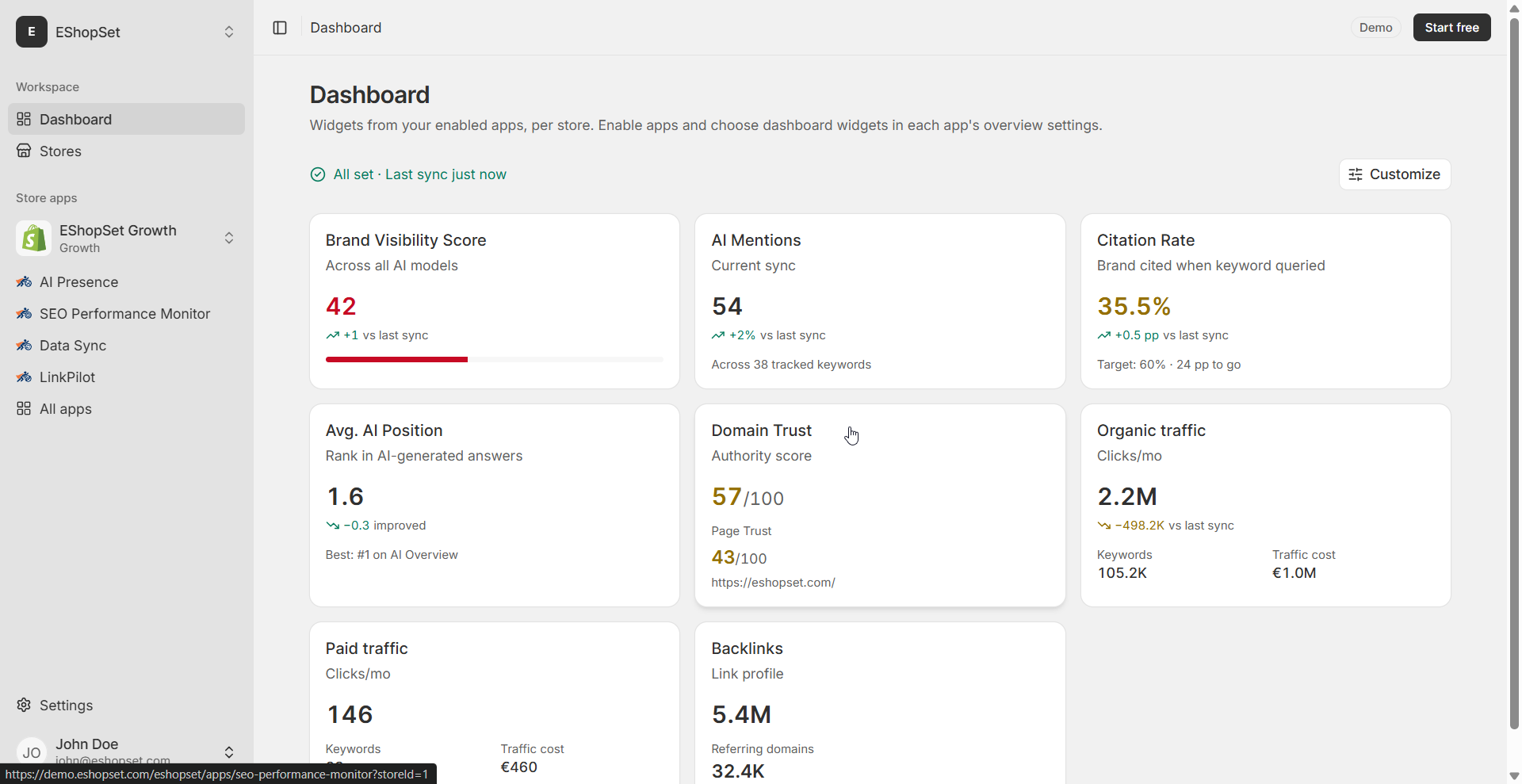
Once products are in your catalog, they need to be found. This is where SEO becomes non-negotiable. With new products, you need to ensure their titles, descriptions, and meta-data are optimized for search engines. Are you tracking how your new product pages rank? Are you monitoring your competitors' visibility for similar items? Tools like SEO Performance Monitor become indispensable here, helping you understand if your new offerings are gaining traction and where you might need to adjust your strategy.
Beyond traditional SEO, the rise of AI in search and content means your product descriptions need to be not just keyword-rich, but also engaging and persuasive. This is where AI Presence can be a game-changer. Crafting unique, compelling descriptions for dozens or hundreds of new products manually is a huge time sink. Leveraging AI to generate optimized content not only saves time but can significantly enhance your product's appeal and visibility across various digital touchpoints, including AI Overviews.
EShopSet Team Comment
While the Reddit thread didn't yield direct user experiences with Shopify Collective, it underscores the constant need for efficient supplier management and robust store operations. We believe that relying solely on a platform to "vet" suppliers isn't enough; merchants must have control over their product data and visibility. That's why EShopSet offers tools like Sheet2Cart for seamless product and inventory updates, SEO Performance Monitor to ensure new products are discoverable, and AI Presence to create captivating product content, empowering merchants to succeed regardless of their sourcing method.
Ultimately, whether you explore Shopify Collective or other avenues for sourcing, your success hinges on your ability to efficiently manage your product data, keep your inventory accurate, and ensure your products are easily found and beautifully presented. Focusing on these core operational strengths – with the right tools – will always put you in the best position to thrive, no matter how your supplier network evolves. Keep optimizing, keep syncing, and keep growing!