Inventory Financing for Shopify: Line of Credit vs. Lump Sum & The Critical Role of Sell-Through
Hey there, fellow Shopify merchants and store operators! We've all been there, staring at our inventory spreadsheets, planning the next big order, and wondering how to best fund it. The question of whether to go for a line of credit or a lump sum loan for inventory is a classic one, and it recently sparked a really insightful discussion in an ecommerce community that I wanted to share with you.
The original poster, who works with ecommerce sellers on financing, kicked things off by noticing a clear pattern: sellers with a bit of a cash cushion often lean towards a line of credit. Why? Because it's flexible and doesn't cost a dime until you actually use it. On the flip side, merchants with a very specific, large purchase in mind – think that massive Q4 holiday order – tend to prefer a lump sum. It's straightforward; you know exactly what you owe and when.
The Great Debate: Flexibility vs. Predictability
This initial observation really resonated with a thoughtful community member who jumped into the discussion. They agreed that this split makes perfect sense. If your product demand is lumpy but your inventory purchases are predictable, a lump sum offers clarity. You can easily connect that debt directly to the specific inventory it's funding. It's a clear, defined commitment.
However, if your cash flow is a bit more uneven, or you need the agility to respond to fluctuating demand, a line of credit becomes incredibly appealing. It gives you that crucial flexibility without the burden of paying interest on money you haven't drawn down yet. Think of it as a financial safety net, ready when you need it, but not costing you when it's just sitting there.
The Real Game-Changer: Inventory Turn Time
While the choice between a line of credit and a lump sum is important, the conversation quickly pivoted to what truly matters: how fast your inventory sells. This is the absolute core insight from the discussion. As one respondent wisely put it, "The bigger question is how fast the inventory turns, because expensive capital gets ugly if stock sits for six months."
The original poster echoed this sentiment, emphasizing that repayment trouble isn't about the type of financing you choose; it's almost always about your sell-through rate. Whether you have a line of credit drawn on slow stock or a lump sum tied to stagnant inventory, the outcome is the same: cash flow problems and regret. The critical point of regret, they explained, is when your stock takes longer to sell than your repayment period. That's when you're forced to dip into other cash reserves to cover the debt, creating a real squeeze.
This highlights a crucial point for all Shopify merchants: your financing strategy, however smart, is only as good as your inventory management and sales velocity. Slow-moving stock is a drain on resources, regardless of how you paid for it.
EShopSet Team Comment
We absolutely agree with the community's consensus: inventory turn time is paramount. While financing choices offer strategic advantages, they cannot compensate for poor sell-through. Merchants must prioritize optimizing product visibility and sales velocity to ensure inventory moves quickly. Our EShopSet apps are designed precisely to help Shopify merchants achieve faster turns and stronger cash flow.
Optimizing for Faster Turns: Practical Steps for Shopify Merchants
So, how do you ensure your inventory turns quickly and avoids that dreaded "regret point"? It boils down to smart operations, and that's where tools like EShopSet come in handy.
1. Know Your Audience and Demand with SEO Performance Monitor
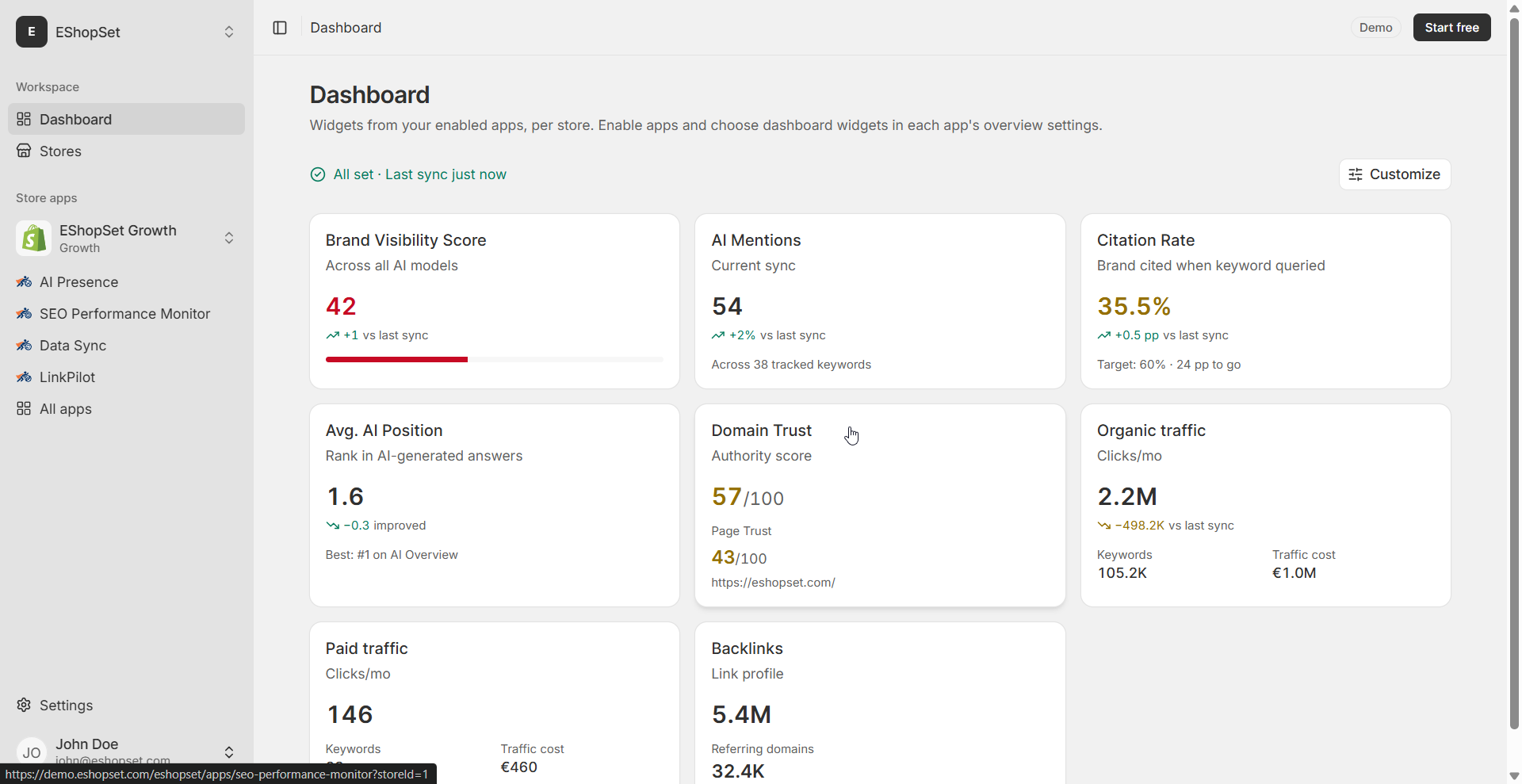
If customers can't find your products, they can't buy them. Understanding your market demand and ensuring your products are discoverable is fundamental to fast inventory turns. This is where SEO Performance Monitor becomes indispensable. Regularly track your Shopify organic keyword rankings to see how your products are performing in search results. Identify your Shopify top organic pages – these are your powerhouses, driving traffic and sales. If a key product isn't ranking well, it's a red flag that it might become slow-moving stock. Use these insights to optimize product titles, descriptions, and collections to match what buyers are searching for.
2. Boost Product Appeal and Visibility with AI Presence
Once customers find your products, you need to convince them to buy. AI Presence helps you craft compelling product descriptions and marketing copy that convert browsers into buyers. By leveraging AI, you can ensure your product listings are not only informative but also highly engaging and optimized for search engines. This improved 'presence' directly contributes to higher conversion rates and, you guessed it, faster inventory turns.
3. Streamline Inventory & Catalog Management with Sheet2Cart
Efficiently managing your product catalog is crucial, especially when dealing with large inventory orders (like those lump sum purchases for Q4). Manual updates or clunky CSV uploads can lead to errors, delays, or outdated information, all of which slow down sales. Sheet2Cart allows for seamless Shopify sheet sync without CSV upload, enabling you to manage your product data, inventory levels, and pricing directly from a Google Sheet. This means real-time accuracy, faster product launches, and fewer opportunities for stock-outs or overstocks that can lead to stagnant inventory.
Ultimately, whether you choose a line of credit for its flexibility or a lump sum for its predictability, the underlying success of your Shopify store hinges on your ability to sell through your inventory efficiently. By focusing on strong SEO, compelling product presentation, and streamlined catalog management, you'll be in a much better position to make any financing choice work for you, avoiding regret and keeping your cash flow healthy.