Escaping the Manual Grind: Why Smart Automation is Your Shopify Superpower
Ever felt like you're drowning in manual tasks just to keep your online store afloat? You're not alone. We recently stumbled upon a spirited community discussion that perfectly captured the frustration of many store operators dealing with clunky, outdated systems and endless manual data entry. While the original poster's rant was about a specific non-Shopify platform, their struggles hit home for anyone managing an ecommerce catalog.
The Pain of Manual Product Management
The original poster described a truly exhausting scenario: being hired to upload products and edit images, only to slowly morph into a full-time 'tool-maker' just to make the website function. Imagine having to manually update every price, upload every product, and process every change from a supplier by hand. It's mind-numbing, boring, and a massive drain on time and resources.
Their story highlighted a core problem: a severe lack of bulk actions, no support for major production-ready solutions, and inadequate SEO tools. They resorted to 'vibe coding' browser extensions, scrapers, and even platform extensions to automate tasks like downloading product data, checking prices, and processing images. This isn't just inefficient; it's a desperate measure born out of necessity when the underlying system fails to support basic ecommerce operations.
This situation becomes even more complex when supplier data is a mess. As the original poster elaborated, they rarely received clean CSVs or APIs; instead, they got spreadsheets with prices that needed extensive reformatting, or even had to scrape supplier websites for images and data, often dealing with watermarks and inconsistent pricing. This 'sketchy' data acquisition process makes maintaining accurate product information incredibly difficult.
Community Insights: Building Tools vs. Changing Platforms
The community discussion quickly resonated with others. One respondent rightly pointed out that a content management system (CMS) isn't inherently designed for robust ecommerce functionality, leading to these kinds of operational bottlenecks. The consensus was clear: the original poster's situation was a nightmare for an ecommerce business.
Several solutions were tossed around:
- Leveraging AI for Tooling: One community member suggested using AI to whip up tools for bulk actions, acknowledging the existing environment's aversion to risk and spending. This points to the power of AI in automating repetitive, data-intensive tasks.
- Platform Migration: Many advocated for getting off the problematic platform entirely. Suggestions ranged from WooCommerce to PrestaShop, highlighting the need for a system built specifically for ecommerce. However, the original poster revealed that migration attempts were often scrapped due with resistance to change within their organization, even when a modern solution was proposed.
- Technical Workarounds: For those stuck on older platforms, technical advice included hooking up 'feeds modules' or writing scripts against JSON:API endpoints for bulk uploads and price updates via CSV. This underscores the critical role of structured data import and export capabilities.
What became clear is that the core problem wasn't just the platform, but the fundamental challenge of data ingestion, bulk editing, and process automation – issues that plague many businesses, regardless of their ecommerce platform.
What This Means for Shopify Merchants
While the original discussion was about a different platform, the underlying pain points are incredibly relevant to Shopify merchants and store operators. Even on a robust platform like Shopify, managing product data from multiple, often messy, suppliers can be a huge headache. Manual updates, inconsistent product descriptions, and slow catalog changes can impact everything from customer experience to your Shopify page trust score and SEO performance.
Automating these daily operations isn't just a luxury; it's a necessity for growth. Imagine being able to:
- Bulk Update Products: Quickly adjust prices, stock levels, or product details across thousands of items.
- Streamline Product Uploads: Get new products live faster, with accurate data and rich descriptions.
- Monitor SEO Performance: Keep an eye on your search rankings and identify opportunities for improvement without constant manual checks.
- Enhance Product Content with AI: Generate compelling product descriptions and ensure consistent brand voice across your catalog.
These capabilities free you from the 'manual labor' trap, allowing you to focus on strategy, marketing, and growing your business.
EShopSet Team Comment
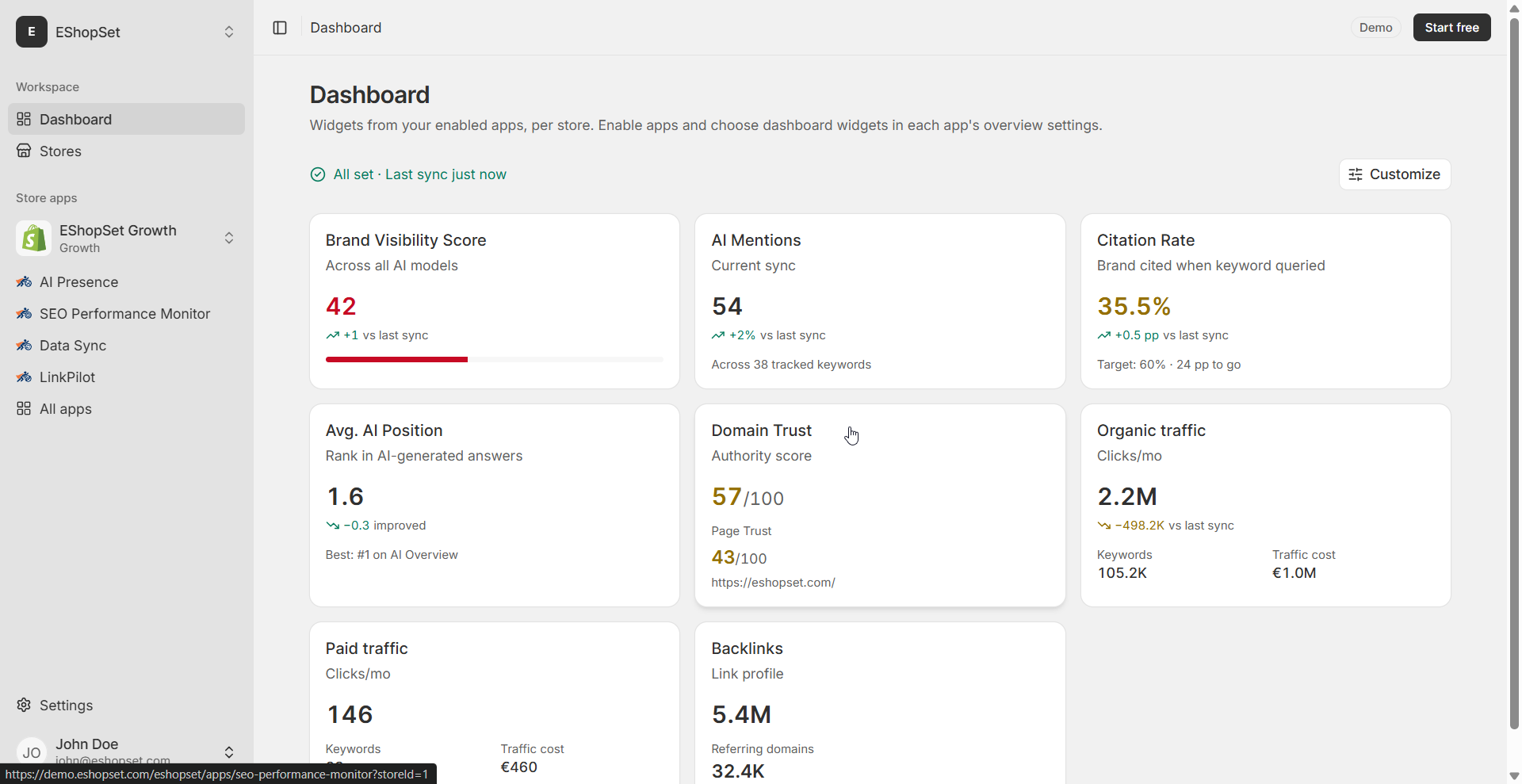
This discussion perfectly illustrates the critical need for efficient daily operations in ecommerce. We wholeheartedly agree that wrestling with manual product data is a productivity killer and a barrier to growth. Shopify merchants are fortunate to have an ecosystem built for seamless operations, and EShopSet is designed to amplify that advantage. Our Sheet2Cart app directly tackles the bulk upload and catalog sync challenges highlighted here, making supplier data management a breeze. For optimizing your store's discoverability and content, SEO Performance Monitor and AI Presence are invaluable for ensuring your products stand out and rank well.
Don't let manual product management be your bottleneck. Embrace the power of automation and specialized tools. Shopify provides a fantastic foundation, and with the right app stack, you can transform tedious tasks into streamlined, efficient workflows. Focus on what truly matters: serving your customers and growing your brand, not endlessly updating spreadsheets.