Ditching Manual Data: The Shopify Merchant's Guide to Smart Operations
It's a story we hear often in the ecommerce world: the struggle with manual processes. We recently came across a fascinating community discussion started by an individual who built a free invoicing tool, KaamWala, for small shopkeepers and wholesalers still relying on handwritten invoices or basic Excel sheets. Their motivation? To streamline operations and bring efficiency to businesses stuck in the past. While their tool focused on invoicing, the core problem they're tackling — the shift from manual to digital — resonates deeply with many Shopify merchants and store operators today.
Think about your own daily routine. How much time do you spend on repetitive tasks that could be automated? For many, it's a significant chunk of the day, especially when it comes to managing product data, keeping an eye on SEO, or ensuring your brand's online presence is top-notch. The original poster's initiative is a powerful reminder that even seemingly small steps towards automation can make a huge difference.
The Hidden Costs of Manual Data Entry
Whether it's updating product descriptions, adjusting inventory levels, or even just tracking performance, manual data entry is a time sink. Beyond the hours spent, it's also prone to errors. A simple typo in a product price or stock count can lead to customer frustration, lost sales, or even costly returns. For Shopify merchants, this challenge often surfaces when trying to keep their product catalog up-to-date or when managing complex pricing structures.
Many start with Shopify's CSV import function, which is certainly a step up from purely manual entry. However, there's a crucial distinction to make: Data Sync vs Shopify CSV import. While CSV imports are great for one-off bulk updates, they don't offer continuous, real-time synchronization. This means if your product data lives in a Google Sheet and changes frequently, you're constantly re-importing, which can be cumbersome and still leaves room for discrepancies between your source data and your Shopify store.
Automating Your Shopify Catalog: Beyond Basic Imports
Imagine a world where your product data, housed in a spreadsheet, automatically updates your Shopify store. This is where true data synchronization shines. It's not just about getting data *into* Shopify, but ensuring it stays consistent and accurate without constant manual intervention. For merchants managing large catalogs or sourcing products from multiple vendors, this capability is a game-changer.
One of the most common hurdles is Shopify column mapping Google Sheets. Your spreadsheet might have columns like 'Item Code' or 'Wholesale Price,' while Shopify expects 'SKU' or 'Compare At Price.' A robust sync solution allows you to map these disparate columns seamlessly, ensuring that your data flows correctly from your sheet to your store. This eliminates the need for manual reformatting or editing CSVs every time you need an update.
Beyond Products: Automating for SEO and AI Presence
The principles of moving from manual to automated processes extend far beyond just product data. Daily operations for a Shopify merchant also involve staying competitive in search engines and ensuring your brand's AI presence is strong. Manually tracking SEO performance across hundreds or thousands of products, or monitoring how your brand appears in AI-driven searches, is simply not sustainable.
-
SEO Performance: Constantly monitoring keyword rankings, identifying broken links, or analyzing competitor performance manually can be overwhelming. Automated tools provide regular insights, alerting you to critical changes and helping you optimize your store without constant vigilance.
-
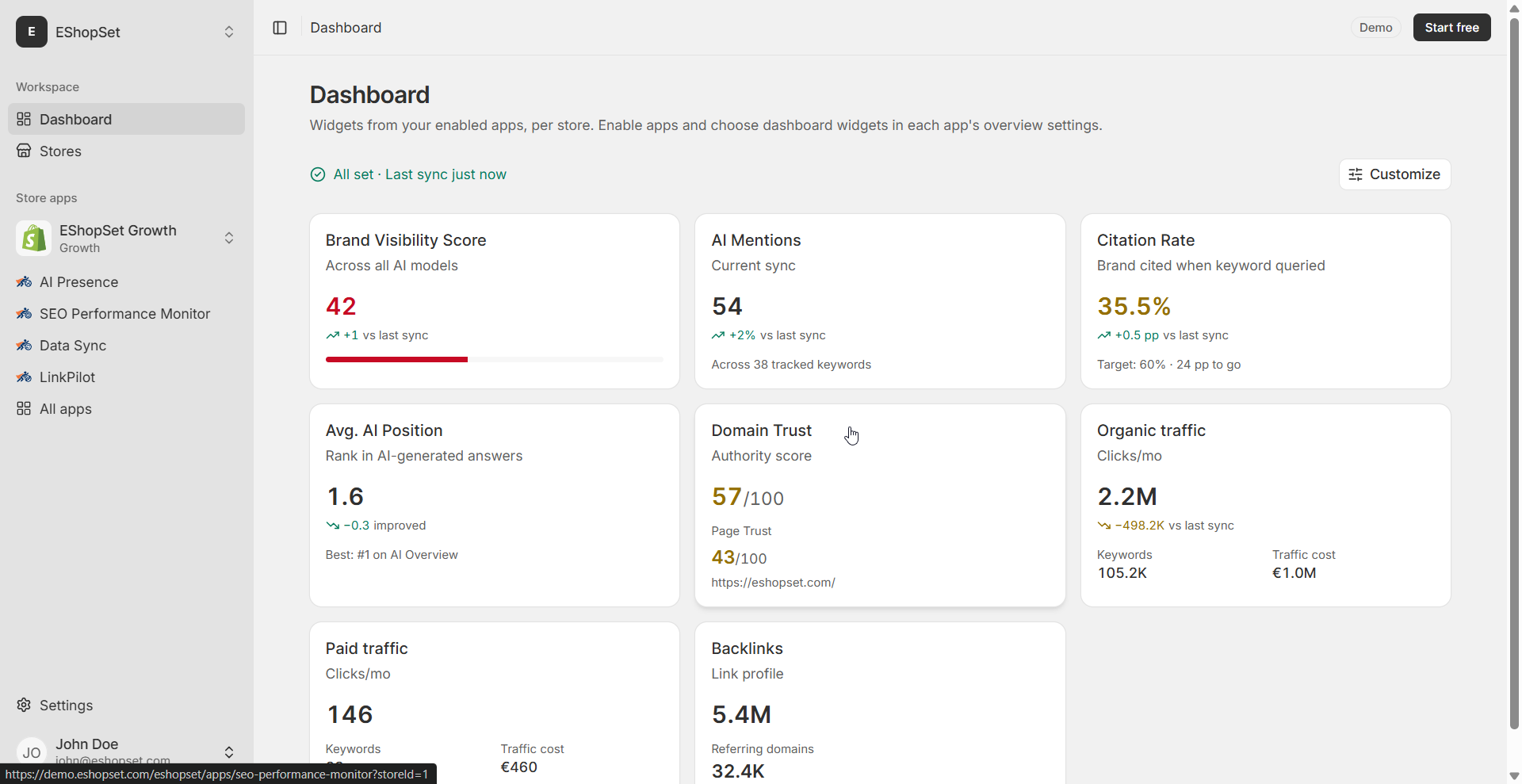
AI Presence: As AI becomes more integrated into search and shopping, understanding how your brand is perceived and cited by AI models is crucial. Manual checks are nearly impossible. Automated solutions can give you a clear picture of your brand's visibility and reputation in this evolving landscape.
EShopSet Team Comment
The original poster's initiative highlights a universal pain point: the need to move beyond manual, error-prone processes. For Shopify merchants, this isn't just about invoicing, but about efficient daily operations across the board. We believe that embracing automation is not just a convenience, but a necessity for growth. Sheet2Cart is specifically designed to tackle the challenge of keeping your Shopify catalog in sync with your Google Sheets, while SEO Performance Monitor and AI Presence ensure your store remains visible and competitive in today's digital landscape.
Making the Shift: Practical Takeaways
So, how can you, as a Shopify merchant, start making this shift?
-
Identify Your Manual Bottlenecks: Pinpoint the daily tasks that consume the most time and are prone to human error. Is it updating product prices, managing inventory, or tracking SEO rankings?
-
Explore Automation Tools: Look for apps that specialize in automating these specific areas. For product data, prioritize solutions that offer robust Shopify column mapping Google Sheets capabilities and true data synchronization.
-
Start Small, Scale Up: You don't have to automate everything at once. Begin with one critical area, see the benefits, and then gradually expand to other aspects of your operations.
-
Leverage Integrated Solutions: An integrated suite of tools, like EShopSet, can provide a more cohesive approach to managing your daily operations, ensuring that your product data, SEO, and AI presence are all working in harmony.
The journey from manual to automated operations is about empowering yourself and your business. By embracing smart tools and processes, you free up valuable time to focus on what truly matters: growing your Shopify store and serving your customers better. Just like the original poster recognized the need for a better invoicing solution, recognizing and addressing your own operational inefficiencies is the first step towards a more streamlined and successful future.