Solving the Mystery of Vanishing Shopify SEO Rankings: A Community Deep Dive
Hey there, fellow Shopify merchants and store operators!
Ever felt that sinking feeling when a product page you worked so hard to rank in the top 3 suddenly vanishes from Google's search results, only to miraculously reappear a week later as if nothing happened? You're not alone. This exact head-scratcher recently sparked a lively discussion in an online community, and the insights shared are incredibly valuable for anyone managing a Shopify store's SEO.
The Ranking Rollercoaster: Is It Real or Just a Glitch?
The original poster described a dramatic scenario: a client's page consistently ranking 1st-3rd for key terms, then dropping out of the top 100 for days or even a week, only to bounce back. Their rank tracker (Accuranker) confirmed the fluctuations, ruling out a tool-specific error. This kind of volatility can be terrifying for any merchant relying on organic traffic.
The first crucial piece of advice from a community member was to distinguish between a "real" ranking drop and a measurement anomaly. Sometimes, rank trackers might pick up different result sets or variations in SERPs (Search Engine Results Pages). The gold standard for verification? Google Search Console (GSC).
- GSC vs. Rank Tracker: If your GSC impressions and clicks remain stable during the reported "drop," it's likely a tracking or SERP variation issue. But if GSC also shows a significant dip, then you've got a genuine problem on your hands that needs immediate attention.
Unmasking the Culprits: Why Your Pages Disappear
Once you've confirmed the drop is real, the community pointed towards several common culprits for this "now you see it, now you don't" ranking dance:
1. Server-Side Shenanigans and CDN Hiccups
A recurring theme in the discussion was the possibility of server errors. Imagine Googlebot trying to crawl your page, only to be met with a 5xx server error, a timeout, or what's known as a "soft 404" (where a page loads but is essentially empty or broken). If the bot catches your page in this state, it might temporarily de-index it, causing the ranking drop. A community member specifically suggested checking server logs for Googlebot fetches during the exact periods of the drops.
For Shopify merchants, while you don't directly manage server logs in the same way a self-hosted site might, issues with your Content Delivery Network (CDN) or caching layer can sometimes cause similar intermittent availability problems. It's worth considering if any apps or configurations related to speed optimization were recently changed.
2. Canonical Confusion and Duplicate Content
Another strong contender for erratic rankings is canonicalization issues. Google tries to identify the "true" version of a page when multiple similar URLs exist. If Google can't decide which URL on your domain is the definitive canonical for a specific query, it might swap between different versions—perhaps a near-duplicate product page, an old blog post, or even a faceted navigation URL. This "dance" can lead to the page appearing and disappearing from top results.
One respondent noted, "Google can't decide which URL on the domain is the true canonical for that query." This is especially critical for large Shopify stores with many products, variations, or content pieces that might inadvertently target similar terms. Ensuring proper canonical tags and avoiding duplicate content across your Shopify apps bundle for content management is vital.
3. Google's Tests and Indexing Quirks
While less actionable from your end, Google constantly runs tests and experiments. Sometimes, these "test/rollback cycles" can cause temporary fluctuations as they evaluate different versions of their algorithms or SERP layouts. Also, changes in Google's crawling and indexing processes can lead to pages being re-evaluated, potentially causing a temporary dip before they settle back into their rightful place.
Your Shopify Store's Action Plan for Diagnosis and Recovery
Based on the expert advice from the community, here’s a practical roadmap for Shopify merchants facing similar ranking volatility:
- Start with Google Search Console (GSC): This is your single most important tool.
- Go to "Performance" and filter by the affected page and keywords.
- Check impressions and clicks during the periods of reported drops. If GSC shows stable performance, the issue might be with your tracker's data collection or SERP variations. If GSC reflects the drop, it's a real problem.
- Examine "Index Coverage" for any errors, warnings, or excluded URLs related to the page.
- Use the "URL Inspection" tool to see how Google last crawled and indexed the page. Look for any issues like "Page fetch error" or "Indexed, though blocked by robots.txt."
- Investigate Server and CDN Behavior:
- While direct server logs might not be readily available on Shopify, monitor your store's uptime and performance dashboards.
- If you use a third-party CDN or caching app, check its logs or support documentation for any reported outages or errors during the drop periods.
- Manually check the affected URL repeatedly during a suspected drop period to see if the page loads correctly or exhibits any errors.
- Audit for Canonical Conflicts and Duplicates:
- Use a site crawler (like Screaming Frog or similar tools) to identify any pages with similar content or targeting the same keywords as your fluctuating page.
- Check the HTML source of your pages for correct
tags. Ensure they point to the intended, definitive version of your page. - Review product variants and collection pages to ensure they are properly handled by Shopify's canonicalization, or if any custom themes/apps are creating unintended duplicates.
- Review Recent Changes:
- Did you recently install a new app, update your theme, or make any changes to your site's structure, redirects, or robots.txt file? Revert or test these changes to see if they correlate with the ranking drops.
EShopSet Team Comment
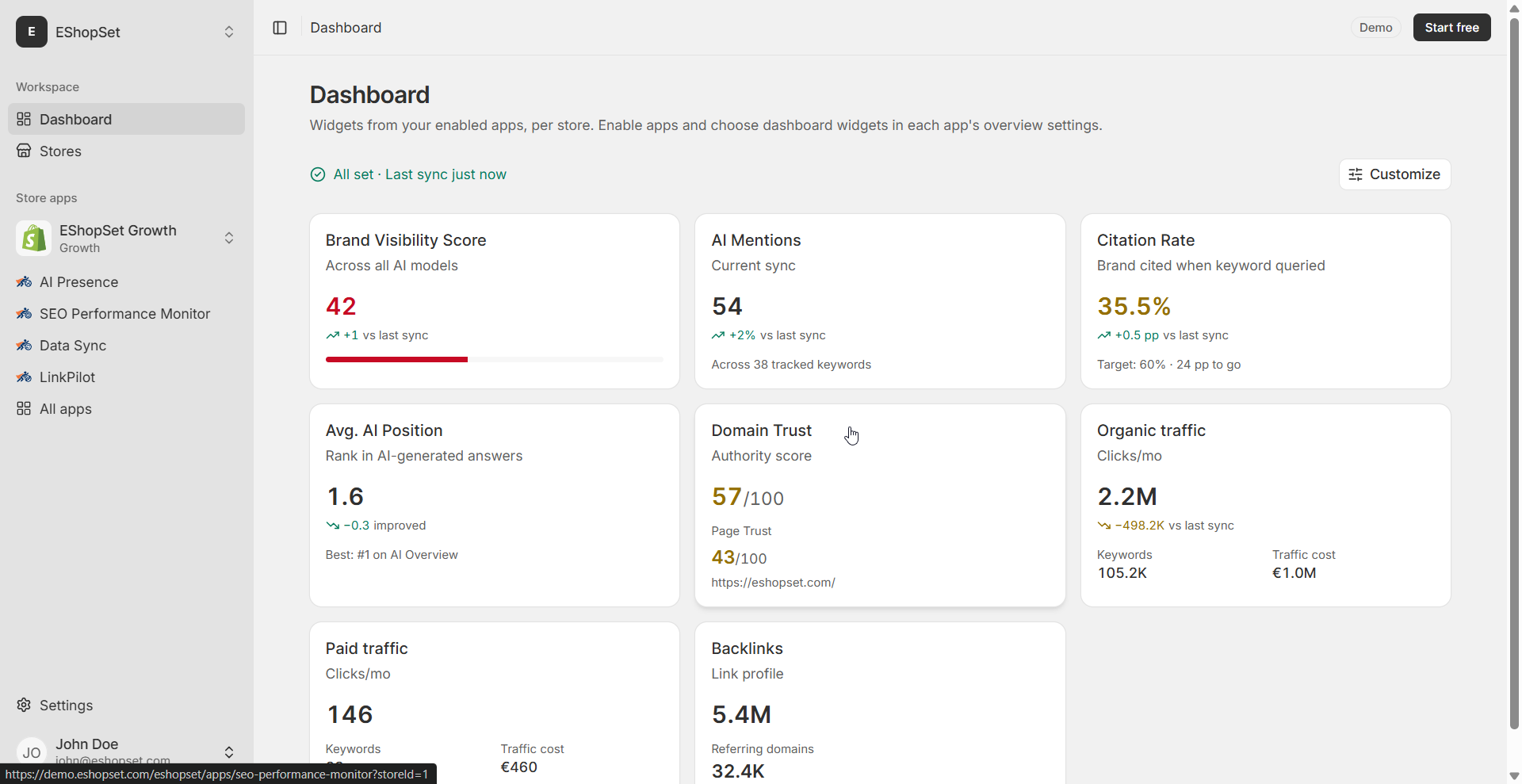
This community discussion perfectly highlights the critical need for proactive SEO monitoring and robust operational tools. We strongly believe that for any Shopify merchant, consistent tracking and immediate alerts are non-negotiable. Our SEO Performance Monitor app is designed precisely for this—to keep a vigilant eye on your rankings, identify drops, and alert you so you can investigate before significant traffic loss occurs. Furthermore, if canonical issues due to varying product data are suspected, Sheet2Cart can help maintain a clean, consistent catalog, preventing content duplication and ensuring Google always finds the right page.
The bottom line? Don't let your Shopify store's SEO rankings play games with your business. By combining community wisdom with the right tools, you can diagnose these mysterious drops and ensure your hard-earned visibility stays put. Happy optimizing!