Solving the Conversion Conundrum: Turning Shopify Traffic into Sales
It’s a classic Shopify merchant dilemma: you’re putting in the work, driving traffic to your store, but those sales just aren’t materializing. The conversion rate feels stubbornly low, leaving you to wonder, “Am I attracting the wrong audience, or is my store itself turning people away?” This exact question recently sparked a lively discussion in an online community, and the insights shared are golden for any store operator facing this challenge.
The original poster articulated this perfectly, noting the difficulty in discerning whether the issue lay with the website or the quality of incoming traffic. This is where most experts agree: before you start overhauling everything, you need a clear diagnosis.
First, Let the Data Guide You
A recurring theme from the community was the importance of diving deep into your analytics. As one respondent wisely put it, you need “actual numbers to know which one you’re looking at, not just vibes.”
- Benchmark Your Performance: Start by comparing your key metrics against standard Shopify benchmarks. Aim for an overall conversion rate of 2-3%, an Add to Cart (ATC) rate of 8-12%, and a checkout completion rate of 60-70% for those who start checkout.
- Segment Your Traffic: Don't look at conversions as one blended number. Several community members, including one experienced marketer, stressed the need to break down sessions by traffic source. If your organic traffic converts at 4% but paid social is at 0.6%, you know one channel is healthy while the other is bringing in browsers, not buyers. This is also where a good Shopify keyword rank tracker comes in handy – are you ranking for keywords that attract buyers, or just general interest?
- Pinpoint Drop-off Points: Another expert suggested a simple, effective method: check your Shopify reports for sessions, product page views, add to carts, checkouts started, and orders. The biggest gap between any two steps reveals your primary leak. For example, if many view product pages but few add to cart, it’s likely a product/offer problem. If carts are healthy but checkout completion is low, it’s checkout friction.
- Monitor Bounce Rate: A high bounce rate (people leaving without interacting) is often a strong indicator that your traffic isn't finding what they expected, or your landing page isn't engaging enough.
Understanding User Behavior: Beyond the Numbers
While numbers tell you where the problem is, understanding why requires a closer look at user behavior. Tools like Microsoft Clarity (a free option mentioned by several members) allow you to watch session recordings and view heatmaps. This can reveal crucial insights:
- Are users clicking where you expect?
- Are they getting stuck or confused?
- Is your mobile experience smooth? (A common culprit for high bounce rates, as one store operator noted).
Remember, if you're selling in the EU, ensure you have proper customer consent from your cookie banner to run these analytics tools.
Tackling Site Friction
If your analytics point to a site problem, here’s where to focus, drawing from the community’s advice:
- Product Pages: Are your product photos compelling? Is the pricing clear and competitive? Is your unique selling proposition (USP) evident? Ensure your product descriptions are informative and persuasive. For stores with many products or variants, maintaining accurate and appealing product data is crucial. Consider how a solution for Shopify variant SKU sync Google Sheets could streamline this, ensuring your product pages always reflect the latest, most accurate information.
- User Experience (UX): Simple changes can make a big difference. One member shared how making the “Add to Cart” button bigger significantly moved the needle. Clean up your UX, simplify navigation, and ensure page speed is optimized.
- Trust Signals: Do you have customer reviews, security badges, and clear return policies? These build confidence.
- Checkout Process: This is often the biggest leak. Look for: too many form fields, forced account creation, unexpected shipping costs appearing late in the process, or missing payment methods your audience expects. Test the checkout flow yourself, and even better, ask friends to test it and provide honest feedback.
Optimizing Traffic Quality
If your site seems solid but traffic isn't converting, it's time to refine your audience:
- Targeting: Are you truly reaching your Ideal Customer Profile (ICP)? Review your ad targeting and SEO strategy.
- Message-Page Correlation: As one respondent highlighted, if your marketing message doesn't quite correlate with what's on the landing page, you'll lose people. Ensure consistency.
- Know Your Audience: Understand their decision-making and purchasing behavior. Optimize your store to match that, rather than trying to appeal to everyone.
Don't Forget Post-Visit Engagement
Many people don't buy on their first visit. Implement email capture, browse abandonment, and cart abandonment flows. The data from these follow-up efforts can also provide diagnostics: high opens/clicks with no purchase might point to price or checkout friction, while low opens could indicate a traffic quality issue.
EShopSet Team Comment
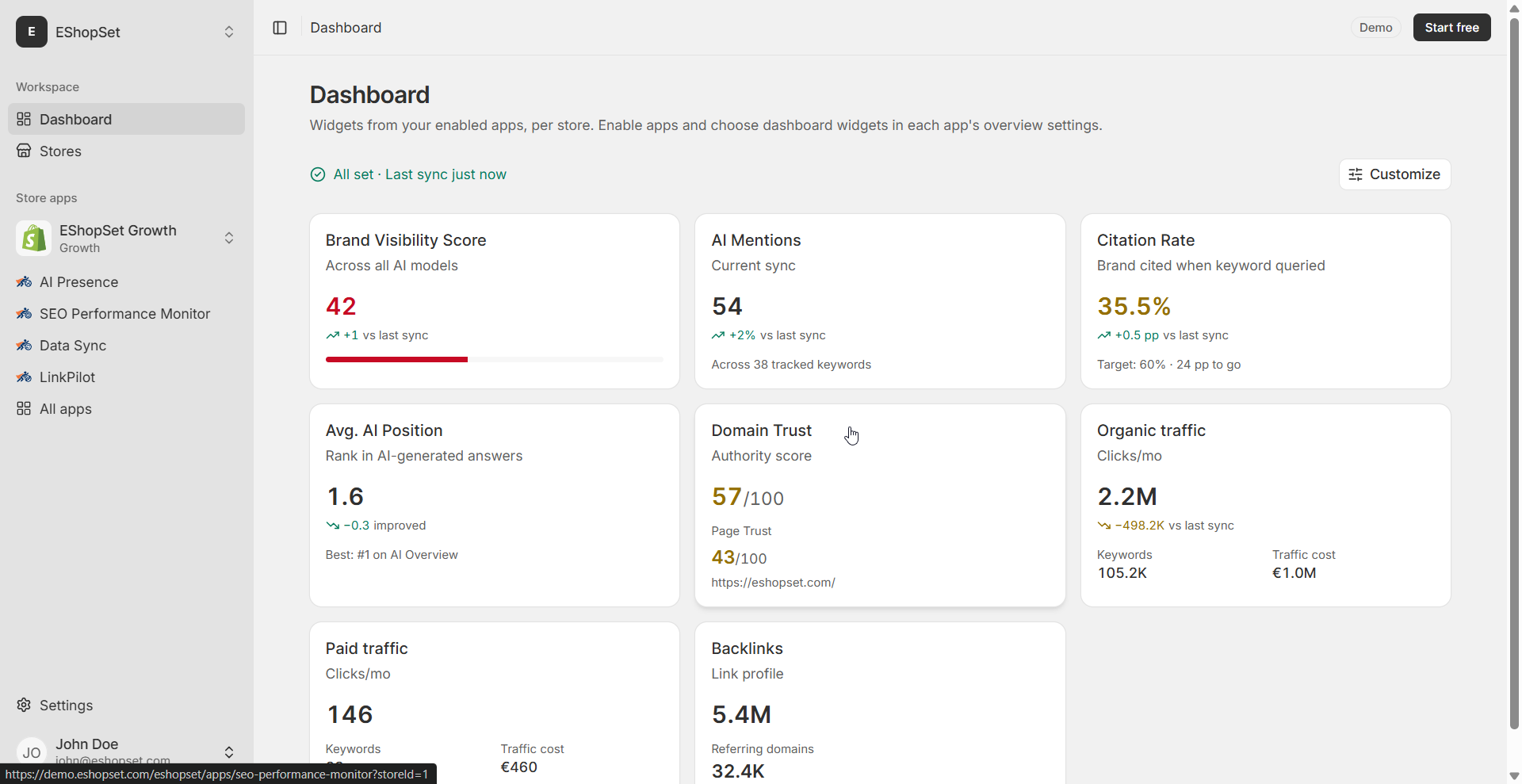
The community discussion really hits the nail on the head: understanding your conversion problem is a two-pronged approach, balancing site optimization with traffic quality. We strongly agree that data is paramount for diagnosis. For Shopify merchants looking to stay on top of these issues proactively, our EShopSet apps offer direct solutions. For instance, our SEO Performance Monitor can provide Shopify overnight SEO alerts, immediately notifying you of critical changes that could impact traffic quality or site visibility, helping you maintain a strong organic presence. For ensuring your product offerings are always accurate and appealing, Sheet2Cart simplifies managing your catalog, making it easy to perform a Shopify variant SKU sync Google Sheets, directly addressing potential friction points on product pages. And to refine your messaging and product descriptions for better conversion, AI Presence can help optimize your content to resonate more deeply with your target audience.
Ultimately, improving conversions is an ongoing process of analysis, iteration, and optimization. By systematically addressing both traffic quality and on-site friction, armed with data and the right tools, you can turn those visitors into loyal customers.