Shopify SEO for AI: Mastering Visibility in a New Digital Landscape
Hey Shopify store owners and operators! Let's talk about something that's been buzzing in the digital marketing world: how much of our SEO efforts should really be geared towards AI and Large Language Models (LLMs)? I recently stumbled upon a fascinating community discussion where experts were weighing in on this very topic, and the insights are gold for anyone running an online store.
Is AI SEO a Whole New Game?
The original poster in the discussion asked a direct question: how much of our SEO work is for Google versus being measured for LLM visibility? The results of their informal poll were quite telling, with a significant percentage of respondents already offering or focusing on what they call "AI SEO" services. However, a strong consensus quickly emerged: most of what's labeled "AI SEO" isn't entirely new. As one community member aptly put it, it's often "just solid technical SEO wearing a new hat."
Think about it: LLMs pull information from the same crawlable, well-structured pages that Google indexes. If your content isn't accessible or well-organized for Google, it won't be for AI either. About 70% of the work truly overlaps with traditional SEO. So, if you've been diligently working on your Shopify store's technical SEO – ensuring fast loading speeds, mobile responsiveness, and clean site architecture – you're already ahead of the curve for AI visibility.
The Core: Technical SEO and Crawlability
Before you even think about AI, make sure your foundational SEO is rock solid. This means:
- Excellent Site Structure: Easy navigation for users and bots.
- Fast Page Load Times: Crucial for user experience and crawl efficiency.
- Mobile-Friendliness: Non-negotiable in today's mobile-first world.
- Clean Markup: Helps bots understand your content.
These basics ensure your Shopify store's content is discoverable. Without them, no amount of AI-specific tweaking will make a difference.
Beyond the Basics: Making Your Content AI-Friendly
While the fundamentals remain, there are indeed specific nuances for optimizing content for AI. This is where the remaining 25-30% of "AI SEO" comes into play, primarily focusing on how LLMs consume and cite information.
Be Quotable and Unambiguous
One expert highlighted the importance of being "quotable and unambiguous." This means:
- State Answers Plainly: Don't bury your key information. Put the most important answers high on the page.
- Self-Contained Sentences: Write sentences or short paragraphs that an AI model can lift and use without needing extensive surrounding context. Think of it like creating snippets for featured results, but for AI.
- Leverage FAQs: A community member noted that FAQ sections are increasingly important. They naturally provide direct, quotable answers to common questions, making them ideal for AI to extract.
Solving the Entity Collision Conundrum
This was a fascinating point from the discussion that many traditional SEOs might overlook: "entity clarity." Imagine you have a product, brand, or even a unique selling proposition. If its name or description varies slightly across your site, in your schema markup, or on third-party mentions, an AI model might struggle to confidently identify it. This "entity collision" can quietly tank your AI visibility, even if your page ranks well.
For Shopify merchants, this means meticulous consistency. Ensure your product names, brand descriptions, and key attributes are uniform everywhere. If you're managing a large catalog, this might involve streamlining your product data. Tools that help with Shopify Google Sheets product import can be invaluable here. By using a consistent source like a Google Sheet to update your products, you can easily Shopify match products by handle from Sheets, ensuring that every detail, from product titles to descriptions and variants, remains perfectly aligned. This minimizes the risk of AI models getting confused about who or what you are.
Don't Forget Bing and Microsoft Clarity
Here's a tip that came up repeatedly: don't sleep on Bing. ChatGPT's search capabilities often lean on Bing's index, yet many SEOs neglect Bing Webmaster Tools. Setting up and monitoring your site there can give you an edge.
Even more powerfully, Microsoft Clarity, with its AI performance report, offers unique insights. It provides data on "Share of Authority" and a "prompt tracker," which can be tremendous for understanding user behavior, the questions they're asking, and for improving your topical authority. It's a free tool that many are missing out on.
EShopSet Team Comment
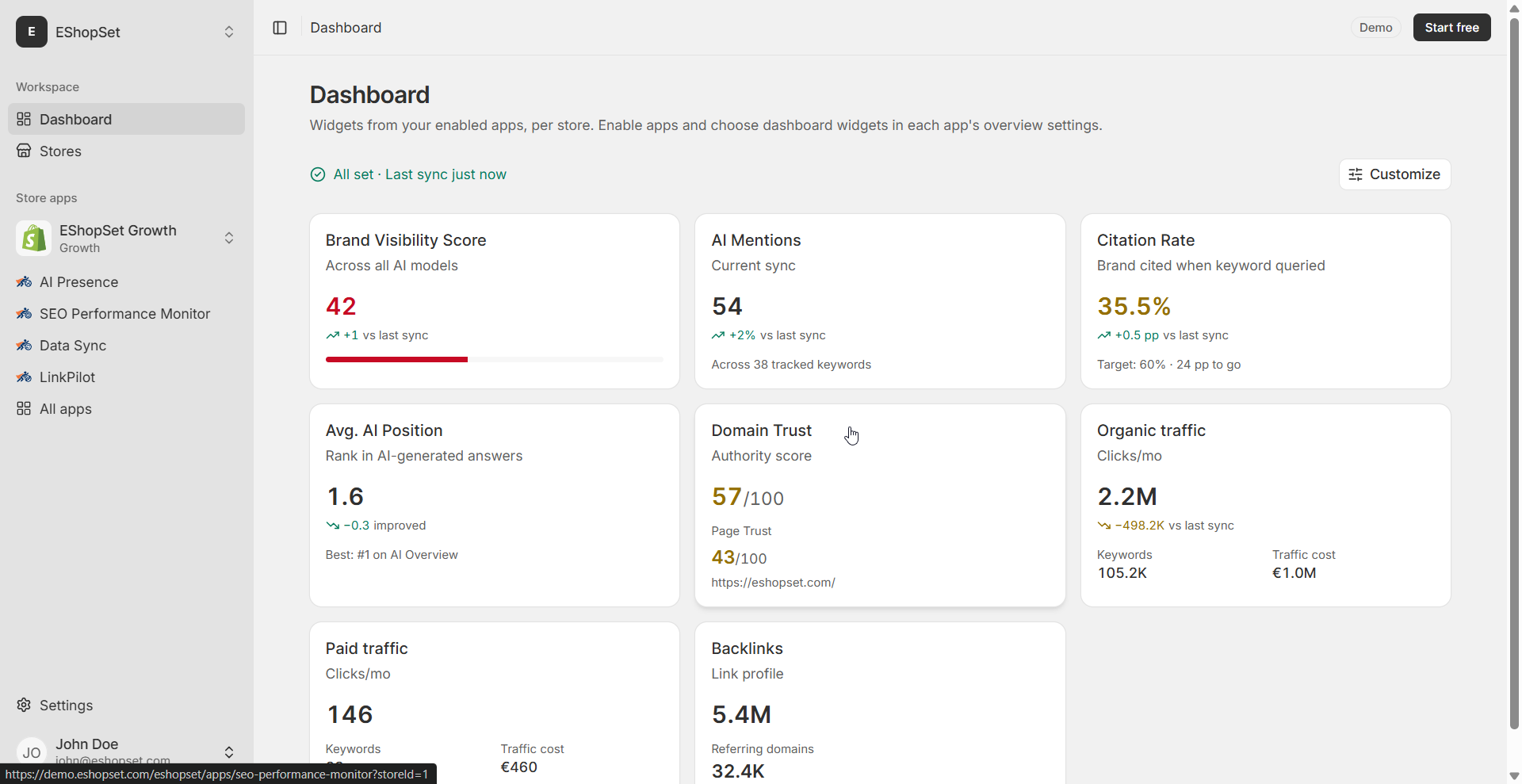
We at EShopSet firmly believe that while the core principles of SEO remain, adapting for AI visibility is no longer optional for Shopify merchants. The discussion highlights the critical need for both robust technical SEO and precise content strategy. Our SEO Performance Monitor helps you stay on top of your foundational SEO health, while AI Presence is specifically designed to help optimize your content for LLM visibility and quotability. Furthermore, for ensuring that crucial entity clarity across your product catalog, Sheet2Cart is indispensable for maintaining consistent, up-to-date product data directly from your Google Sheets.
So, what's the takeaway? The future of search involves a blend of traditional ranking factors and AI-specific considerations. By focusing on clear, quotable content, ensuring entity consistency, and utilizing powerful (often free) tools like Microsoft Clarity, your Shopify store can not only rank well in traditional search but also shine in the evolving landscape of AI-powered answers. It's about smart, strategic adjustments to your existing SEO efforts, not a complete overhaul. Keep experimenting, keep monitoring, and keep learning!