Navigating Shopify SEO & Daily Operations: Insights from the Community
Hey there, fellow Shopify store owners! It's always great to see the community come together to tackle the ever-evolving world of SEO. I was just browsing through a really insightful 'SEO Help Weekly Mega Thread' on Reddit, where folks were throwing out all sorts of questions, from beginner queries to gnarly technical challenges. It got me thinking about the common hurdles we face daily in ecommerce and how a bit of shared wisdom can make a huge difference.
The original poster of the thread opened it up for any legitimate SEO question, and while there weren't specific questions to dissect, the sentiment was clear: everyone's looking for practical, actionable advice to boost their online visibility. And let's be honest, for Shopify merchants, SEO isn't just a 'set it and forget it' task; it's a constant, vital part of daily operations, intertwined with everything from product launches to customer experience.
Keeping Your Shopify Store SEO-Healthy
One of the biggest takeaways from these kinds of open discussions is the sheer breadth of SEO. It's not just about keywords anymore. It's about technical health, content quality, user experience, and now, even how AI perceives and presents your brand. For Shopify stores, this means a few key areas demand regular attention:
1. Technical SEO: The Foundation
Many community members often ask about the basics: 'Is my site crawlable? Are my URLs optimized?' These are fundamental. Shopify handles a lot of the heavy lifting, but you still need to keep an eye on things like broken links, site speed, and structured data. Regular audits are non-negotiable. Think of it as your store's infrastructure – if the foundation isn't solid, everything else struggles.
- Check for broken links: Products go out of stock, pages get retired. Make sure these aren't creating dead ends for search engines or customers.
- Monitor site speed: Especially crucial for mobile users. Shopify themes are generally fast, but large images or too many apps can slow things down.
- Review sitemaps and robot.txt: Ensure search engines are indexing what you want them to and ignoring what you don't.
2. Content & Keyword Strategy: Speaking Your Customer's Language
This is where your brand truly shines. The community thread, while general, always sparks conversations around 'how do I find the right keywords?' and 'how do I write content that ranks?' It's about understanding your customer's search intent. Don't just stuff keywords; create valuable content that answers questions, solves problems, and showcases your products effectively.
- Product descriptions: Go beyond basic features. Highlight benefits, use cases, and unique selling points.
- Blog posts: Address common questions, create buying guides, and share industry insights. This builds authority and provides long-tail keyword opportunities.
- Category pages: Optimize these with unique, descriptive text that helps both users and search engines understand what's on offer.
3. The Rise of AI Presence: Beyond Traditional SEO
This is a hot topic, and it definitely would be front and center in any current SEO discussion. With AI Overviews and conversational AI becoming more prevalent, how your brand is perceived and summarized by AI is a new frontier. It's not just about ranking #1 anymore; it's about being the most relevant, concise, and authoritative answer when AI looks for information. This means consistent brand messaging, high-quality information, and a strong online reputation. Think about how your product information and brand story would sound if an AI summarized it for a user – clarity and precision are key.
Streamlining Your Daily Operations with the Right Tools
Managing all this can feel like a full-time job, especially when you're also handling inventory, orders, and customer service. This is where smart tools come into play. Many merchants in these discussions are looking for ways to automate, monitor, and simplify. For instance, maintaining an updated product catalog is critical for SEO. Imagine the headache of manual updates across hundreds or thousands of SKUs! This is where a weekly Shopify catalog sync becomes a lifesaver, ensuring your product data is always fresh and accurate for search engines.
EShopSet Team Comment
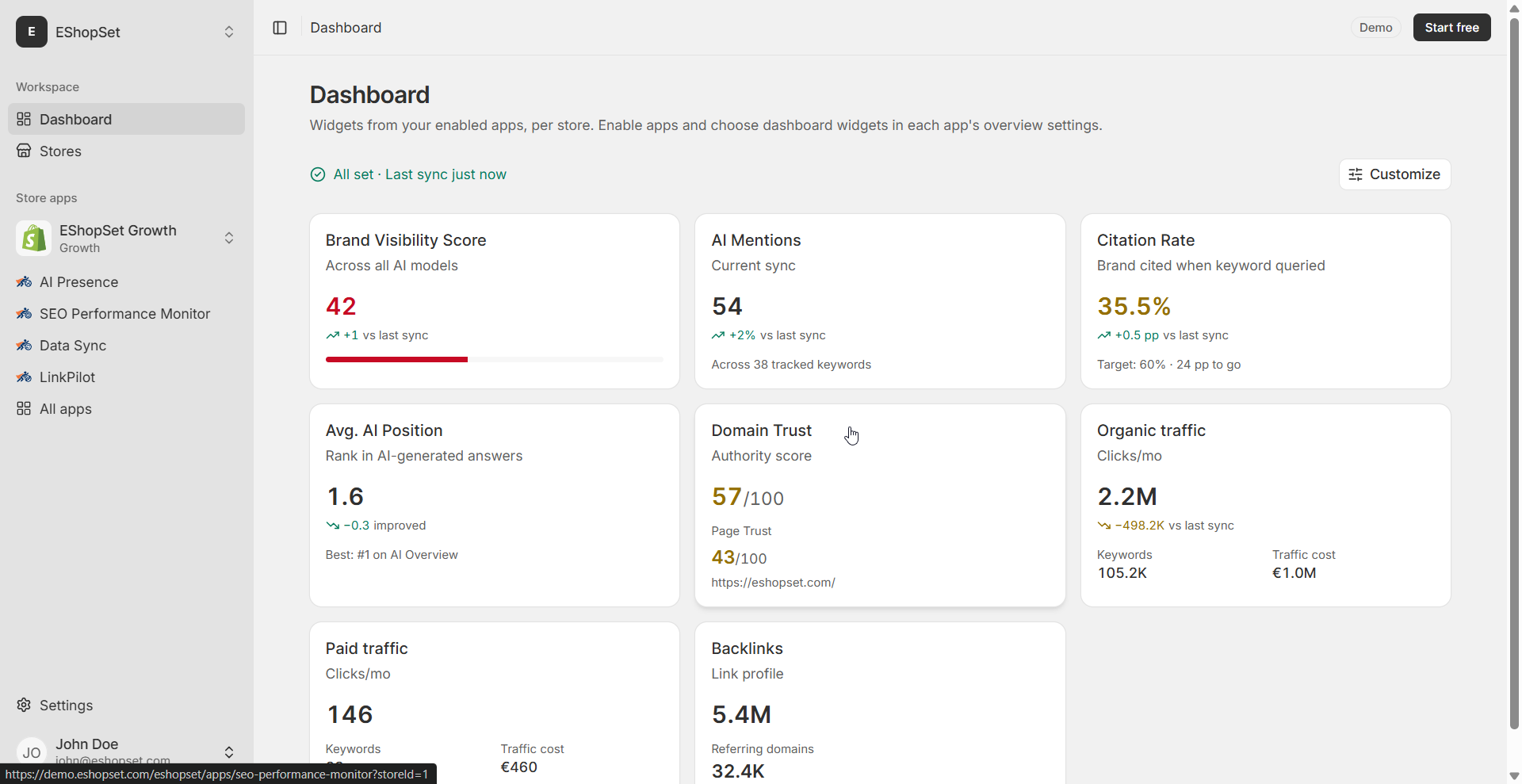
The community discussion highlights the constant need for vigilance and smart tools in ecommerce SEO. We firmly believe that proactive monitoring and efficient data management are critical for Shopify merchants. Our SEO Performance Monitor provides the insights needed to stay ahead of technical and content issues, while AI Presence helps shape how your brand appears in AI-driven searches. And for those wrestling with product data, Sheet2Cart is invaluable for keeping your catalog perfectly synced and optimized, turning a potential headache into a smooth daily operation.
So, what's the takeaway from all this? SEO, AI presence, and efficient catalog management aren't separate tasks; they're interconnected threads in the fabric of your online store's success. By staying informed, leveraging the right tools, and engaging with the community, you can not only solve your current challenges but also build a robust, future-proof strategy for your Shopify store. Keep those questions coming, and keep learning!