Googlebot Not Crawling New Shopify Pages? Here's What Experts Say & What You Can Do
Ever hit 'publish' on a shiny new product page or a brilliant blog post on your Shopify store, only to find Googlebot playing hard to get? It's a common, frustrating scenario that recently sparked a lively discussion among SEO pros. One community member, the original poster, shared their dilemma: a new URL, perfectly set up with a sitemap, internal links, and a 200 OK status, remained 'unknown to Google' after a full week. Sound familiar? Let's dive into what the experts had to say and what you, as a Shopify merchant, can do.
The Mystery of the Missing Googlebot
The original poster outlined a textbook setup: the new page was included in the XML sitemap, linked from the main navigation, and even from an already indexed page. They requested recrawls of the linking pages, which Googlebot quickly fetched, but the new URL itself remained untouched. Server logs confirmed that only Google-InspectionTool (from manual live tests in Search Console) had visited, not the regular Googlebot. This is a critical distinction, as the Inspection Tool simply checks reachability, not actual indexing intent.
Several other community members immediately echoed the sentiment, noting a recent change in Google's crawling behavior. Pages that used to be indexed almost instantly were now taking days, or even weeks. This raised a crucial question: Is it a site-specific issue, or a broader Google phenomenon?
Authority, Crawl Budget, and Patience
One recurring theme in the discussion was 'authority.' As one respondent put it, "Because it has no authority." This isn't just about your overall domain authority, but also page-level authority. Google, it seems, prioritizes crawling based on perceived importance and how frequently a site (or a section of it) changes and receives engagement. If your site isn't CNN or Forbes, immediate indexing isn't a given.
A community member elaborated on how Googlebot operates: it has 'retrieval' mode (fetching assigned pages) and 'discovery' mode (following a crawl list). The links found on a fetched page aren't automatically sent to an index manager for immediate processing. There's an internal 'crawl manager' that decides what to do next, and authority heavily influences this queue. If your page or site loses clicks or engagement, its authority can drop, moving it from a 'priority queue' to a slower 'pool' where it might take longer to be noticed.
Another crucial takeaway: sitemaps don't force Google to crawl. They're a suggestion. While essential for discoverability, they don't guarantee instant action. Similarly, requesting a recrawl of a linking page doesn't guarantee that Google will immediately follow every link on that page and index the new target URL.
Actionable Steps for Shopify Merchants
So, what can you do when your new Shopify product pages are seemingly stuck in limbo? Here are some practical steps, inspired by the expert discussion:
- Patience is a Virtue (Sometimes): Several experts noted that 7 days isn't entirely unusual for a new URL, especially for smaller or less authoritative sites. If your Search Console live test passes and the page is discoverable, waiting a bit longer (up to 14 days or more) might be the only option.
- Verify Your Links & Sitemap: Even if you think it's perfect, double-check. The original poster confirmed their internal links pointed directly to the canonical URL without trailing slashes, avoiding unnecessary 301 redirects during discovery. Ensure your sitemap is submitted correctly in Google Search Console and that the URL is indeed listed accurately.
- Strengthen Internal Linking: Link to your new page from established, high-traffic pages on your Shopify store. The more prominent and authoritative the linking page, the better the signal to Google. Think about your most popular blog posts or category pages.
- Build Site & Page Authority: This is a long-term play, but critical for faster indexing and better Shopify product SEO rankings. Focus on creating high-quality, valuable content that naturally attracts visitors and earns reputable backlinks. The more Google sees your site as a valuable resource, the more frequently it will crawl it.
- Monitor Google Search Console's Crawl Stats: While direct server logs are not typically accessible for Shopify merchants, you can use Google Search Console's 'Crawl Stats' report to get insights into Googlebot's activity on your site. This can help you understand if Google's crawl budget for your site has decreased.
- Consider External Signals (Carefully): One expert suggested getting the URL onto a busy external page. While building external links is part of SEO, focus on natural, high-quality links rather than trying to 'force' a crawl through low-quality methods.
- Run a Control Test (If Possible): If you manage multiple Shopify stores, publishing a trivial new page on another site and observing its crawl time can help determine if the issue is site-specific or a broader Google pattern.
EShopSet Team Comment
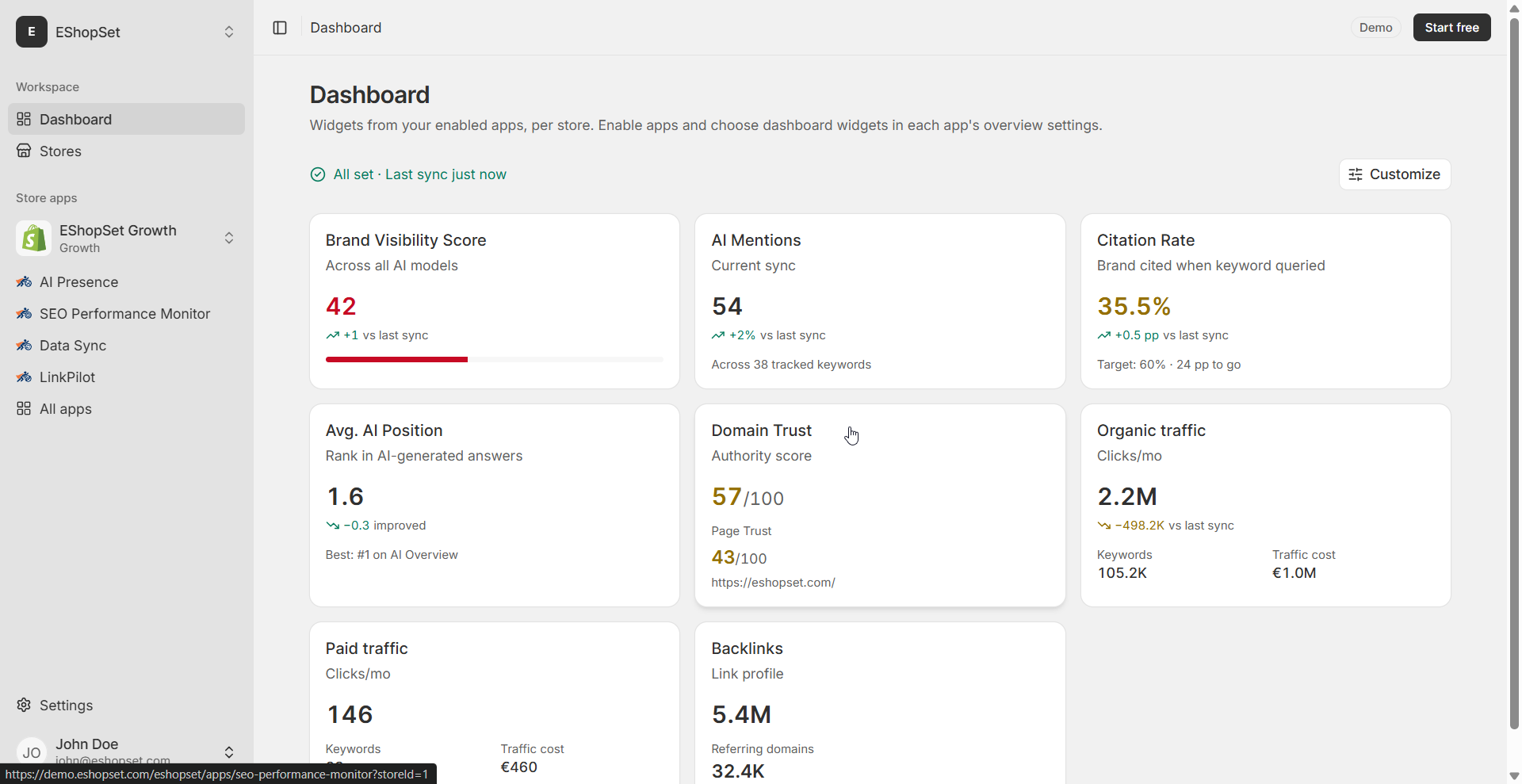
This discussion highlights a common pain point for Shopify merchants: the uncertainty of Google's crawling and indexing. While patience is often required, proactive monitoring is non-negotiable. Our SEO Performance Monitor app can be invaluable here, helping you track the indexing status of your pages and identify crawlability issues before they impact your Shopify product SEO rankings. Additionally, creating high-quality, authoritative content with AI Presence and managing your product data efficiently with Sheet2Cart can indirectly boost your site's perceived authority, encouraging Googlebot to visit more frequently.
Ultimately, while Google's algorithms can be a black box, focusing on strong technical SEO foundations, valuable content, and consistent monitoring will always put your Shopify store in the best position for timely discovery and strong search performance. Keep an eye on your Search Console, keep building quality, and remember that sometimes, a little patience goes a long way.