Decoding Your Keyword Strategy: GSC vs. Keyword Planner for Shopify Success
Alright, Shopify store owners and operators, let's talk keywords. This is a topic that comes up constantly in our community discussions, and for good reason! Choosing the right keywords can feel like trying to hit a moving target. Recently, a very insightful discussion unfolded online, tackling a common dilemma: should you prioritize keywords from Google Search Console (GSC) or Google Keyword Planner?
The original poster brought up a classic scenario: their manager insisted on using GSC queries, even when Keyword Planner showed very low search volume for those terms, leading to a lack of clicks. It's a situation many of us have faced – feeling torn between what's *already* happening and what *could* happen.
GSC vs. Keyword Planner: Unpacking the Debate
The community quickly weighed in, offering a nuanced perspective that really gets to the heart of effective SEO. One respondent perfectly summed it up: your manager might be optimizing for queries your site already gets impressions for, while you're eyeing potential opportunities. They're related, but not the same 'source of truth'.
The Case for Google Search Console (GSC)
- Real-World Data: As several members pointed out, GSC shows actual search queries where your pages are already appearing. This isn't an estimate; it's what Google is currently associating with your content.
- Long-Tail Gold: Many low-volume GSC queries are long-tail and highly specific. Optimizing for these can capture very targeted search intent. Even if Keyword Planner shows low volume, these are real people searching for something specific that Google believes your site relates to. You might not be getting clicks yet, but you're getting impressions, which is a huge step.
- Fixing What You Have: GSC is invaluable for refining existing content. If you have high impressions but low click-through rates (CTR) for certain queries, it signals that your page is visible but perhaps the title, description, or content itself isn't compelling enough. It's about optimizing what's 'almost ranking'.
- AI Relevance: An interesting point raised was that optimizing for these specific, often conversational queries can increase the chances of your content being surfaced in AI systems like AI Overviews or AI assistants.
The Role of Keyword Planner (KP)
- Discovery Tool: KP is fantastic for discovering new keywords and estimating demand for broader topics. It helps you expand into new areas and identify potential content gaps.
- Estimates, Not Guarantees: A crucial caveat highlighted by the community is that KP's search volumes are estimates and often don't capture the nuances of long-tail queries. One member even called it 'highly unreliable for validating broader organic search demand'.
- New Content Ideas: If GSC shows you're not competing for certain broader terms, KP can help you find those terms to target with new content.
The Smart Approach: Use Both, Strategically
The overwhelming consensus from the community? Don't pick one over the other. Use both, but for different jobs. Here's how you can approach it for your Shopify store:
- Start with GSC for Optimization:
- Export and Analyze: Regularly export your GSC queries. Look for pages with high impressions but near-zero clicks. These are your immediate opportunities.
- Group by Intent: Group related low-volume queries by common intent. For example, if you sell handmade jewelry, queries like "handmade silver earrings for sensitive ears" and "hypoallergenic handmade earrings" might point to a single, more comprehensive page you could optimize.
- Refine Existing Pages: For these high-impression, low-CTR queries, update your page titles, meta descriptions, and on-page content to better match the search intent. Make sure your product descriptions are rich and clearly address what searchers are looking for.
- Leverage Keyword Planner for Expansion:
- Identify New Topics: Use KP to research broader terms and identify new product categories or content themes your store isn't currently ranking for.
- Validate Demand (with caution): While KP volumes are estimates, they can still give you a rough idea of broader demand for new areas you're considering.
- Create New Content: Develop new blog posts, collection pages, or product pages targeting these broader terms, ensuring they align with your store's offerings.
- Prioritize Relevance Over Volume: As one expert contributor emphasized, the most relevant keywords to achieve your campaign goals matter most, not always the highest volume. Think about specific customer needs and how your products fulfill them. For instance, if you sell specialized parts, "Shopify match products by SKU from Sheets" might be a highly relevant, albeit low-volume, query for a niche audience looking for specific data management solutions for their inventory. Ensuring your product data, including SKUs, is accurately maintained (perhaps through a tool like Sheet2Cart) directly impacts how discoverable those specific products are.
Ultimately, it's about asking: what's the goal? Are you trying to improve what you already have, or expand into new territory? The best strategy combines both perspectives.
EShopSet Team Comment
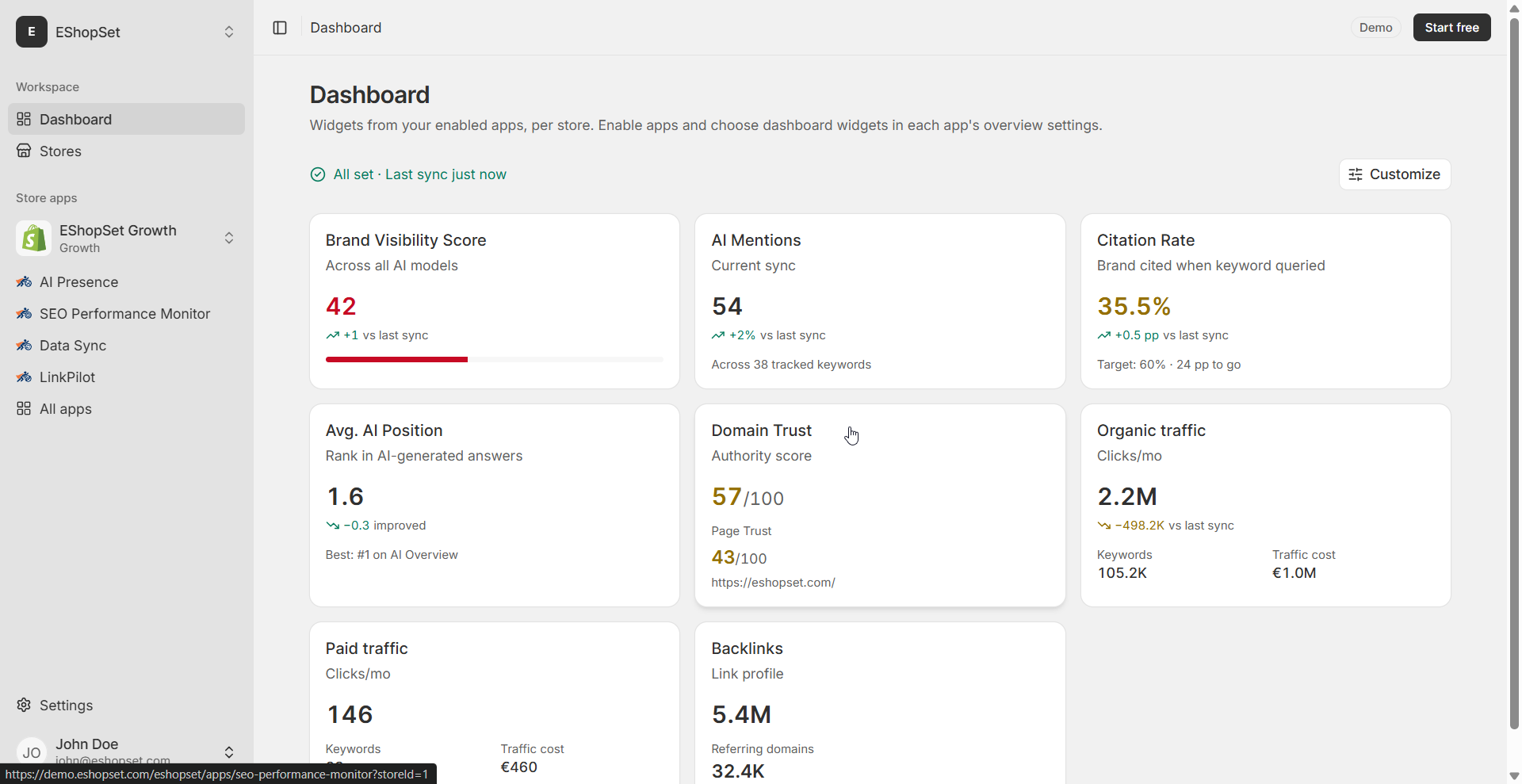
This discussion perfectly highlights the dynamic nature of SEO. We wholeheartedly agree that a hybrid approach is key for Shopify merchants. GSC provides invaluable real-time feedback on your current performance, which our SEO Performance Monitor can help you track and act upon immediately. For expanding your reach and optimizing for future search trends, especially with the rise of AI, a tool like AI Presence can help ensure your content is structured to capture those long-tail, conversational queries. And remember, the foundation of good SEO is accurate product data – which is where Sheet2Cart shines, ensuring your product details are always up-to-date and SEO-friendly.
So, next time you're wrestling with keyword choices, remember the wisdom from the community: don't just chase volume. Understand intent, leverage your existing strengths, and strategically explore new opportunities. Your Shopify store's growth depends on it!