From Clicks to Carts: Boosting Shopify Conversion Rates with Trust and Strategy
Hey there, fellow Shopify merchants! We've all been there: pouring effort and budget into driving traffic, only to see a trickle of 'Add to Carts' and even fewer actual purchases. It's a common, frustrating hurdle. Recently, I came across a really insightful community discussion that perfectly captured this dilemma, and I thought it'd be super helpful to break down the key takeaways for you.
The original poster in this discussion was testing a dog car seat cover on their Shopify store, spending €70 to get around 34 visits, one Add to Cart, and zero purchases. They were getting clicks from Meta ads but not much else, asking the community: what's the biggest issue here? Is it price, trust, the offer, the page itself, or the product?
The Initial Head-Scratcher: Traffic vs. Sales
Right off the bat, several community members pointed out that 34 visits isn't a huge sample size to draw definitive conclusions. It's true; sometimes you need more data to see patterns. However, even with limited data, the feedback provided was incredibly valuable, highlighting common pitfalls that many Shopify stores face, especially when starting out or launching a new product.
The original poster had already tweaked their ad placements, improved titles, highlighted benefits, free gifts, warranty, and mobile cookie banners. Their offer included the car seat cover, two free gifts, free shipping, and a one-year warranty. Sounds like a decent offer on the surface, right? But the community dug deeper.
Unpacking the Core Issues: Price, Product, and Trust
The feedback quickly coalesced around a few critical areas:
- Price & Product Differentiation: Many respondents felt the product was overpriced and generic. One community member even found the identical product for $48 AUD elsewhere, while the original poster was selling it for $99 AUD. Another mentioned a Temu version for $25. This massive price disparity for a seemingly undifferentiated product was a huge red flag. The 'free gifts' and 'warranty' weren't enough to justify the premium price when customers could easily find the same item for much less. The core problem, as one respondent put it, was selling a commodity at 2-4x the commodity price with zero brand trust to justify the gap.
- The Trust Factor: This was a recurring theme. With a new brand and a generic-looking site, the absence of customer reviews was a significant barrier. As one member highlighted, "Nobody trusts a store they've never heard of with their dog's safety off one Facebook ad." A generic site without unique branding, consistent imagery, or social proof can negatively impact your Shopify domain trust score, not just with customers but also with search engines. Establishing trust is paramount, especially for products related to pet safety. Without it, customers are more likely to abandon their cart or seek out more established, cheaper alternatives.
- User Experience (UX): Beyond the trust and pricing, the product page itself had issues. A community member noted that the "Add to Cart" button was "really lost" in the right column, blending in with other elements. The site lacked a distinct UX or unique branding, featuring few pictures of varying sizes, contributing to a "dropship site" look. A well-designed, professional-looking product page is crucial for conveying legitimacy and guiding customers smoothly through the purchasing process.
Actionable Steps to Boost Your Shopify Conversions
So, what can we learn from this discussion to apply to our own Shopify stores? Here are some actionable steps:
-
Build Authentic Trust:
- Gather Reviews: Prioritize getting genuine customer reviews and displaying them prominently. Consider offering incentives for early customers.
- Professional Branding: Invest in high-quality photos, consistent brand messaging, and a clean, unique site design. This helps improve your perceived Shopify domain trust score.
- Transparency: Be clear about your product's origins, shipping times, and return policies.
- Content Marketing: Use tools like EShopSet's AI Presence to generate engaging blog posts, FAQs, and product descriptions that showcase your expertise and build a community around your niche. This helps establish your brand as an authority, not just another seller.
-
Refine Your Offer & Pricing:
- Market Research: Understand your competitors' pricing and product offerings. If you're selling a commodity, you need to either compete on price or differentiate significantly.
- Differentiate Your Product: Can you source a unique version, add exclusive features, or bundle it with a truly valuable, unique service? If not, adjust your pricing to be competitive.
- Value Proposition: Ensure your entire offer (product, price, gifts, warranty) clearly communicates superior value. If "free gifts" don't add significant perceived value, simplify your offer or lower the price.
-
Optimize Your Product Page UX:
- Clear Call to Action: Make your "Add to Cart" button stand out. Use contrasting colors and ensure it's easily visible above the fold on all devices.
- High-Quality Imagery: Use professional, consistent product images and videos that clearly show the product from multiple angles and in use.
- Engaging Descriptions: Use EShopSet's AI Presence to craft compelling, benefit-driven product descriptions that address customer pain points and highlight unique selling propositions.
- Seamless Product Data Management: If you're managing a large catalog or frequently updating product details, consider using a tool like Sheet2Cart to ensure your product information is always accurate and consistent across your store, which reinforces trust.
EShopSet Team Comment
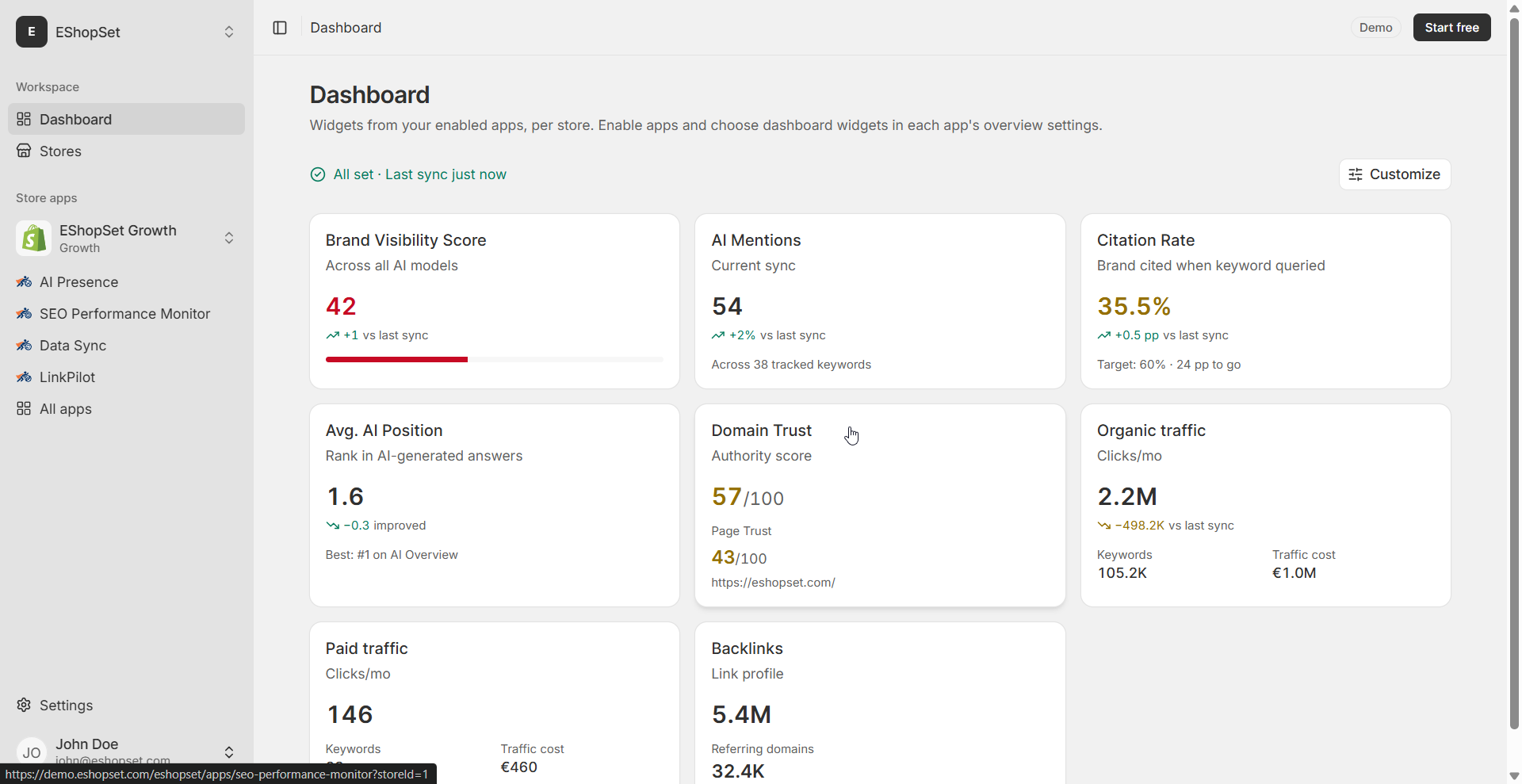
The community discussion here hits on fundamental truths for Shopify merchants: trust and value are non-negotiable for conversions. We wholeheartedly agree that a generic storefront with an undifferentiated product at a premium price is a recipe for low sales. Merchants must prioritize building a strong brand identity and ensuring their product data is impeccable, which is where apps like AI Presence for compelling content and Sheet2Cart for efficient catalog management truly shine. Don't forget to monitor your site's health and perceived authority with tools like SEO Performance Monitor to ensure search engines also see you as a trustworthy source.
Ultimately, getting traffic is only half the battle. Converting that traffic into loyal customers requires a holistic approach that builds trust, offers undeniable value, and provides a seamless shopping experience. It's about looking at your store through your customer's eyes and continuously refining every touchpoint.