From 1,100 Visitors to Zero Sales: Real Talk on Boosting Your Shopify Store's Conversions
Ever poured your heart (and budget) into launching a Shopify store, only to watch visitors come and go without a single sale? It's a frustratingly common scenario, and one that recently sparked a lively discussion in an online community. The original poster shared their dilemma: 1,100 site visitors from $100 in ads, but zero conversions for their 'aging-odor' soap product. They were seeking advice on their website and marketing strategies, and the community delivered some truly candid, eye-opening insights.
1. Beyond the Pixels: The Trust Factor of Your Website
One of the most immediate and striking takeaways from the discussion was about the website itself. Multiple community members didn't mince words, describing the site as "AI slop" and questioning its authenticity. The original poster admitted the site was built by AI, thinking it would do a better job than they could. This highlights a critical point for all Shopify merchants: while AI tools are powerful, they are assistants, not replacements for strategic thinking and a human touch.
- Authenticity Over Automation: Generic, AI-generated content and images can erode trust. As one respondent put it, "People don't trust and buy things from a place that shows them exactly what they hate." Invest in real product photography and genuine copy that speaks to your audience.
- Clear & Concise Messaging: The site had "too much text" and confusing taglines like "The aging-odor soap that keeps receipts." Your website should clearly communicate your value proposition quickly and effectively, without jargon or ambiguity.
- User Experience (UX) is King: Beyond aesthetics, the site's functionality was problematic. A community member who actually attempted a purchase highlighted missing buy buttons, a broken email signup, and a clunky checkout process. A seamless user journey is non-negotiable for conversions.
2. Refining Your Product Story: Who Are You Selling To?
The product itself – a $20 bar of "Persimmon Tannin Bar - Soap for Age-Related Body Odor" – also came under heavy scrutiny. Many questioned the target audience and the product's unique selling proposition (USP).
- Identify Your Niche (Truly): "Who is this product actually for?" was a key question. The messaging seemed to confuse its intended audience, using youthful slang for a product aimed at older demographics, and potentially insulting the very people it sought to help.
- Value, Not Just a Problem: Selling a $20 bar of soap requires a compelling reason to buy. Community members advised focusing on the true value and benefits, not just pointing out a potential problem. "Give people a reason to buy," one suggested.
- Proof Points & Positioning: Claims of having "proof it works" without presenting any evidence undermine credibility. Your product story needs to be consistent, believable, and clearly differentiate you from competitors.
3. Smarter Advertising, Not Just More Spending
The original poster's $100 ad spend ($5/day) yielded 1,100 visitors but no sales. This isn't just bad luck; it's a common pitfall when starting out with ads.
- Budget for Optimization: As several experts pointed out, $5 a day is too low for platforms like Meta to optimize for purchases effectively. You're likely getting the cheapest, lowest-quality clicks. "Nobody buys at that click price," one respondent bluntly stated.
- Optimize for Purchase, Not Clicks: Ensure your campaigns are optimized for purchase from day one, even if your pixel is new. Aim for a higher daily budget (e.g., $30-50/day) to give the algorithm enough data to find actual buyers.
- Strategic Landing Pages: Sending cold traffic directly to a product page often doesn't work for new stores. Consider a collection page or a simpler landing page to warm up visitors first.
- Test and Learn: Run three to five ads in an ad set on the same post ID to stack social proof. Then, leave it alone for 5-7 days before drawing conclusions.
4. The Checkout Gauntlet: Smooth Sailing to Sales
Even if a customer is convinced to buy, a clunky checkout can send them running. The original poster mentioned an accidental shipping threshold error, but a community member who successfully made a purchase identified several more hurdles:
- Visible Buy Buttons: Sounds basic, but a missing or hard-to-find buy button is a critical conversion killer.
- Seamless Payment Options: Lack of Apple Pay, difficult credit card entry, and problematic verification codes all added friction. Streamline your payment options.
- Transparent & Fair Shipping: "Shipping was $9. That's too much. I almost backed out – the cost to ship was half the cost of the product." High shipping costs are a top reason for cart abandonment. Review your shipping strategy and offer attractive options, like free shipping thresholds that are clearly communicated and correctly implemented.
- Remove Distractions: An "this bar is $8 on Amazon" note on the product page directly funnels customers away. Remove any links or information that direct customers to competitors.
EShopSet Team Comment
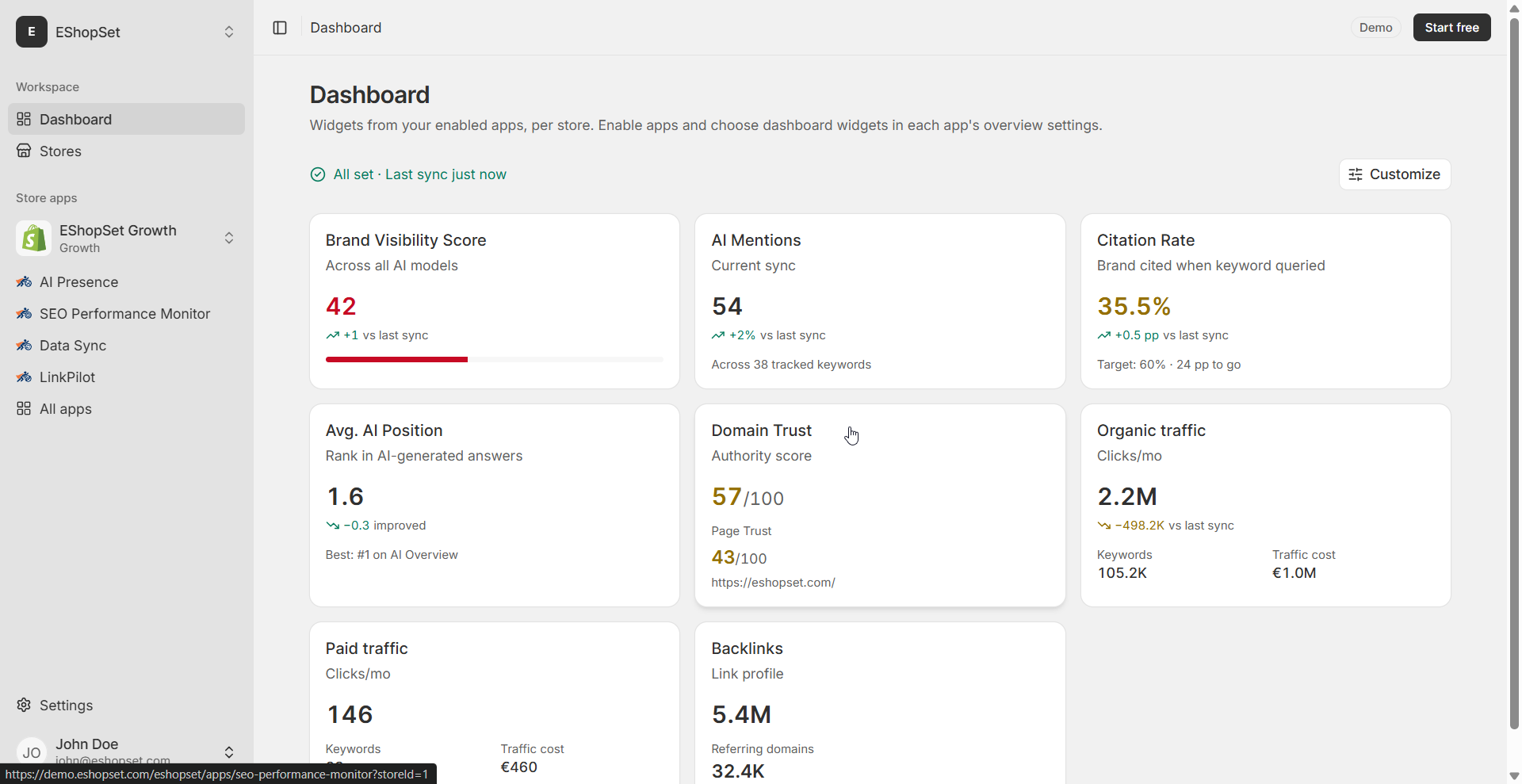
This discussion perfectly illustrates that conversion isn't just one thing; it's a symphony of trust, clear messaging, smart marketing, and a frictionless user experience. We agree that starting with a solid foundation – a trustworthy site, a clear value proposition, and an optimized ad strategy – is paramount. Our AI Presence app helps merchants craft compelling, human-centric copy and product descriptions, ensuring AI enhances your message, not dilutes it. For managing product details like pricing and variants efficiently, Sheet2Cart can be invaluable for maintaining accuracy and consistency. And once your site is solid, monitoring your organic visibility and competitive landscape with SEO Performance Monitor, which includes features like a Shopify backlink monitor, will be crucial for long-term growth.
Ultimately, boosting conversions on Shopify comes down to a holistic approach. It’s about building a brand that resonates, driving quality traffic, and making the buying experience as effortless as possible. Take the time to audit your store, listen to customer feedback (or simulate it with honest friends!), and continuously refine every step of the customer journey. The journey from zero sales to a thriving business is paved with learning and iteration, and every merchant faces these challenges. The good news is, with the right focus, you can absolutely turn those visitors into loyal customers.