Favicon Gone Missing? How to Restore Your Shopify Store's Brand Icon in Google Search
Ever log into your Google Search Console or just open a new tab and notice your brand's favicon – that tiny little icon that makes your site stand out – has just… vanished? It’s a small detail, but boy, does it grab your attention when it’s gone! We recently saw a lively discussion in an online community that perfectly captured this frustration, with an original poster asking, “Why my search console, google and sometimes active tab does not show the favicon?”
It’s a common head-scratcher for many Shopify merchants. You know your favicon is there because it shows up when you’re in your Shopify admin or editing your theme. But out there in the wild, on Google search results or even just a regular browser tab, it’s nowhere to be seen. What gives?
Why Your Favicon Might Play Hide-and-Seek
The core of the issue, as several community members pointed out, often boils down to a disconnect between what you see on your live site and what Google has indexed. One respondent wisely noted, “What you see in GSC and Google is based on what’s cataloged in Google’s Index. It can take a while to get the favicon to show on Google.”
Here’s a breakdown of the usual suspects:
- Google’s Indexing Lag: Google doesn't instantly re-crawl and update every part of your site. If your favicon was there before and suddenly disappeared, it might be that Google's index hasn't caught up to a minor change or a temporary glitch.
- Caching Issues: Both your browser and potentially your site's CDN (Content Delivery Network) can cache old versions of your site. A community member suggested, “It could be due to caching or a recent change to the favicon configuration.”
- Favicon Configuration or File Path Problems: Sometimes, the favicon file itself might have been moved, renamed, or its path in your theme code got broken. As one expert explained, “If Chrome itself is not showing it on the live site, the first thing I would check is whether the favicon is still being output in the frontend head and whether the file is still reachable.”
robots.txtBlocking: While less common for favicons on Shopify, it's possible (though unlikely if you haven't manually edited it) that yourrobots.txtfile is inadvertently blocking Google from accessing the favicon file.- File Format: The original poster wondered if using WebP was the cause. While modern browsers and Google generally support WebP, an older or non-standard implementation might cause issues. A good rule of thumb, as one contributor suggested, is to “make sure there is a plain square PNG or ICO favicon being served cleanly from the site.” Shopify typically handles this well with standard formats.
Actionable Steps for Shopify Merchants
Don't just sit there wondering where your brand went! Here’s a checklist to get your favicon back in action:
- Check Your Shopify Theme Settings: Go to your Shopify admin, then Online Store > Themes > Customize. Look for Theme Settings, then 'Favicon'. Ensure you have an image uploaded there. If it's there, try re-uploading it. Shopify usually handles the correct HTML output automatically.
- Inspect Your Site's Code: Even if Shopify's settings look good, sometimes custom themes or apps can interfere. Right-click on your store's homepage in your browser, select 'Inspect' (or 'View Page Source'), and search for
or. Make sure thehrefpoints to the correct, accessible image file. - Verify Favicon File Accessibility: Copy the URL of your favicon from the theme code and paste it directly into your browser. Does the image load? If not, the file might be missing or corrupted.
- Clear Caches: Clear your browser's cache. If you use a CDN or other caching services for your Shopify store, clear those as well.
- Use Google Search Console: Go to Google Search Console, use the URL Inspection Tool for your homepage, and then request indexing. This can prompt Google to re-crawl your site sooner.
- Patience is a Virtue: After making changes, give Google some time. It can take anywhere from a few hours to a few days or even weeks for Google to recrawl and update its index, especially for a small element like a favicon.
Maintaining your store's online presence goes beyond just getting your favicon right. It's about ensuring every detail, from visual branding to product data, is accurate and optimized. For instance, ensuring your product catalog is perfectly synchronized through a daily Google Sheets Shopify sync is just as vital as your favicon. Tools like EShopSet's Sheet2Cart help you keep your product data flawless, preventing issues that could impact customer trust and search visibility, much like a missing favicon.
EShopSet Team Comment
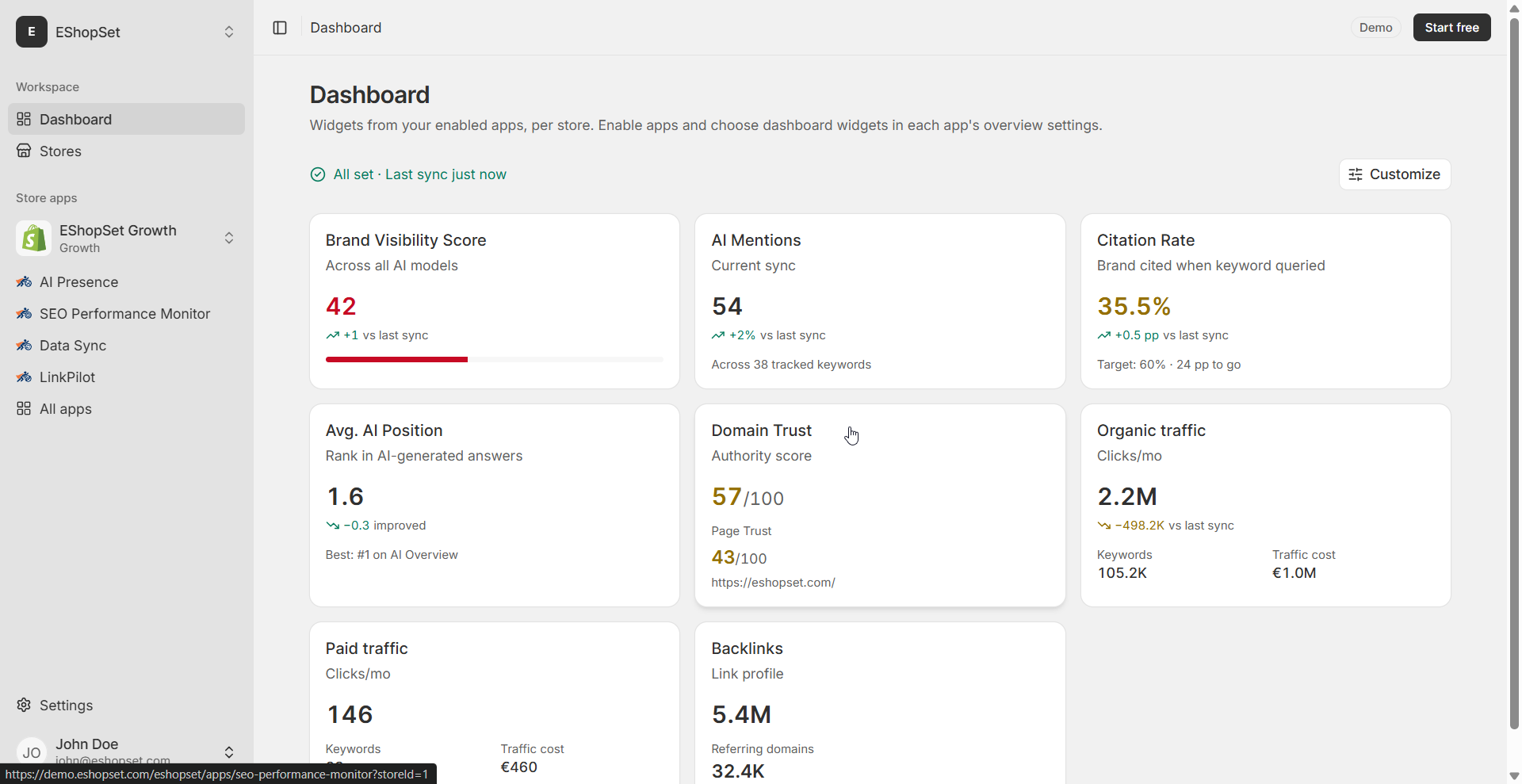
This discussion highlights a classic SEO headache that often gets overlooked. We strongly agree that while a favicon seems minor, its absence impacts brand recognition and perceived trustworthiness in search results. The advice to check accessibility, configuration, and then patiently wait for Google is spot on. For Shopify merchants, our SEO Performance Monitor can help you stay on top of how Google sees your site, giving you insights into potential issues that might affect elements like your favicon's visibility. It's all part of ensuring your online presence is exactly as you intend it.
Don't let a tiny icon undermine your hard work. By taking these proactive steps, you can ensure your Shopify store's brand identity shines consistently across all platforms, from browser tabs to Google search results. Keep an eye on those details – they make a big difference in the long run!