Beyond ROAS: Unlocking Long-Term Customer Value with Smart Shopify Operations
Hey there, fellow Shopify merchants and store operators! We recently stumbled upon a really insightful community discussion that hits close to home for anyone focused on building a sustainable, high-value customer base. The original poster was asking about an ad platform called AdScale, but the conversation quickly broadened into a fantastic exploration of how to truly measure and optimize for Customer Lifetime Value (LTV) rather than just chasing short-term ROAS (Return On Ad Spend).
The original poster, spending a significant amount on Meta and Google Ads, was clear: they weren’t just looking to shave a few points off their CAC (Customer Acquisition Cost). Their main goal was to acquire higher-value customers who stick around longer. This is a sentiment we hear constantly from successful brands – it's not just about the first purchase, it's about the relationship that follows.
The LTV Promise: What to Really Ask
Many ad tools promise LTV optimization, but as several community members pointed out, skepticism is healthy. One respondent wisely advised pushing hard on how these tools define and measure "higher-value customers." What historical data do they actually use? How long do you need to run a test to see real LTV impact, not just normal variance?
It’s easy for a tool to automate budget allocation or time-of-day adjustments, but as another expert highlighted, Meta and Google's own smart bidding systems are already quite sophisticated. A third-party layer might just be fighting the algorithm or making your ad account "noisier" with too-frequent adjustments. The real value often lies in cross-platform budget shifting based on blended results, which, frankly, you could replicate with a dedicated weekly review if someone on your team owns that task.
Testing for True LTV Impact
The consensus from the community was clear: if you're serious about testing LTV, you need a rigorous approach. At a decent ad spend level, like the £12k/month mentioned by the original poster, you have enough volume to run a proper test. The advice? Split your budget into a "holdout" group (your current setup) and a "test" group (managed by the new tool) for at least 60-90 days. Then, compare LTV by acquisition cohort, not just by campaign. This way, you're measuring genuine long-term impact, not just daily or weekly fluctuations.
Another brilliant point from a seasoned operator: ask the tool vendor what percentage of their existing clients actually run a holdout test like this. The answer will tell you a lot about their confidence in their LTV claims versus their ability to just show before-and-after numbers that might be influenced by external factors or seasonality.
Beyond Bid Logic: Creative and Daily Operations
What truly moves the needle on customer quality, according to one experienced marketer, often has less to do with bid logic and more to do with your creative and offer. Ads that genuinely speak to your best customer's reasons for buying will bring in more of those customers. Focusing on who your ads speak to, rather than just tweaking bids, can lead to significantly higher repeat rates and LTV.
This brings us to a crucial point for Shopify merchants: LTV isn't just about ads. It's about your entire customer journey and how efficiently you manage your store's daily operations. For example, ensuring your product listings are always up-to-date and accurate, whether you're handling a few dozen or thousands of SKUs, directly impacts customer satisfaction and repeat purchases. Tools that streamline tasks like Shopify Google Sheets product import can be game-changers here, keeping your catalog flawless and saving precious time.
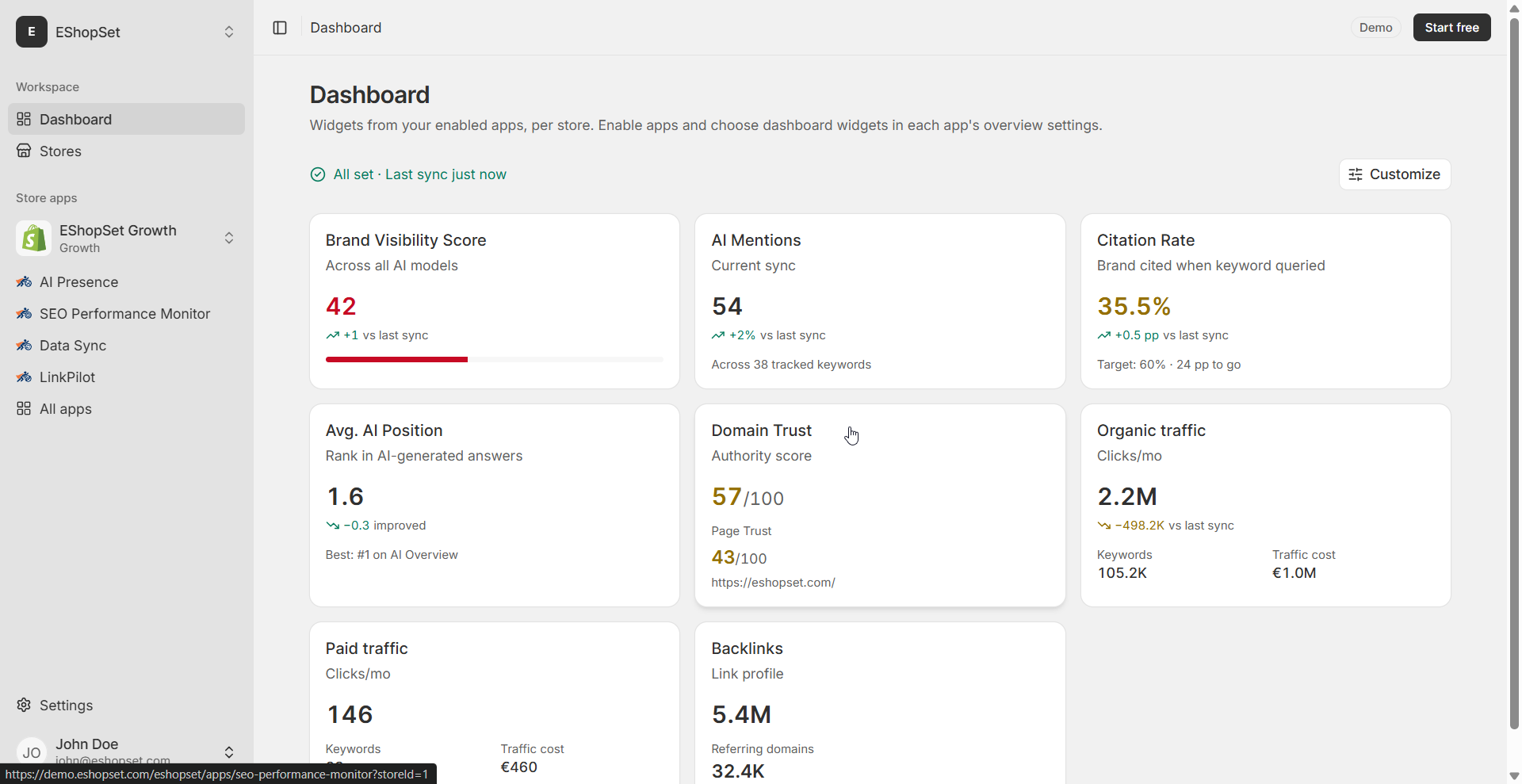
Similarly, your organic presence plays a huge role in attracting quality customers. Many successful merchants leverage embedded Shopify Admin apps to keep a constant eye on their SEO performance, ensuring they're visible when high-intent customers search for their products. These Shopify apps for daily operations are not just about automation; they're about empowering you to make informed decisions that contribute to LTV.
EShopSet Team Comment
We absolutely agree with the community's emphasis on rigorous testing and understanding the true drivers of LTV beyond just ad platform claims. While ad tools can automate certain aspects, the strategic thinking about customer quality and the foundational excellence of your store operations are paramount. Merchants should leverage powerful SEO Performance Monitor to attract organic traffic, refine product data with Sheet2Cart for a seamless catalog, and enhance customer experience with AI Presence to truly cultivate long-term customer relationships, rather than solely relying on ad spend optimizations.
Ultimately, the discussion underscores that LTV is a holistic metric. It’s influenced by everything from your ad creative to your product quality, customer service, and the overall efficiency of your store. As Shopify merchants, focusing on these core operational strengths, alongside smart advertising strategies and robust testing, is what will truly help you build a thriving business with customers who love to stick around.