Beyond Basic Keywords: Mastering SEO for Established Shopify Stores
Ever felt like you've hit a wall with SEO on your Shopify store? Especially if it's already a big, established brand with thousands of products and a solid audience? It's a common feeling, and it came up recently in a lively online discussion that really resonated with us at EShopSet. The original poster, working for a large clothing brand, expressed frustration:
"Most of the SEO content I see tends to be about starting from scratch... but what about ALREADY being hired at a place that already had SEO employees before? I mostly just check the keywords and say 'yeah we're in the top searches'... same as every month. Not quite the top though, other companies can steal the top spot from us. What exactly should I be doing as the SEO guy here?"
It's a great question, highlighting a crucial shift in SEO work once a store reaches a certain scale. It's no longer just about finding new keywords; it's about deep optimization, protection, and strategic growth. Let's dive into the insights shared by seasoned experts.
Beyond Basic Keywords: The Real Work Begins
Many community members quickly pointed out that for a large site, the focus moves from broad keyword discovery to more granular, impactful work. One respondent wisely noted, "Honestly, on a site that big, SEO is less about finding more keywords and more about finding what’s leaking traffic."
1. The Unsung Hero: Technical SEO & Site Health
This was a huge theme. For a site with tens of thousands of products, things break, and technical debt accumulates. Experts emphasized:
- Crawl Efficiency: Ensuring search engines can easily find and index your vast catalog. Issues with XML sitemaps, robots.txt, redirects, and broken links can silently erode your visibility.
- On-Page Foundations: Schema markup, canonical tags, hreflang, and page speed are critical. As one expert put it, "When dozens of people ship changes every week, most of your value is catching the canonical tag someone forgot on the new PDP template, the hreflang regression in a CMS update, or the faceted URLs a new feature just launched — before they cost you traffic." This preventative SEO is gold.
- Data Accuracy: Ensuring product data is optimized and accurate across all pages.
2. Unearthing Hidden Opportunities in Your Catalog
With a massive product catalog, the opportunities often lie within what you already have:
- Long-Tail Categories: A head of SEO for a large clothing brand suggested, "Assuming you have thousands of product skus… you can create a ton of long tail category pages." This means leveraging existing product attributes to create highly specific, niche category pages that capture lower-volume, high-intent searches.
- Content Depth: Beyond product names, consider buying guides, size/fit content, and use cases. This helps answer customer questions and establishes authority.
- Optimizing Mid-Rankers: Instead of chasing completely new keywords, focus on pages sitting in positions 4-10. These pages already have some authority and just need a boost. Look for low CTR, internal linking gaps, or areas of content cannibalization.
Managing this scale of product data efficiently is key. Many merchants struggle with the limitations of manual processes or even basic Data Sync vs Shopify CSV import. While Shopify's CSV import is a tool, for ongoing, large-scale content and technical updates, a robust data sync solution becomes a game-changer. It allows for bulk edits, ensures consistency, and can automate the creation of those valuable long-tail category pages, saving countless hours.
3. Staying Ahead with Authority & AI
SEO isn't just about your site; it's about your brand's presence across the web:
- Building Authority: Pursue backlinks, brand mentions, and PR efforts. This increases your overall domain authority, lifting all your pages.
- AI Visibility (AEO): Several respondents highlighted the growing importance of Answer Engine Optimization (AEO) and AI visibility. As AI models become more prevalent in search, optimizing your content to provide direct, concise answers to user queries is crucial. This means structuring your content for clarity and ensuring your brand is cited as a reliable source.
4. The Strategic Game: Data, Prioritization, and Prevention
Ultimately, SEO at scale is about smart strategy and operational excellence:
- Data-Driven Decisions: Pull brand queries out of your reporting to focus on non-brand terms where real growth can happen. Segment data by category or page type to find cohorts needing attention. Test changes, measure their impact, and build a case for future SEO sprints.
- Collaboration: Developing strong relationships with developers and marketing teams is vital. SEO work often competes for development resources, so being able to forecast impact and make strong business cases is essential.
- Continuous Improvement: SEO is never 'done'. It's a cyclical process of measuring, reporting, deciding, and optimizing.
EShopSet Team Comment
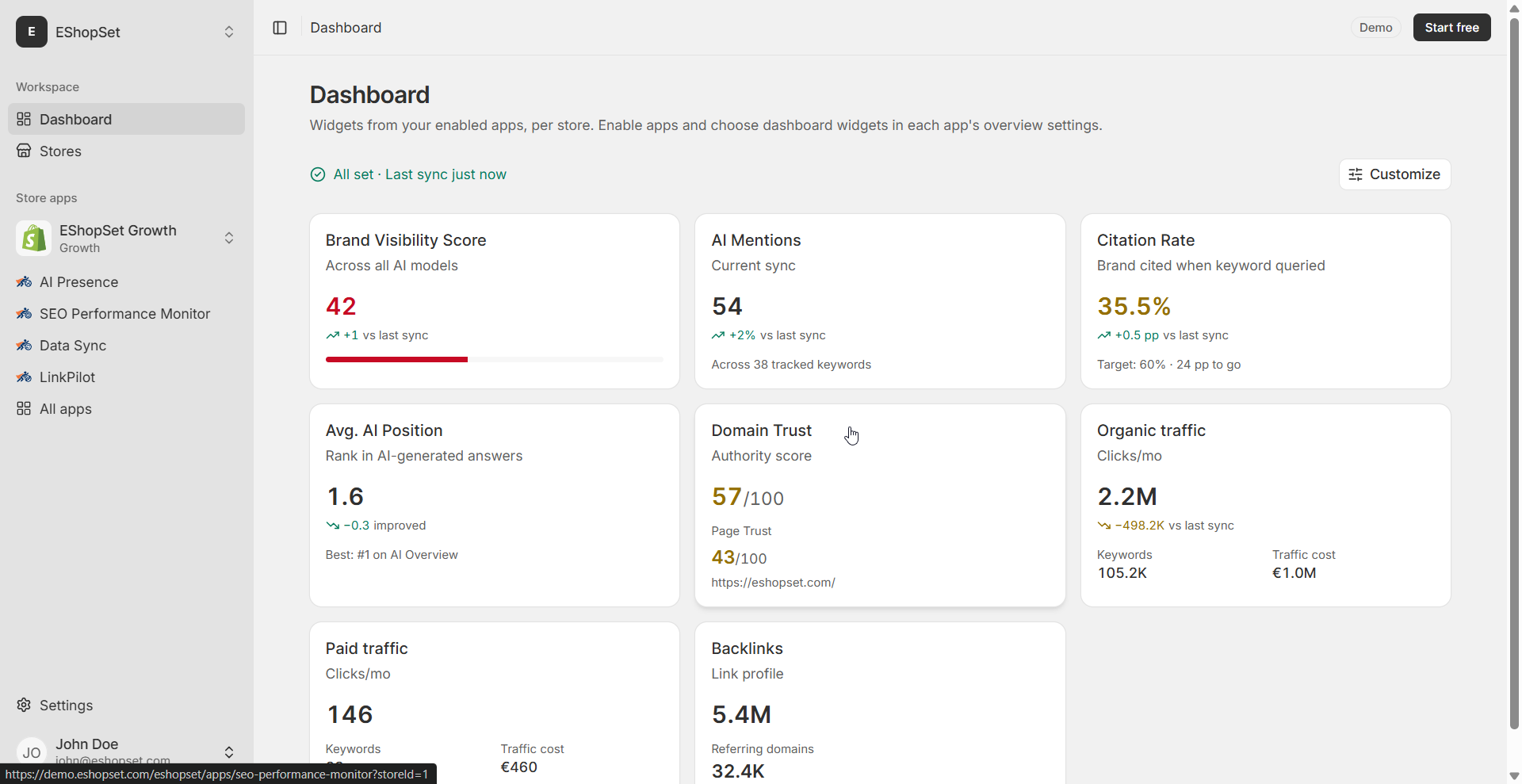
This discussion perfectly encapsulates the shift required for mature Shopify stores. We completely agree that the focus must move from basic keyword hunting to deep technical optimization, data-driven content refinement, and forward-looking AI strategies. For Shopify merchants, continuously monitoring site health and performance with an app like SEO Performance Monitor is non-negotiable, while AI Presence helps you adapt to the evolving search landscape. And when it comes to managing those thousands of products and implementing large-scale content updates efficiently, Sheet2Cart is invaluable, allowing for robust data sync capabilities far beyond what a simple Shopify CSV import can offer.
So, if you're feeling like the original poster, don't despair. Your SEO journey isn't over; it's just getting more sophisticated. By focusing on technical health, leveraging your existing catalog for deeper content, building authority, and embracing AI, you can continue to drive significant organic growth for your established Shopify store. It's about continuous optimization, smart data analysis, and making every incremental improvement count.