Supplier Secrecy & Law Labels: How Shopify Merchants Can Protect Their Business
Running a Shopify store means juggling a lot, from marketing your amazing products to ensuring smooth daily operations. But what happens when a critical step in your supply chain hits a wall? We recently saw a fascinating discussion unfold in an online community that sheds light on a common, yet often perplexing, issue: supplier transparency and legal compliance.
The original poster was trying to bring a custom plush toy to market in the US. This requires registering for a URN (Uniform Registry Number) for law labels, a non-negotiable compliance requirement for stuffed products. The problem? Their Chinese manufacturer flat-out refused to share their local tax ID, business registration code, or official contact details, citing "business privacy."
The Community Weighs In: A Red Flag for Merchants
This situation immediately raised eyebrows among experienced sellers in the community. Several respondents quickly pointed out that a supplier's tax ID or business registration is typically public information, especially for legitimate businesses engaged in international trade. The consensus was clear: the "privacy" claim was likely a smokescreen.
As one community member succinctly put it, "Their Tax ID is public information, no way it's for privacy, so I'd call it bs." Another added, "BS All over the place, you are probably not even buying from the factory making it that's why they don't want to give you anything."
Unmasking the Middleman: Why Transparency Matters
The overwhelming suspicion from the community was that the original poster was dealing with a middleman or an agency, rather than the actual factory. A true manufacturer, especially one exporting to the US, would be well aware of URN requirements and the necessity of providing such documentation. Their refusal strongly suggests they either don't want you to find their source factory or they themselves lack the proper registration to be a direct supplier for regulated goods.
This insight is crucial for any Shopify merchant sourcing products internationally. Lack of transparency at this stage can lead to significant headaches down the line, affecting everything from product quality to legal compliance and ultimately, your store's reputation.
The URN Dilemma: Is There a Workaround?
The original poster had some key questions:
- Is there ANY legitimate way to handle a URN if a supplier won't give their Tax ID? The firm answer from a law label registration service, and echoed by the community, is no. It's impossible to register a URN without the factory's verified tax information. There's no joint license, importer-led filing, or third-party proxy that can bypass this fundamental requirement.
- Is it common for smaller factories to refuse this out of fear/privacy? While smaller operations might be more cautious, legitimate factories understand the need for compliance. Refusal, especially for a regulated product like a plush toy, is a massive red flag, not a common practice among reputable manufacturers.
- If they still refuse, is this a hard dealbreaker? Absolutely. Selling stuffed toys without a URN or faking one on a law label is a massive legal risk in the US. It can lead to product recalls, hefty fines, and severe damage to your business.
This isn't just about plush toys; it's a lesson for any Shopify merchant dealing with products that have specific regulatory requirements – cosmetics, food items, electronics, apparel, etc. Understanding and meeting these compliance standards is non-negotiable for long-term success.
Actionable Steps: Vetting Your Suppliers for Peace of Mind
So, what can you do if you find yourself in a similar situation, or want to prevent it?
- Demand Transparency Upfront: Before committing to a supplier, clearly outline all compliance requirements for your product and target market. Request necessary documentation early in the process.
- Verify the Factory Directly: As one community member suggested, if possible, visit the factory in person. If not, hire a trusted, independent agent in the region to inspect the facility and verify the supplier's claims. An agent can often quickly spot a middleman masquerading as a factory owner.
- Look for Red Flags: Beyond refusing tax IDs, be wary of suppliers who are vague about their production process, reluctant to provide factory photos or videos, or insist on communicating only through platforms that obscure their identity.
- Don't Compromise on Compliance: If a supplier cannot or will not meet your legal and regulatory requirements, it's a hard dealbreaker. Walking away, even if it means delays, is far better than facing legal repercussions later.
Beyond Sourcing: Protecting Your Store's Online Presence
While supplier vetting is a foundational step, once you have compliant products, your focus shifts to getting them in front of the right customers. A robust supply chain ensures you have accurate product data to populate your Shopify store. This accurate data is crucial for effective online visibility.
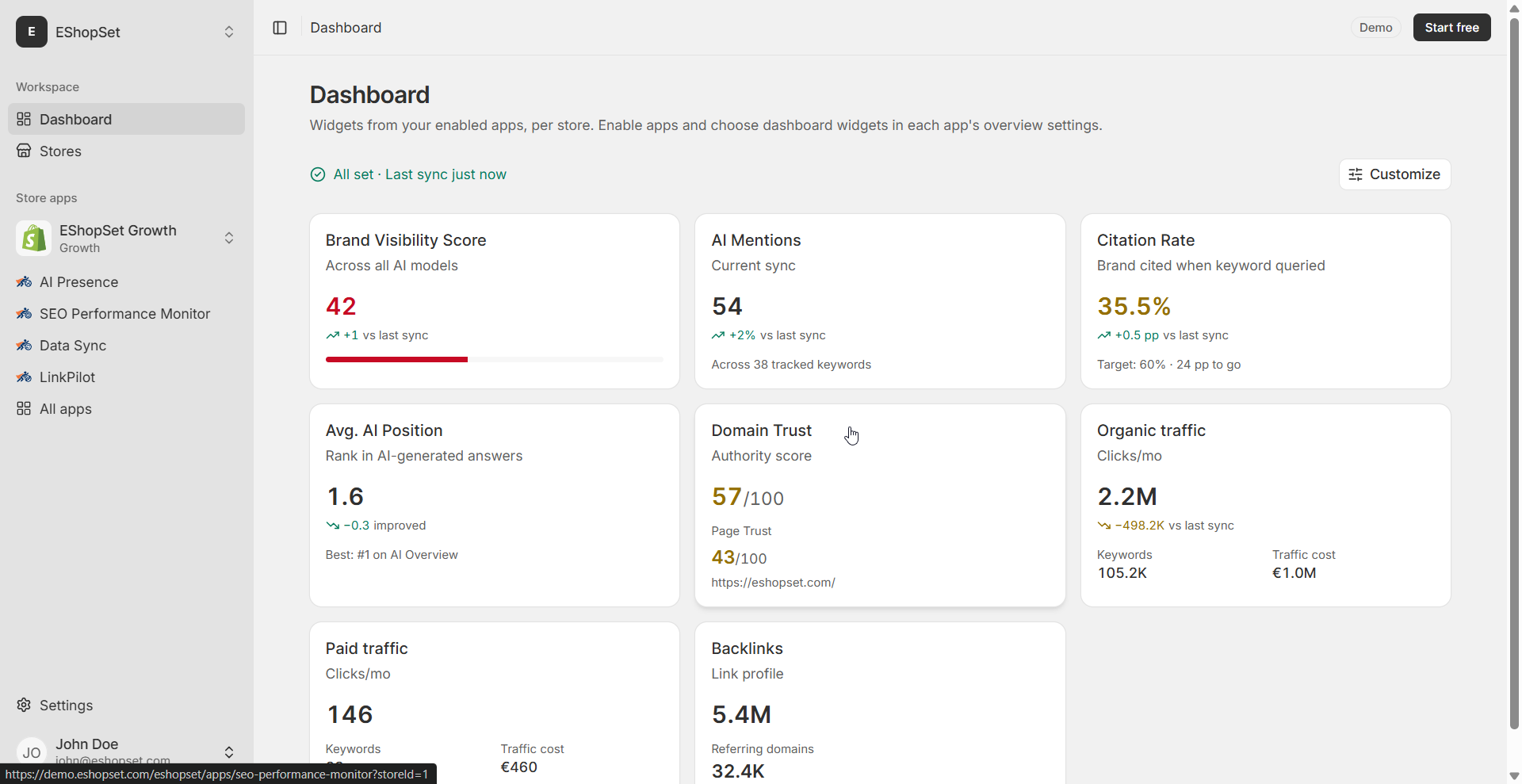
For example, ensuring your product descriptions and details are precise directly impacts your Shopify SEO overview dashboard performance. When search engines understand exactly what you're selling, your products have a better chance of ranking. A reliable Shopify SEO monitoring app can help you track keyword performance, identify opportunities, and ensure your product pages are optimized for organic search.
Furthermore, in today's AI-driven world, precise product information is key to enhancing your AI search visibility Shopify stores need. AI models scour product data for rich, contextual details. The more accurate and comprehensive your product information, the better your chances of appearing in AI Overviews and other emerging search experiences.
EShopSet Team Comment
This discussion highlights the foundational importance of supplier vetting and compliance. Without a legally viable product, all subsequent operational efforts – like managing your catalog, optimizing for search, or enhancing AI presence – are built on shaky ground. We strongly agree with the community: transparency from your supplier is non-negotiable for regulated products. Ensuring your supply chain is solid prevents headaches that no amount of post-production optimization can fix. Once your products are compliant and ready, tools like our Sheet2Cart can streamline your catalog updates, while SEO Performance Monitor and AI Presence ensure they're discoverable and shine online.
Ultimately, a successful Shopify store is built on trust – with your customers, with your platform, and critically, with your suppliers. Don't let a lack of transparency early in the supply chain jeopardize your entire business. Be proactive, ask the tough questions, and prioritize compliance every step of the way.