Shopify Migration SEO: To Clean Up Old Issues or Preserve What Works?
Migrating your Shopify store to a new theme, platform version, or even a full rebrand? It's an exciting time, but it often brings up a tricky question that can keep even seasoned store operators scratching their heads: What do you do with all those old SEO issues?
Do you seize the opportunity to finally clean up years of accumulated redirects, questionable canonicals, and outdated URL structures? Or do you play it safe, preserving as much as possible to avoid rocking the SEO boat? This exact dilemma recently popped up in a vibrant online community discussion, and the insights shared are gold for any Shopify merchant facing a similar move.
The Great Migration Debate: Cleanup vs. Preservation
The original poster in the discussion perfectly captured the core challenge: "CMS migrations always create this awkward choice. Do you preserve the old URL structure as much as possible, or use the migration to finally clean things up?" They highlighted the risk of changing too much at once, a fear many of us can relate to.
One community member offered a fantastic perspective, suggesting that a CMS migration often signifies a pivot in business objectives or even a rebrand. Their advice? Let your execution follow those new objectives. This means you should feel empowered to create new pages, delete irrelevant ones, or combine content where necessary to align with your fresh vision. It's an opportunity to streamline your content and make it more effective.
However, another expert chimed in with a crucial counterpoint: if you have valuable traffic and backlinks pointing to existing pages, there's "no question we are routing it properly and where possible retaining exact URL structure." This highlights the importance of protecting your hard-earned SEO authority. Simply deleting pages with strong backlinks or changing URLs without proper redirects is akin to throwing away years of effort.
The Golden Rule: Test, Test, Test Before Launch!
One point everyone agreed on was the absolute necessity of rigorous testing. The original poster quickly affirmed that "finding the problems before the migration sounds a lot better than discovering them after launch lol."
The consensus is clear: whatever cleanup or preservation strategy you choose, it must be executed and thoroughly tested in a development environment. Use technical crawlers to identify any broken links, redirect chains, or canonical issues long before your new site goes live. This proactive approach is your best defense against post-launch SEO disasters.
The Longevity of Redirects: Why a Year Might Not Be Enough (Especially with AI)
When it comes to 301 redirects, Google generally advises keeping them for at least a year. But the community discussion brought up an interesting modern twist: AI crawlers. One expert recommended keeping redirects much longer than a year, noting that "AI being very slow while following very old URLs." The original poster agreed, emphasizing that with "AI crawlers in the mix," longer redirect lifespans are a smart move.
Another point made was that while Google's index might eventually catch up, AI is "persistent through old links." This means even if a page is no longer in Google's primary index, AI models might still encounter old URLs through various data sources. While ideally, you'd fix all external links pointing to old URLs, that's often impossible at scale. Therefore, robust and long-lasting 301 redirects become even more critical to guide both traditional search engines and emerging AI crawlers to your correct content. When creating new content or optimizing existing pages, consider your seed keywords for AI Presence Shopify to ensure that even with redirects, your valuable content is easily understood and cited by AI.
Making Smart Decisions: A Hybrid Approach for Shopify Merchants
So, what's the takeaway for your Shopify store? It's not an either/or situation. The most effective approach is a strategic hybrid:
- Define Your Objectives: Understand if your migration is a rebrand, a content cleanup, or simply a technical update. Let this guide your decisions on what to keep, delete, or merge.
- Audit & Prioritize: Before touching anything, conduct a thorough audit of your current site. Identify pages with high traffic, strong backlinks, or critical conversion paths. These are your non-negotiables for preservation or careful redirection. Consider a quick Shopify SEO competitor analysis to see which of your existing pages perform well against rivals, reinforcing their importance.
- Strategic Cleanup: Use the migration as an opportunity to remove truly irrelevant or low-value content that doesn't serve your new objectives. Consolidate similar content to create stronger, more authoritative pages.
- Implement Robust Redirects: For any URL changes, implement 301 redirects. Plan to keep them active for significantly longer than Google's minimum recommendation, especially given the rise of AI in search.
- Test, Test, Test: Perform extensive testing in a staging environment. Crawl your entire site, check all redirects, and verify canonical tags before pushing anything live.
EShopSet Team Comment
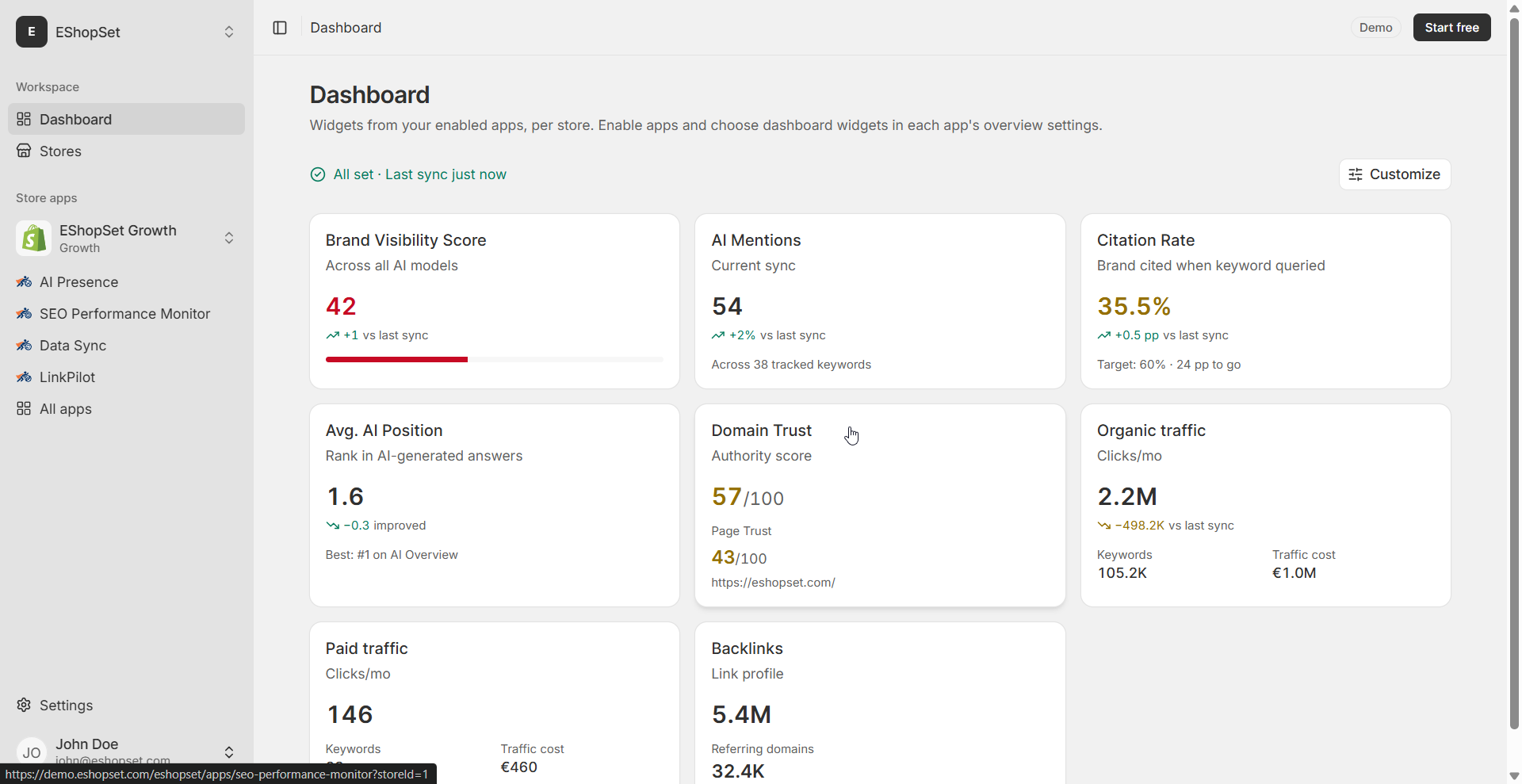
We completely agree with the community's emphasis on a strategic, hybrid approach to SEO during migrations. It's vital to protect your existing SEO value while also leveraging the opportunity to improve. Our SEO Performance Monitor is your go-to for identifying existing SEO issues pre-migration and ensuring post-migration health. For efficiently managing your product catalog during such a big change, Sheet2Cart can be invaluable for bulk updates and imports. And as the discussion highlighted, optimizing for AI is crucial; our AI Presence app helps ensure your new or updated content is primed for AI visibility, making sure your seed keywords for AI Presence Shopify are effective.
A well-planned migration isn't just about a new look or better tech; it's about setting your Shopify store up for continued SEO success. By being methodical and leveraging the right tools, you can navigate these changes confidently and emerge stronger.