Navigating Global E-commerce: Should Your Shopify Store Outsource International Trade?
Running a successful Shopify store means juggling a lot of hats, and when you venture into international sales, that stack of hats gets even taller. We recently saw a fantastic discussion pop up in an e-commerce community about the idea of an outsourced international trade support business. It sparked some great points that are super relevant for any Shopify merchant looking to expand their global footprint or streamline existing international operations.
The original poster, a professional with a strong background in supply chain, proposed offering services like trade-document preparation, HS/HTS classification, shipment tracking, and even supplier sourcing, specifically targeting small to medium-sized e-commerce companies. This immediately got us thinking: how many of you out there are grappling with these exact challenges daily?
The Big Question: To Outsource or Not to Outsource?
For many Shopify merchants, especially those without a dedicated internal supply chain or trade team, the idea of outsourcing these complex international operations is incredibly appealing. Why? Because the alternative often means diving deep into customs regulations, tariff codes, and logistics nightmares that can quickly eat up valuable time and resources.
A community member highlighted the sheer complexity involved. Imagine trying to keep up with country-specific import requirements, ensuring your product descriptions meet local standards, and accurately classifying every item with its correct Harmonized System (HS) or Harmonized Tariff Schedule (HTS) code. Getting these wrong can lead to costly delays, fines, or even rejected shipments – a real headache for your bottom line and customer satisfaction.
What Services Do Merchants Value Most?
Based on the discussion, certain services clearly stand out as high-value for e-commerce businesses:
- Trade-Document Preparation, Review, and Analysis: This is a non-negotiable. Accurate paperwork is the bedrock of smooth international trade. Mistakes here can halt your entire operation.
- HS/HTS Classification Research: As mentioned, this is critical for correct duties and compliance. It requires specialized knowledge that many small businesses simply don't have in-house.
- Shipment Tracking and Exception Management: Knowing where your products are and proactively addressing any issues (delays, damages) is crucial for customer service and inventory planning.
- Cost of Operations Analysis and Reduction: Identifying inefficiencies and finding ways to lower landed costs can significantly boost profitability for international sales.
- Product, Supplier, and International Market Research: Especially for sourcing from specific regions like India, as the original poster mentioned, having a local network can be invaluable for finding reliable manufacturers and competitive pricing.
Building Trust with Overseas Service Providers
One of the key concerns raised by the original poster was about building trust with a new overseas service provider. This is a legitimate hurdle. For Shopify merchants, entrusting critical supply chain functions to an external partner requires confidence. Key factors in building this trust include:
- Transparency and Communication: Clear, consistent updates and easy access to information.
- Proven Expertise: Demonstrable knowledge and experience in international trade.
- Starting Small: Many merchants might prefer to begin with a fixed-price project for a specific task before committing to a long-term retainer or hourly assistance. This allows them to test the waters and build confidence.
Empowering Your Internal Operations with EShopSet
While outsourcing can solve many pain points, even with external support, Shopify merchants still need robust internal tools to manage their day-to-day operations effectively. This is where EShopSet comes in, offering a bundle of apps designed to streamline your workflow and enhance your global presence.
-
For Product Data and Catalog Management: Sheet2Cart (/apps/sheet2cart/)
Imagine managing hundreds or thousands of product SKUs, especially when dealing with international variations, pricing tiers, and localized descriptions. Sheet2Cart empowers you to sync product data directly from Google Sheets to your Shopify store. This is incredibly powerful for keeping your international catalog updated, ensuring accurate HS/HTS codes (if you manage them internally), and quickly pushing new products or price changes across different markets. It’s about maintaining control and efficiency, even when working with external partners. -
For Global Visibility and Market Presence: SEO Performance Monitor (/apps/seo-performance-monitor/)
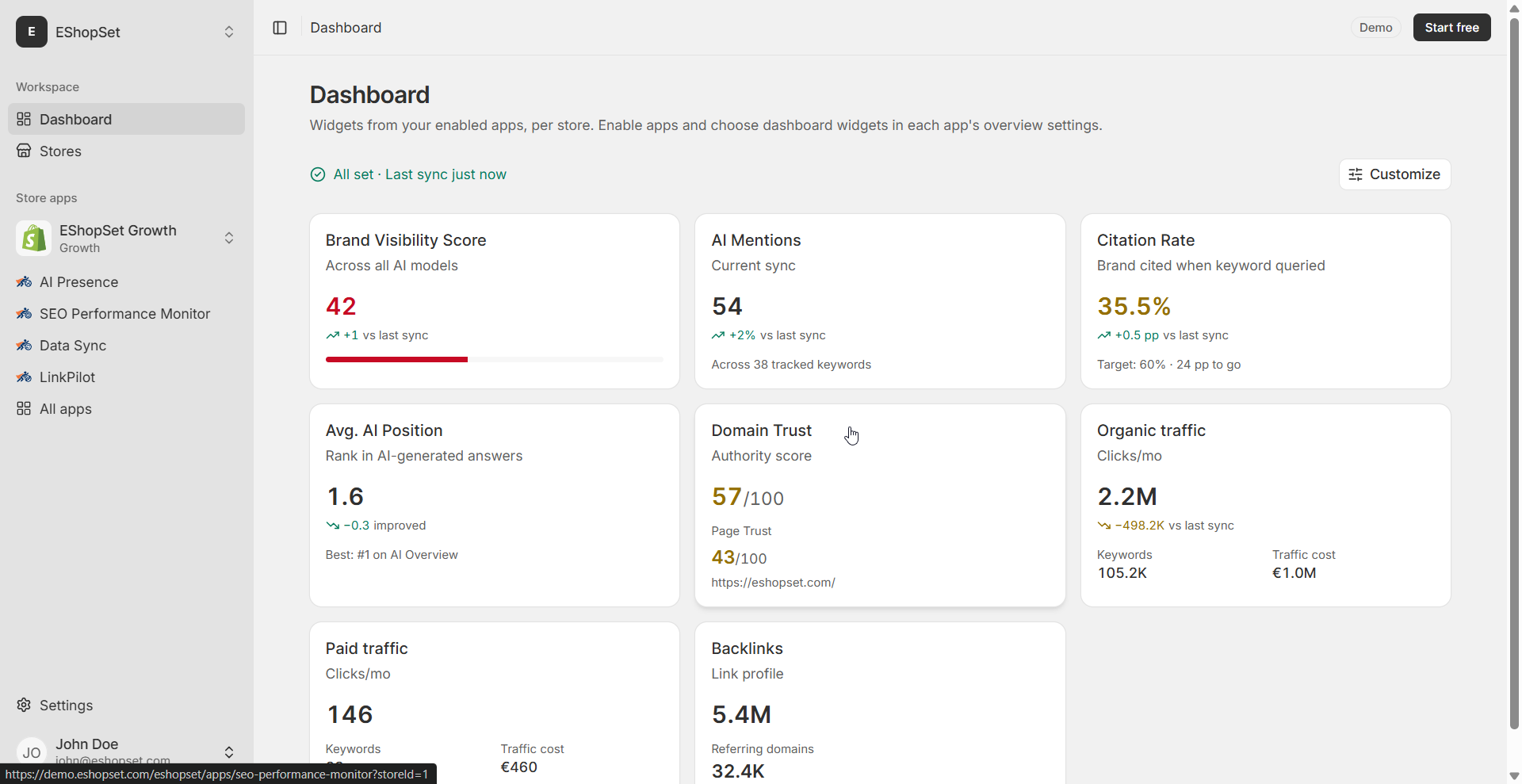
Expanding internationally means competing in new markets. How do you know if your products are visible to potential customers in different countries? Our SEO Performance Monitor acts as your personal Shopify SERP ranking tracker, helping you keep an eye on your search engine rankings across various regions. Understanding your competitive landscape and optimizing for local search terms is crucial. This tool ensures your efforts in international trade translate into actual sales by driving organic traffic. -
For Localized Content and Customer Engagement: AI Presence (/apps/ai-presence/)
Once customers find you, engaging them with relevant, localized content is key. AI Presence helps you craft compelling product descriptions, marketing copy, and even support responses tailored to specific cultural nuances and languages. This not only builds trust but also significantly improves conversion rates in international markets, complementing any outsourced efforts to reach new audiences.
Pricing Models: What Works Best?
The original poster asked about preferred pricing models: fixed-price projects, hourly assistance, or a monthly retainer. For small to medium Shopify stores, a fixed-price project model often provides the most comfort initially, especially for clearly defined tasks like HS classification for a new product line or a one-off document review. As trust builds and the relationship matures, a monthly retainer for ongoing support might become more attractive, offering predictable costs for essential services.
EShopSet Team Comment
The discussion around outsourcing international trade operations highlights a critical need for Shopify merchants: efficiency, accuracy, and market reach. We strongly believe that while specialized external support can be invaluable, empowering merchants with robust internal tools is equally essential. EShopSet's bundle directly addresses these needs, allowing merchants to maintain control over their product data, monitor their global SEO performance, and create localized content with confidence. This combination ensures that whether you outsource or manage internally, your store is set up for international success.
Ultimately, whether you decide to outsource all your international trade operations, handle them entirely in-house, or adopt a hybrid approach, the key is to understand your specific needs, assess the risks, and leverage the right tools and expertise. For those looking to partner with service providers, remember that you can always refer Shopify merchants EShopSet as a valuable app bundle that complements their offerings, helping their clients run smoother and more profitable international stores. By combining expert assistance with powerful apps, your Shopify store can truly thrive on the global stage.