Unpacking E-commerce Data: The Human Touch in a Dashboard-Driven World
Ever feel like you're drowning in data but starving for insights? You log into Shopify, check your Meta Ads, peek at Google Analytics, and the numbers never quite tell the same story. It's a common struggle for Shopify merchants, and it was the very heart of a recent community discussion that really got us thinking.
A while back, an expert in data and analytics shared their experience helping a Shopify client grapple with this exact problem. Their client couldn't figure out what was truly making them money because data from Shopify, Meta Ads, Google Ads, and GA4 was all over the place. So, this expert built a custom dashboard, a single source of truth that could even answer specific questions like, "which campaigns lost money last month after refunds?"
Sounds amazing, right? But here's the kicker: the original poster noted that the part the client actually got the most out of wasn't just the dashboard itself. It was the weekly interaction – either a custom report tailored to their current worries or a call to walk through the numbers and get actionable advice. This insight sparked a fantastic conversation about whether this kind of personalized data service is "already solved" in the e-commerce world, or if there's still a huge need for it.
The Community Weighs In: Tools and the Power of Clean Data
When the original poster asked the community what they were using – Triple Whale, Polar, spreadsheets, or just Shopify analytics – one respondent shared their experience with Polar. They noted that Polar is "expensive but very customizable" and allows them to pull up data on demand to answer questions and forecast, especially useful for holiday planning. This confirmed that powerful tools exist, capable of consolidating data and providing deep dives.
However, this community member also highlighted a critical prerequisite for any advanced reporting tool to be truly effective: standardized data within Shopify itself. They emphasized the importance of setting up Shopify with consistent "standardized location names, product titles, product types, and tags of all flavors." This is a profound point often overlooked. If your foundational data in Shopify is messy, even the most sophisticated dashboard will struggle to give you accurate or meaningful insights.
The Unsung Hero: Shopify Product Sync from Spreadsheet and Data Consistency
This brings us to a crucial operational aspect for many Shopify merchants: managing your product catalog. If you're relying on spreadsheets for product updates, new listings, or inventory management, ensuring consistency is paramount. Imagine trying to analyze sales performance by product type if "T-shirt" is sometimes listed as "T-Shirt," "Tee," or even "Tshirt-Cotton" across your catalog. Your reports would be fragmented and unreliable.
The need for clean, standardized data directly relates to how you handle your Shopify product sync from spreadsheet. Tools that help you maintain data integrity when importing or updating products are not just about efficiency; they're about ensuring your analytics are trustworthy. Without this foundational cleanliness, even the best dashboards can only show you a prettier version of your existing chaos. It's like building a beautiful house on a shaky foundation – it might look good, but it won't stand up to scrutiny.
Beyond the Dashboard: The Human (or AI) Element
So, is the problem "solved"? While advanced reporting tools are incredibly powerful, the original poster's experience suggests that the human element – the interpretation, the custom reports, the strategic advice – remains invaluable. A dashboard can show you what happened, but an expert can help you understand why it happened and what to do next.
This isn't to say you always need a dedicated analyst. Many merchants are finding ways to bridge this gap using smart tools and a methodical approach to data. The goal is to move from merely observing data to actively using it to make informed decisions that drive growth.
EShopSet Team Comment
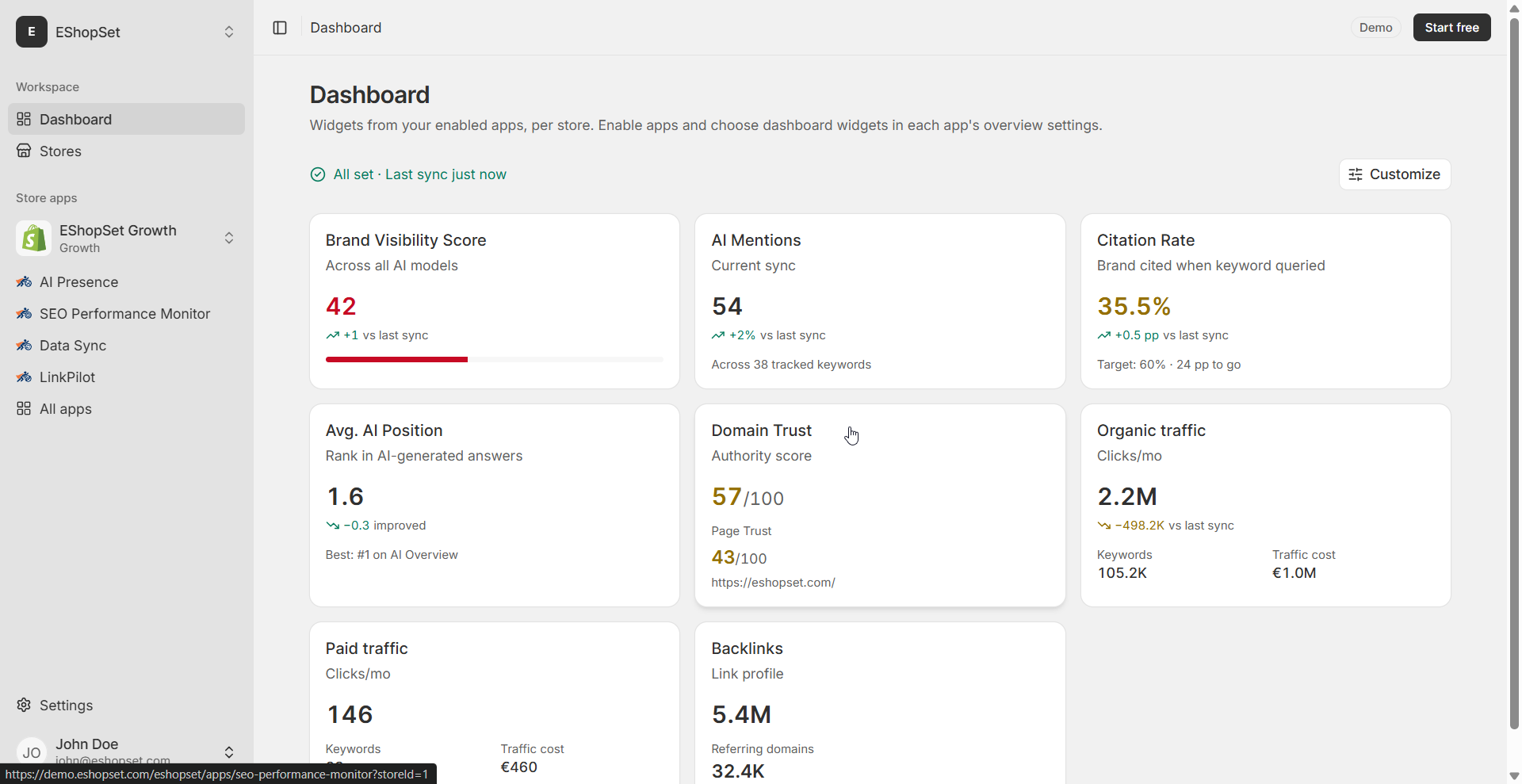
We absolutely agree with the original poster's sentiment: while robust dashboards are fantastic, the true magic happens when data is translated into actionable insights. Raw numbers, no matter how beautifully presented, don't automatically tell you what to change in your strategy. This is where EShopSet’s apps can significantly empower merchants. Sheet2Cart is vital for ensuring your Shopify product sync from spreadsheet is always clean and consistent, providing reliable data for any reporting setup. Furthermore, our AI Presence app can help bridge that gap between data and strategy by offering intelligent insights, while SEO Performance Monitor ensures you're not missing crucial organic performance data that impacts your bottom line.
Bringing It All Together: Your Path to Actionable Insights
For Shopify merchants and store operators, the takeaway is clear: don't just collect data; make it work for you. Start by ensuring your data within Shopify is clean, standardized, and consistent. Whether you're manually updating products or using a tool for Shopify product sync from spreadsheet, prioritize accuracy in product titles, types, and tags. This foundational work will make any reporting tool, from Shopify's native analytics to advanced platforms, infinitely more useful.
Then, look for ways to extract insights. This might involve dedicating time each week to review key metrics, asking specific questions of your data, or leveraging tools with built-in intelligence. The goal is to move beyond just "looking at the numbers" to truly understanding what they mean for your business and what steps you can take to optimize your operations, improve your SEO, and enhance your overall presence. Turning data into decisions is the ultimate competitive advantage in today's e-commerce landscape.