Running Multiple Shopify Stores? Master Inventory, POS, and Loyalty for Seamless Growth
Hey there, fellow Shopify merchants and store operators! We recently stumbled upon a really insightful discussion in the community that hits home for many of us scaling our businesses. The original poster was looking to split an existing niche business into three distinct Shopify stores, all while sharing inventory and running a single physical POS. It’s a common challenge: how do you maintain separate brand identities and reporting without creating a logistical nightmare?
Let's dive into the key takeaways from that conversation and see how you can apply these insights to your own multi-store strategy.
Separate Stores vs. Shared Checkout: The Reporting Advantage
The original poster wisely considered keeping their three Shopify stores (HRTI, HSC, DLL) entirely separate, each with its own native checkout. Their reasoning? Cleaner reporting, better SEO, and distinct traffic and conversion data for each brand. This approach received strong backing from the community.
One respondent emphasized that merging carts across disparate sub-niches could actually kill cross-sell conversion more than the friction of paying double shipping. While the original poster's idea of offering a shipping discount for sister-store purchases (perhaps 50% off eligible standard shipping on the second store) is a clever way to soften the blow, a community member pointed out that discount codes on thank-you pages often have low redemption rates. So, while it's a good thought, don't rely on it completely to solve the two-checkout friction.
The consensus here is clear: for accurate data, brand integrity, and streamlined reporting, separate checkouts are generally the way to go. The benefits for targeted marketing, analytics, and ultimately, understanding each brand's performance, often outweigh the perceived conversion boost of a shared cart.
The Inventory Puzzle: One Source of Truth is Key
This was perhaps the most crucial point of discussion. When you have shared inventory across multiple stores and a physical POS, how do you prevent overselling? The original poster planned to use one store (HRTI) as the inventory hub, with products tagged for their respective destinations. Longer-term, they were eyeing solutions like Flxpoint as a central IMS.
A community member highlighted the critical need to define where the inventory ultimately lives and which system is the 'source of truth.' They asked: are you syncing the same quantity into all three Shopify stores, or does a central availability layer determine what each storefront is allowed to sell? The 'last unit' scenario is the biggest distinction – selling the last item anywhere (online or in-store) must update availability everywhere instantly.
Another respondent stressed the importance of a sync tool that writes inventory adjustments with zero caching delays. An in-store rush on a weekend could otherwise trigger nasty oversells on your online stores. This means your inventory management system needs to be robust and real-time.
Practical Inventory Sync Considerations:
- Designate a Master Store or System: Clearly decide which Shopify store or external IMS (like Flxpoint) will hold the master inventory data. All other stores and your POS should pull from and update this single source.
- Real-time Updates: Invest in a solution that offers near real-time inventory synchronization. Delays, even minutes long, can lead to overselling and unhappy customers.
- SKU Consistency: Maintain consistent SKUs across all stores and your POS. This is fundamental for accurate tracking and syncing.
Loyalty Programs and Customer Accounts: A Unified Experience Challenge
One of the biggest 'hidden problems' identified by a community member was loyalty. If you're using an app like Growave, it might not sync customer points between separate Shopify stores. This means a customer buying on HRTI and then shopping on DLL could start from zero, undermining any promise of a unified rewards experience.
This highlights a significant challenge in multi-store setups: managing customer accounts and loyalty across different brand fronts. You'll need to carefully evaluate your loyalty solution's capabilities and decide if a unified loyalty program is more important than the distinct branding or reporting. Sometimes, a separate loyalty program per store might be the most straightforward path, even if it means customers have multiple accounts.
Shopify POS with Shared Inventory: Keeping it Streamlined
The original poster's plan to use HRTI’s existing Shopify POS for the physical storefront, carrying products from all three categories, is a smart move. They proposed tagging DLL-only products as 'Bankful Only' and publishing them to POS only, not to the HRTI website. This keeps the retail location streamlined without needing extra Shopify backends or separate POS ecosystems.
For in-person card sales, processing everything through an external terminal like Bankful (as the original poster considered) can simplify employee training and payment processing, especially for higher-risk products. The crucial part here, again, is ensuring that any sales through the POS instantly update the shared inventory across all online stores.
EShopSet Team Comment
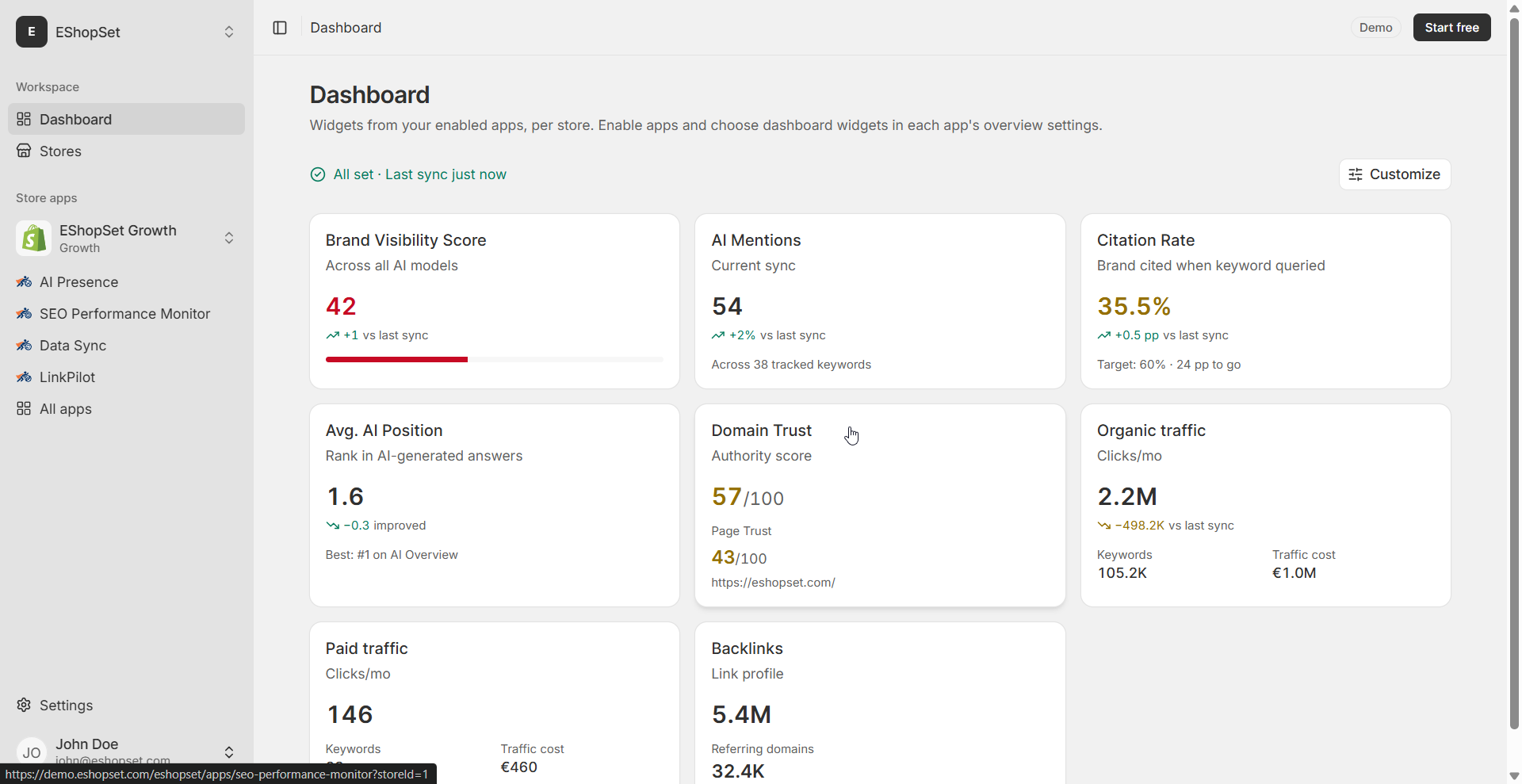
This discussion perfectly illustrates the complexity and opportunity in managing multiple Shopify stores. We firmly believe that while separate checkouts offer superior data integrity and brand focus, the real magic lies in robust backend synchronization. This is where tools like Sheet2Cart become invaluable for effortlessly managing and syncing product catalogs and inventory across your stores, ensuring that 'source of truth' is always up-to-date and preventing those dreaded oversells. Furthermore, maintaining consistent SEO and a strong online presence for each distinct brand, even when operating under the same umbrella, is paramount – and that's precisely what our SEO Performance Monitor and AI Presence apps are designed to help you achieve across all your Shopify stores.
Wrapping Up Your Multi-Store Strategy
The original poster's goal was to keep the setup affordable and manageable now, but structured for future growth. The community's advice strongly supports the idea of separate Shopify stores for clear identity and reporting, while emphasizing meticulous inventory synchronization and careful consideration of how loyalty programs will function across brands. When evaluating solutions, always consider the Shopify apps pricing per store for each tool in your stack, as costs can quickly add up with multiple subscriptions.
By focusing on a single, reliable inventory source, ensuring real-time updates, and making informed decisions about customer loyalty, you can successfully scale your multi-brand Shopify empire without getting bogged down in operational complexities. It’s all about building a solid foundation that supports each unique brand while leveraging shared resources efficiently.