Demystifying AI Sales on Shopify: Unmasking Your Meta/Muse & ChatGPT Attribution
Ever wonder why some sales data looks a little... mysterious? We recently saw a fantastic discussion pop up in a merchant community that really hit home for many Shopify store operators. The original poster was scratching their head, noticing a good number of sales attributed to "chatgpt" in their "agentique data," but practically nothing showing up from "meta/muse." They were asking if this was normal and if there was some secret setting they were missing.
This isn't just a quirky data anomaly; it's a peek into the evolving world of AI-driven shopping. As AI agents become more sophisticated, they're not just recommending products; they're browsing, evaluating, and even completing transactions on behalf of customers. But as the original poster found out, tracking where these sales really come from can be a bit of a black box.
The AI Agent Reality Check: Beyond Traditional Attribution
One community member hit the nail on the head, pointing out that many Meta AI answers (and similar AI agent interactions) often stay within the app. This means the AI might describe your product, make a recommendation, and even facilitate a purchase without ever sending a direct "click out" to your store. When a customer does eventually land on your site, that traffic might appear as "direct" or simply untracked, leaving you wondering about the true source. This is a crucial distinction when comparing traditional Shopify paid vs organic traffic with the new wave of AI-generated engagement.
So, if direct clicks aren't always the mechanism, how do you make sure your store is ready for these AI shoppers?
Optimizing for AI Discovery: It Starts with Your Data
Several experienced merchants highlighted that the key lies in how well your store's data is structured. Think of AI agents as super-efficient, but very literal, shoppers. They rely heavily on structured product data to parse recommendations and select products. This means:
- Meticulously Structured Product Titles and Descriptions: Be clear, concise, and keyword-rich.
- Detailed Variant Options: Ensure every size, color, and material is clearly defined.
- Accurate, Real-time Inventory Feeds: AI agents won't recommend out-of-stock items.
- Clean Meta Fields: These custom data points are gold for providing AI with rich, structured information beyond standard Shopify fields.
As one respondent eloquently put it, "Because native checkout routing handles these transactions behind the scenes using structured product data, merchants do not need complex third-party tools to make their catalog discoverable to AI agents." The emphasis is on your data quality.
To really shine in AI environments, consider adding faq schema and short answer blocks directly on your product pages. This makes it easier for AI to quickly pull information and answer customer questions about your products without needing to send them away from the AI interface.
Advanced Tracking & Attribution: Peeking Behind the AI Curtain
Even with great data, you still want to understand the traffic. Here’s where things get a bit more technical, but incredibly valuable:
-
Allow AI Agents in
robots.txt: A savvy community member suggested allowing specific AI agents likeMeta-ExternalAgentin yourrobots.txtfile. This ensures they can properly crawl and index your site, making your products discoverable. -
Enhance Shopify Web Pixel for Referrers and UTMs: In-app browsers often strip referrer data, making it hard to know where traffic originated. One expert recommended using a Shopify web pixel to capture
document.referreralong withutmparameters oncheckout_completed. This gives you a much clearer picture of traffic sources, even if it's not a direct "click." -
Monitor Server Logs for Bot Activity: To truly separate bot crawls from actual sales, you can dig into your server logs. Look for activity from bots like
GPTBot,OAI-SearchBot, andMeta-ExternalAgent. This helps you understand how often these agents are visiting and interacting with your site, even if they aren’t directly driving a click-through sale.
The core idea here is to not just hope for traffic, but to actively prepare your store and tracking for the unique ways AI agents interact with the web.
And beyond just tracking, it's about understanding how AI describes your brand and products. One contributor mentioned using a tool to compare how LLMs (Large Language Models) describe their brand versus competitors. This insight can help you refine your product descriptions and overall brand messaging to better resonate with AI agents and, by extension, the customers they influence.
EShopSet Team Comment
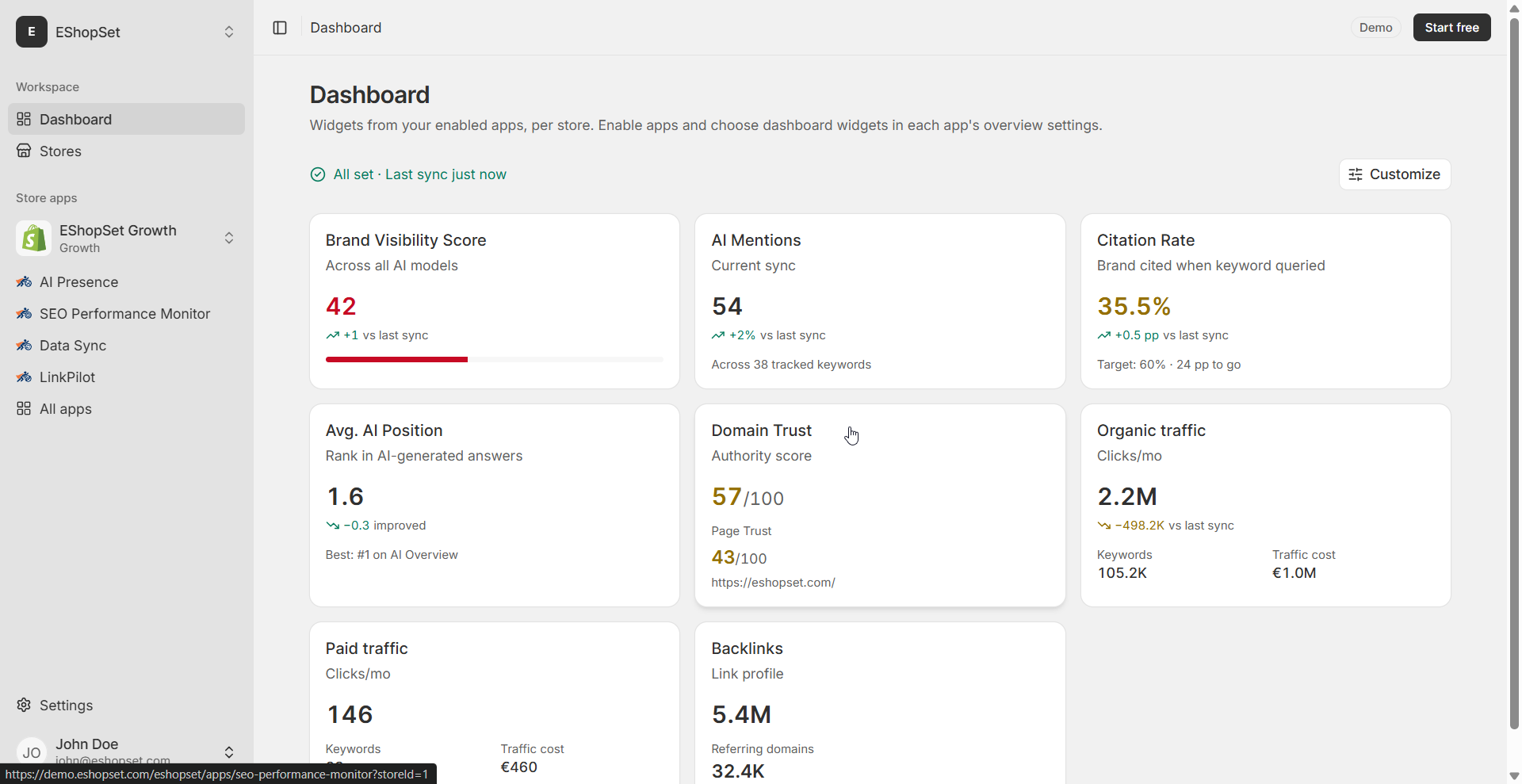
This discussion perfectly illustrates the new frontier of ecommerce attribution. We completely agree with the emphasis on structured data and proactive tracking. While traditional analytics still matter, optimizing for AI discovery and understanding AI agent behavior is becoming paramount. Our AI Presence app is built precisely for this, helping you manage how AI sees and represents your brand. For ensuring your product data is always meticulously structured and synchronized, our Sheet2Cart app is indispensable, making your Shopify Google Sheets catalog workflow seamless. And for keeping an eye on how search engines and bots crawl your site, our SEO Performance Monitor provides crucial insights.
In essence, the future of ecommerce isn't just about customers finding you; it's about AI agents finding and understanding you. By focusing on clean data, robust tracking, and a clear AI presence, you're not just solving an attribution mystery; you're building a more resilient and discoverable Shopify store. So go ahead, give your product data some love, refine your tracking, and ensure your store is speaking the language AI agents understand!