Boosting Conversions: Should You Upgrade Your Shopify Store's Search with AI?
Hey there, fellow Shopify merchants and store operators!
We’ve all been there, right? Staring at our analytics, wondering how to squeeze just a little more juice out of our store's performance. Recently, a really interesting conversation popped up in an online community that hit home for many of us, revolving around a crucial part of any online store: the search bar.
The original poster brought up an intriguing question: would you replace Shopify’s default search if an alternative claimed a whopping 30%+ higher conversion rate? The tool in question was an AI autocomplete feature that lets customers filter results as they type. Sounds pretty compelling, doesn't it?
The Promise of Smarter Search
The basic idea is quite logical. Imagine a customer typing "red dress." Instead of waiting for them to hit enter and then sifting through pages, this tool would immediately start narrowing down the catalog, showing relevant options right there. Fewer clicks, faster finds, happier customers. The original poster noted that the appeal wasn't just the AI's natural language understanding, but the promise of more orders, especially if it worked seamlessly with the existing Shopify catalog without needing a full system overhaul.
This point about seamless integration really resonated with community members. One respondent highlighted that the ability to work directly with the existing catalog was even more interesting than the 30% conversion claim itself. Another agreed, saying "Filter while typing sounds more useful than normal autocomplete." It's clear that merchants value practical, easy-to-implement solutions that don't disrupt their current setup.
Skepticism Meets Opportunity: What the Community Really Cares About
While the idea of a 30%+ conversion boost is certainly eye-catching, a healthy dose of skepticism quickly surfaced. Several community members, including one who said, "30%+ is a pretty big claim I'd want to see how they measured it," emphasized the need for real, verifiable data. It’s not enough to just claim a number; merchants want to see how that translates into actual "search to purchase" numbers for their specific store. As one person wisely put it, "I’d test it before replacing anything. The actual search to purchase numbers matter way more than the 30% claim tbh."
This is where the rubber meets the road. Theoretical gains are nice, but what truly moves the needle for your business? Another community member offered a more conservative estimate, suggesting that perhaps only 10% of visitors would even use advanced search features, and a 1% increase in sales would be a more realistic, albeit still valuable, outcome. This perspective underscores the importance of incremental gains and understanding your specific customer behavior.
Interestingly, one respondent shared a positive experience, mentioning they had replaced their default search with a solution built using Typesense, finding it superior to another popular app. This anecdote shows that merchants are indeed open to adopting new search technologies if they prove effective and offer a better user experience. Improving your store's search functionality can significantly enhance your overall AI presence score Shopify store, making your products more discoverable and your site more user-friendly.
Managing Your Catalog for Optimal Search
Beyond the search technology itself, the underlying product data is paramount. A sophisticated search engine is only as good as the catalog it's searching through. Keeping your product information accurate, up-to-date, and well-organized is crucial for any search solution, default or advanced, to perform optimally.
For many Shopify store operators, managing a large or frequently changing catalog can be a significant challenge. Ensuring product details, inventory levels, and pricing are always correct is a daily operation. This is where tools that help you efficiently Shopify update products from Google Sheets become invaluable. Imagine being able to sync your product data directly from a spreadsheet, saving hours of manual entry and reducing errors. This kind of streamlined data management directly impacts the quality of your search results, making the user experience smoother and more effective.
EShopSet Team Comment
This discussion perfectly captures the tension between exciting new tech and practical business impact. We at EShopSet believe that while big claims need validation, the underlying principle of improving customer discovery through smart search is critical. Merchants should absolutely test advanced search solutions, focusing on tangible improvements in conversion and user experience, not just hypothetical numbers. Our AI Presence app helps optimize your store's visibility and user interaction, and Sheet2Cart ensures your product data is always accurate for any search solution.
What This Means for Your Shopify Store
So, what's the takeaway for your daily operations? First, don't be afraid to explore alternatives to Shopify's default search, especially if they promise a better user experience through features like "filter while typing." However, always approach claims of massive conversion boosts with a critical eye. Focus on A/B testing and measuring actual "search to purchase" metrics specific to your store.
Second, remember that the best search tool in the world can't fix a messy catalog. Invest in robust product data management. Tools like EShopSet's Sheet2Cart can simplify the process to Shopify update products from Google Sheets, ensuring your search engine has the best possible data to work with. Clean data means more accurate search results, which means happier customers and higher conversions.
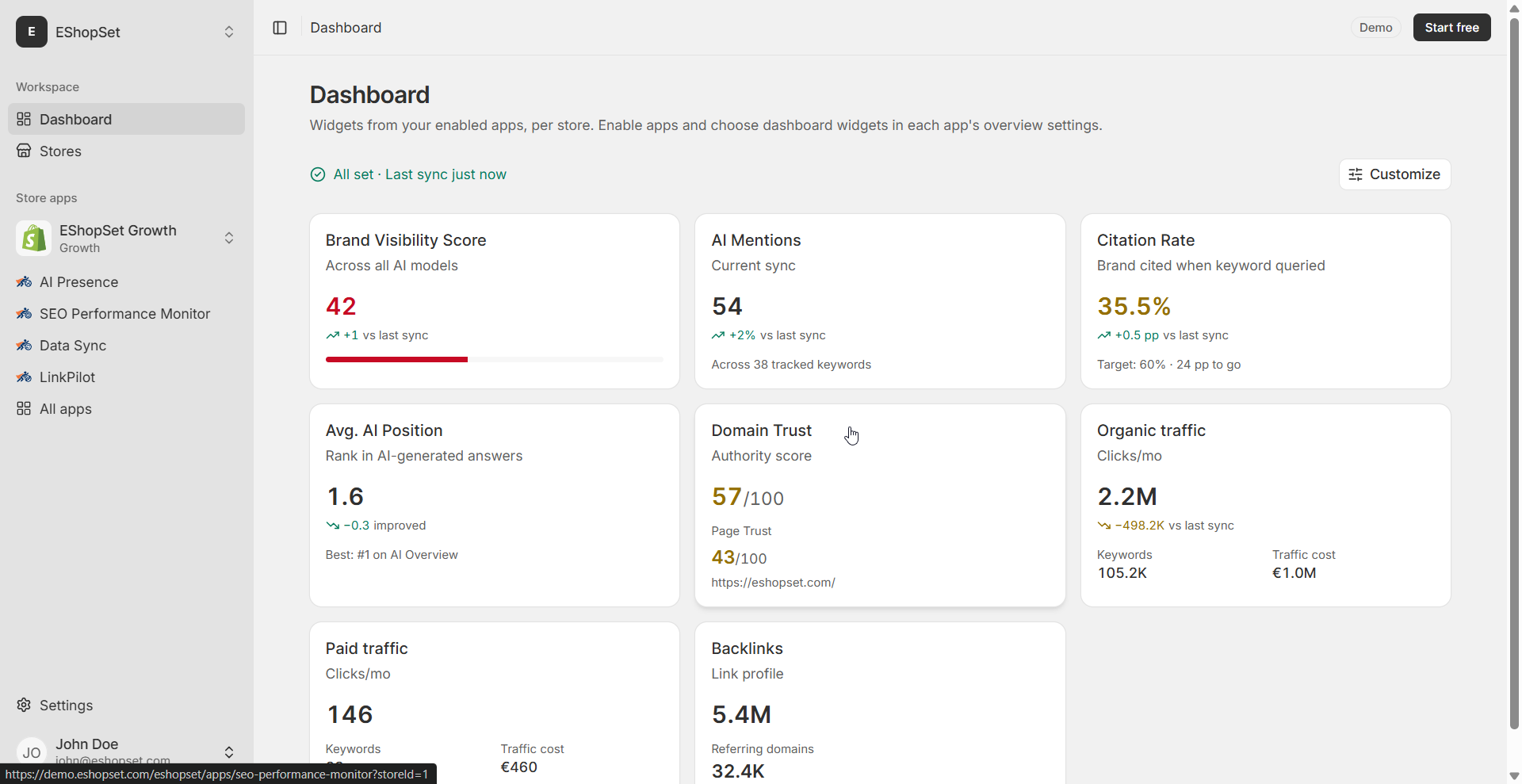
Finally, consider how an enhanced search experience contributes to your overall AI presence score Shopify store. A store that intelligently guides customers to what they need, quickly and efficiently, will naturally perform better in terms of engagement and conversions. Our AI Presence app can help you monitor and improve various aspects of your store's AI readiness and visibility, ensuring you're leveraging modern technologies effectively.
Improving your store's search is a strategic move, not just a technical one. It's about enhancing the customer journey, reducing friction, and ultimately, growing your sales. Keep experimenting, keep measuring, and keep your product data sparkling clean!