Are AI Shopping Agents and Coupon Bots Eating Your Shopify Profits? How to Detect and Control Them
Hey fellow Shopify merchants and store operators! Ever feel like your conversion numbers tell one story, but your gut tells another? You’re seeing traffic, you’re making sales, but sometimes it just doesn't quite add up. Maybe you're wondering if every 'user' session is truly a human shopper with genuine intent, or if something else is at play, subtly influencing your bottom line.
This is a conversation that recently caught my eye in an ecommerce community thread, and it really resonated with the challenges many of us face daily. The original poster, an app founder, brought up a fascinating point: how do you really know if a coupon extension or an AI shopping agent has interacted with a session on your store, tried out codes, or even altered the offer experience for a customer? It’s a question that gets right to the heart of understanding your traffic and protecting your profitability.
The Hidden Impact of AI Agents and Coupon Extensions
Think about it: a customer lands on your site, browses, maybe even adds items to their cart. But before they check out, a browser extension automatically pops up, trying every coupon code under the sun. Or perhaps an AI shopping agent, designed to find the best deals across the web, is interacting with your pricing and offers. While these tools can sometimes help customers, they can also significantly impact your perceived conversion rates and the effectiveness of your marketing campaigns.
The original poster highlighted that traditional order and conversion metrics often don't differentiate between human-driven sessions and those touched by these automated entities. This means you might be giving away discounts that weren't necessary, or your A/B tests for new offers could be skewed by non-human interactions. It’s a blind spot that many of us didn't even realize we had!
The core problem isn't necessarily that these agents exist – they're part of the modern web. The problem is the lack of visibility for merchants. Without knowing when and how these agents interact with your store, it’s incredibly difficult to make informed decisions about your pricing strategy, coupon usage, and overall user experience.
Gaining Clarity: Observing and Controlling Your Store Sessions
So, what’s the solution? The discussion pointed towards a fascinating approach: session classification combined with observation and controlled testing. Imagine being able to label your store sessions not just as 'visitors' but as 'people,' 'coupon extensions,' 'AI shopping agents,' or 'automation.' This kind of detailed classification gives you a whole new lens through which to view your traffic.
The app discussed in the thread proposed an 'observe mode' where merchants can simply see these classifications in action. This initial step is crucial. Before you change anything, you need to understand the baseline. How many of your sessions are truly human? How often are coupon extensions active? Are AI agents frequently interacting with your product pages or checkout?
Once you have this visibility, the next step is about control. The original poster suggested applying controls such as hiding extension pop-ups, capping code attempts, or even running your own optimized offer against these identified sessions. This isn't about blocking all automation, but about ensuring that your offers are presented on your terms and that your conversion data is as accurate as possible.
A key takeaway from this discussion is the importance of 'holdout measurement.' This means that any changes you implement, like adjusting how you handle coupon attempts, are measured against a control group that doesn't experience the change. This rigorous A/B testing approach is essential for truly understanding the impact of your actions on revenue and conversion, rather than just guessing. It allows you to confidently say whether a change led to a real improvement or not.
For Shopify merchants, understanding these traffic nuances is becoming increasingly vital. As AI continues to evolve, we're likely to see more sophisticated AI agents influencing customer journeys, even impacting how your products appear in Shopify Google AI Overviews citations. Having a robust strategy to monitor and adapt to these changes is no longer optional.
EShopSet Team Comment
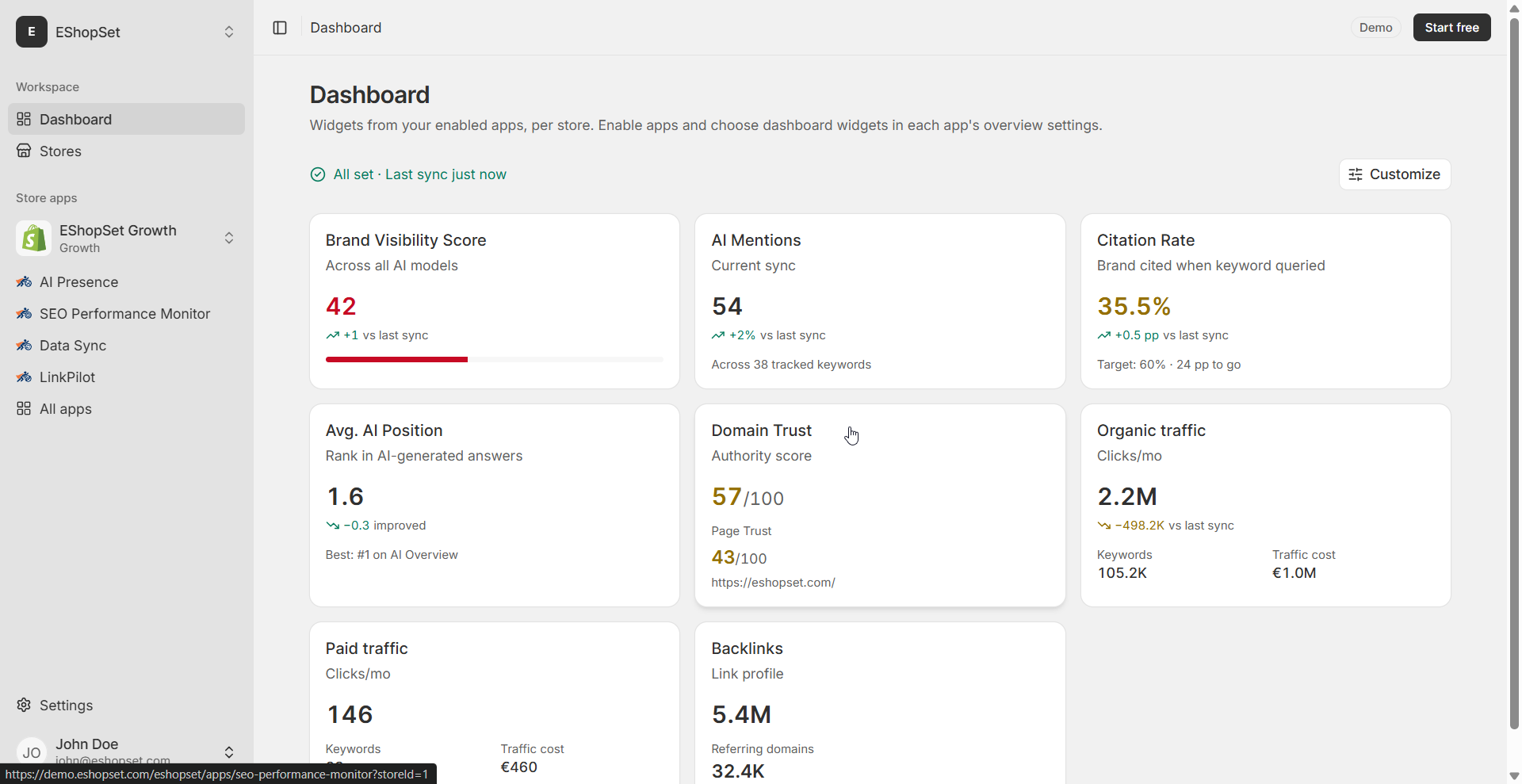
This discussion perfectly illustrates why understanding your traffic beyond surface-level analytics is critical for modern Shopify merchants. We strongly agree that differentiating between human and automated interactions is paramount for accurate conversion optimization and offer management. For EShopSet users, our AI Presence app is designed to help you navigate the evolving landscape of AI in ecommerce, ensuring your brand is optimally positioned and understood by AI, while our SEO Performance Monitor provides the crucial Shopify organic traffic monitor insights needed to track the quality and source of your visitors, helping you correlate these advanced session insights with your overall search performance.
Actionable Steps for Your Store
So, what can you do right now?
- Review Your Analytics: Start by digging deeper into your existing Shopify analytics. Look for unusual patterns in session duration, bounce rates, or conversion rates associated with specific traffic sources or times of day. While you might not have 'agent' labels, anomalies can be clues.
- Evaluate Coupon Strategy: How are you distributing your coupon codes? Are they widely available, or targeted? Consider the potential for coupon extensions to find and auto-apply codes, and whether this aligns with your discounting goals.
- Consider Specialized Tools: Explore apps, like the one discussed, that offer session classification and control features. The ability to observe and test changes with holdout measurement is a powerful way to optimize your store's performance.
- Stay Informed on AI: Keep an eye on how AI is shaping consumer behavior and search results. Understanding how AI agents might interact with your store is part of a proactive strategy to maintain strong Shopify Google AI Overviews citations and overall visibility.
Ultimately, the goal is to ensure that your Shopify store is not just attracting traffic, but attracting the right kind of traffic, and that your efforts to convert visitors into customers are truly effective. By gaining a clearer picture of who or what is interacting with your store sessions, you can make smarter decisions, protect your offers, and drive more profitable growth. It’s about taking control of your ecommerce narrative, one session at a time.